The Origins of Golf: Scotland, St Andrews and the Birth of the Rules
From a 1457 Scottish ban to the first written rules at Leith, the rise of St Andrews, the 18-hole standard and the founding of the USGA in 1894.
Golf’s history is full of romance and a fair amount of myth. Ask where the game was invented and you will hear confident answers ranging from medieval Holland to ancient Rome. The honest answer is more interesting: games involving sticks and balls were played in many places, but the game we recognize today, played over open ground into a series of holes, took shape in Scotland. It was there that the first clubs were formed, the first rules written and the 18-hole round established.
This article traces that story from the first written record of golf in Scotland to the founding of the two bodies that still govern the game: The R&A and the United States Golf Association.
Before Scotland: Kolf and Other Stick-and-Ball Games
The origins of golf are genuinely uncertain and still debated by historians. Golf-like games appear in Dutch and Flemish sources from the 13th century onwards; a Middle Dutch text from 1261 mentions “colf,” and the English word golf is generally thought to derive from the Dutch kolf or kolve, meaning club.
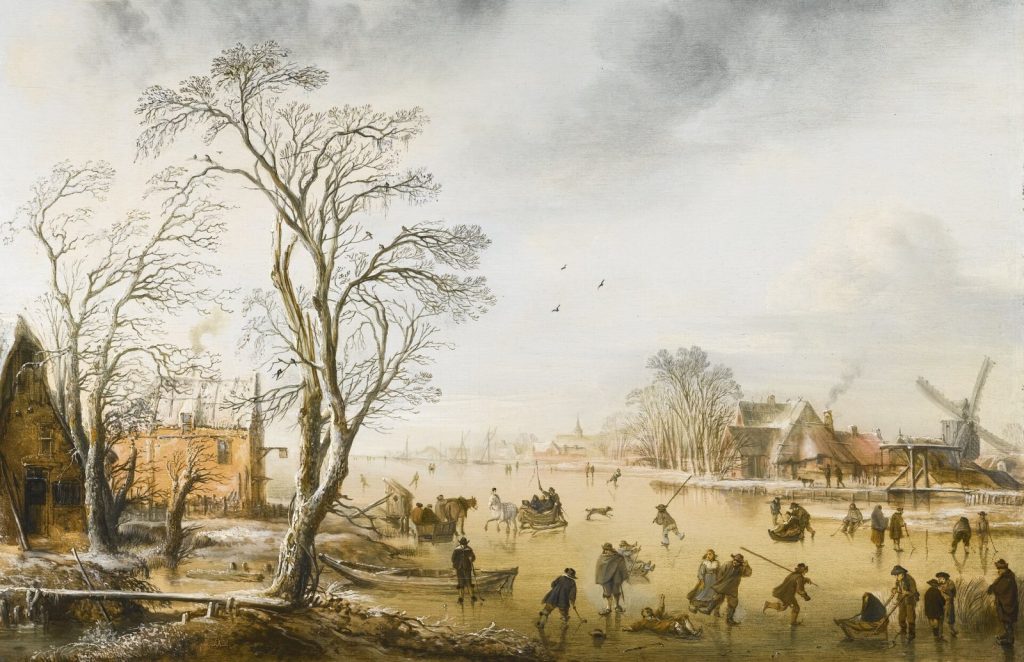
Those continental games, however, often involved hitting a ball toward a target such as a post or door, sometimes on ice or in streets. The distinctive features of golf, namely a course of holes cut in the ground, played in sequence, with the fewest strokes winning, are associated with Scotland. That is why modern golf is generally regarded as a Scottish development, even if the idea of striking a ball with a stick has older roots across Europe.
One popular myth can be dismissed immediately: golf is not an acronym for “Gentlemen Only, Ladies Forbidden.” That explanation is a modern invention with no historical basis.
1457: The Ban That Proves the Game Existed
The earliest secure Scottish reference to golf is, ironically, a prohibition. In 1457 the Scottish Parliament under King James II banned “gowf,” along with football, because the games were distracting men from archery practice, which was considered essential to national defense.
The ban tells us two important things. First, golf was already popular enough in mid-15th-century Scotland to worry the authorities. Second, it was being played on common ground by ordinary people, not just in exclusive settings. The ban evidently did little to stop the game. Over time golf won royal favor rather than royal disapproval: Charles I is said to have played on Leith Links while staying at Holyrood Palace, and was reportedly on the links there in 1642 when news of the Irish rebellion reached him.
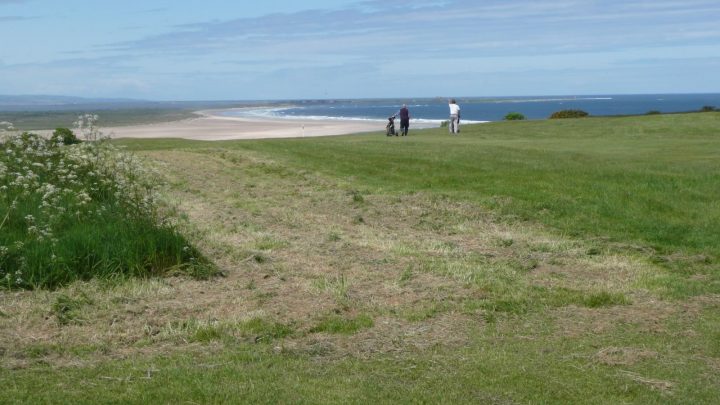
The ground where much of this early golf was played was links land: the sandy, rolling strips of coast between the beach and farmland. The word comes from the Old English hlinc, meaning rising ground or a ridge. Links land was poor for agriculture but ideal for golf: firm, fast-draining turf grazed short by animals, natural hollows that became bunkers, and constant wind. Golf has been played on links near the east coast of Scotland since the 15th century, and Musselburgh Links is generally regarded as the oldest recorded golf course still in existence.
1744: The First Written Rules at Leith
For three centuries golf was played under local customs that varied from place to place. That changed in 1744, when a group of Edinburgh golfers playing at Leith Links asked the City of Edinburgh for a trophy to compete for. The council agreed and provided a Silver Club, and the first competition for it was played at Leith that year.
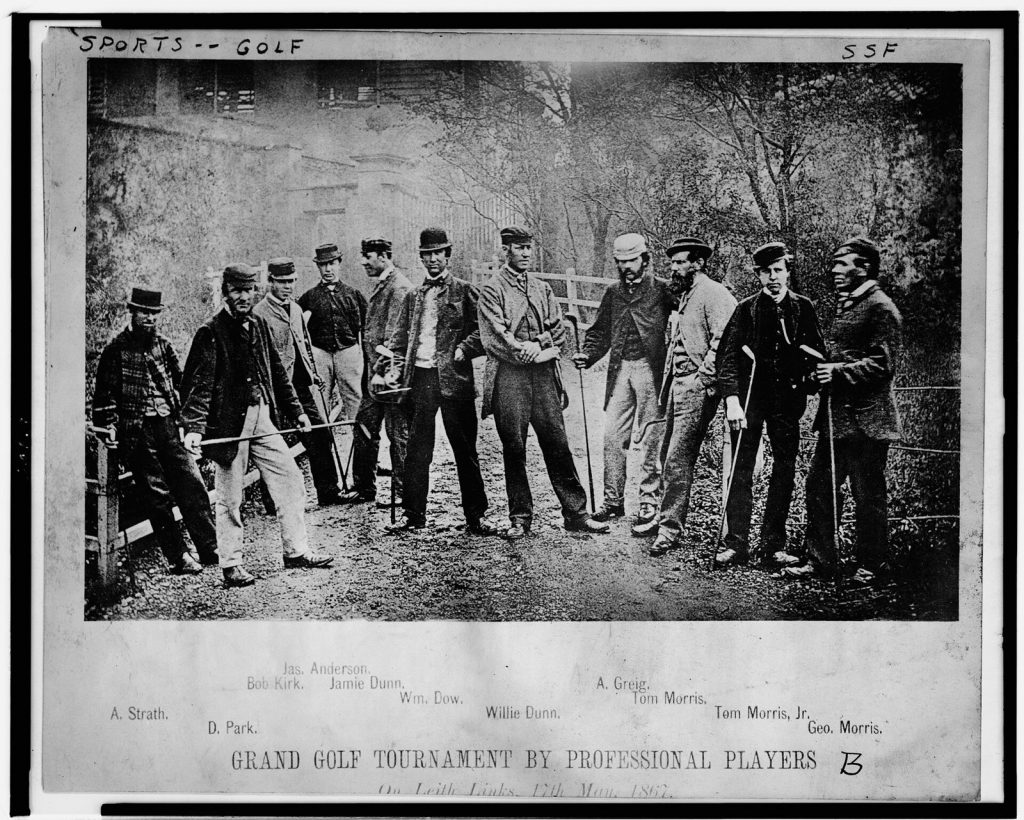
For that competition the golfers, known as the Gentlemen Golfers of Leith, drew up thirteen rules under the title “Articles and Laws in Playing at Golf,” dated March 7, 1744. They are the oldest surviving written rules of golf, and the original manuscript is held by the National Library of Scotland. John Rattray won the first competition, signed the rules and became the club’s first captain; he won the Silver Club again in 1745. Historians still debate whether Rattray wrote the rules himself, but his signature and prominence make him the most likely author. The club still exists today as The Honourable Company of Edinburgh Golfers, and its records date continuously back to 1744.
The thirteen rules are short and practical, written for a game played on public land. They covered teeing, playing from water, lost balls, the order of play and holing out. Several of those ideas survive in the modern code, including:
- Order of play, so that golfers take turns in a fair sequence.
- Stroke-and-distance for a lost ball: go back to where you last played and add a penalty stroke.
- Relief from water, the ancestor of today’s penalty-area rules.
- Outside interference, what happens when something other than the player stops or deflects the ball.
- Holing out, the requirement to finish the hole by getting the ball into the cup.
Anyone who has read our guide to the essentials of the Rules of Golf will recognize the lineage.
The Honourable Company later moved from Leith, which had become overcrowded, to Musselburgh’s nine-hole course in 1836, and then built its own 18-hole course at Muirfield in 1891. Muirfield went on to host The Open many times.
1754: The Society of St Andrews Golfers
Ten years after the Leith rules, in 1754, a group of golfers in the university town of St Andrews formed the Society of St Andrews Golfers. They largely adopted the Leith rules for their own competition, and their club would become the most influential in the world.
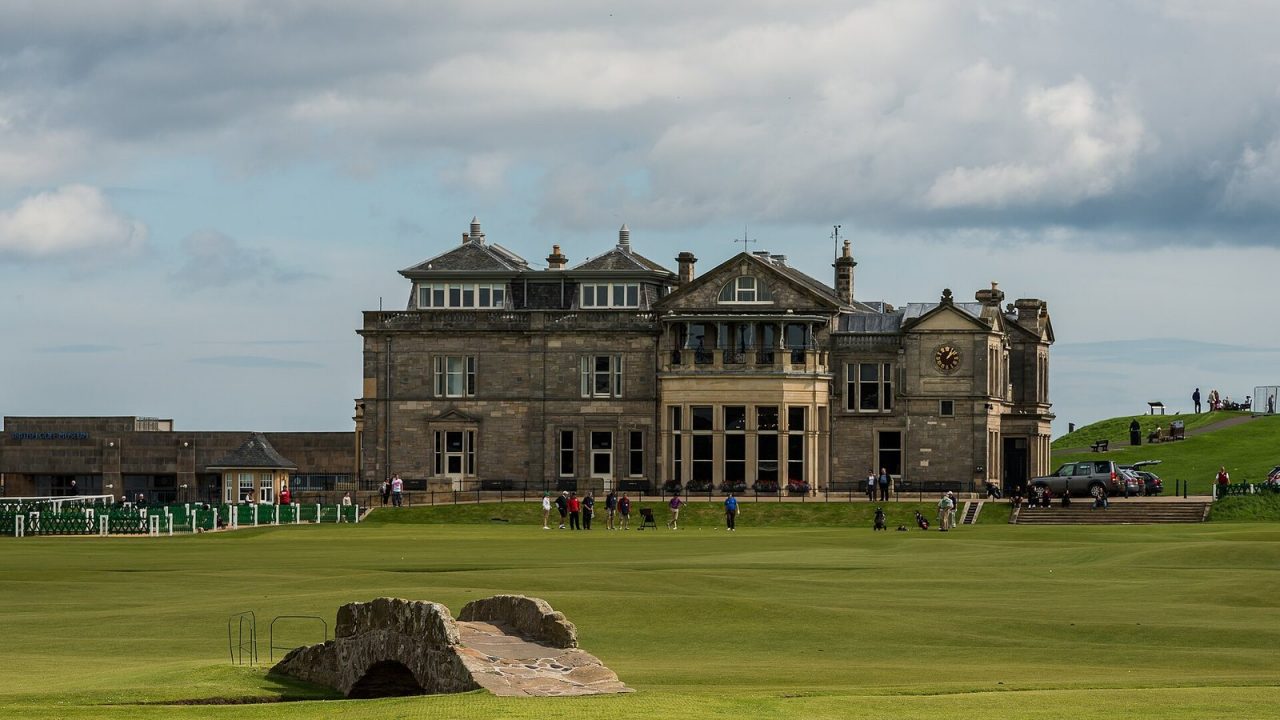
In 1834 King William IV became the club’s patron, and the society took the name it holds today: the Royal and Ancient Golf Club of St Andrews. The town would come to be known as the “Home of Golf,” and the Old Course, which predates the club, became the most famous golf course in the world. The club does not own the St Andrews courses; they are public and run today by the St Andrews Links Trust. The club’s famous clubhouse sits behind the first tee of the Old Course.
Why a Round Has 18 Holes
Early courses had no standard number of holes; each simply used the land available. Records show that Leith had a five-hole course that was typically played round twice, and other early courses had their own counts. St Andrews originally had 22 holes.
In 1764 St Andrews reduced its course from 22 holes to 18. Because St Andrews became the most influential club in the game, its 18-hole round gradually became the standard, and the format spread as new courses were built across Britain and the world. Nine-hole courses remain common, and shorter or irregular layouts still exist, but 18 holes has been the norm for well over a century. For a modern look at what those holes contain, see our guide to the parts of a golf course.
Balls, Championships and a Golfing Boom
Early golf balls were “featheries”: leather cases stuffed with boiled feathers, then stitched and hammered into shape. They were expensive and easily damaged. In the 19th century the gutta-percha ball, or “gutty,” made from a natural latex, transformed the game. It was cheaper and more consistent than the feathery, and it helped golf expand well beyond the wealthy.
The championship era began in 1860, when Prestwick Golf Club staged a tournament for professionals. Eight players competed on 17 October 1860, and Willie Park Sr. won the Challenge Belt. That event became The Open Championship, the oldest of the four men’s majors described in our guide to the majors.
Railways made it easy for city dwellers to reach coastal links, and golf spread rapidly through the British Isles and the British Empire in the late 19th century. Clubs had already been founded abroad by Scottish expatriates and soldiers, in places such as India and Pau in France, but the late-Victorian boom turned golf into an international game.
The R&A Becomes the Rules Authority
As clubs multiplied, so did local variations in the rules. Many clubs looked to St Andrews for guidance, and in 1897 the Royal and Ancient Golf Club formally took on the role of codifying the Rules of Golf. Over the following decades it also took responsibility for running championships, including The Open.
Those governing functions eventually outgrew a private members’ club. In 2004 they were transferred to a separate group of companies known simply as The R&A, which today runs The Open and, together with the USGA, writes and interprets the Rules of Golf for golfers worldwide outside the United States and Mexico. The members’ club remains in St Andrews; in September 2014 it voted to admit women as members for the first time.
1894: The USGA Is Founded
Golf arrived in the United States in earnest in the late 1880s and grew quickly. By 1894 there was a problem: two different clubs held events that year, each billed as the national amateur championship, and the results were disputed.
To settle the matter, delegates from five clubs, namely Newport Golf Club, St. Andrew’s Golf Club, The Country Club, Chicago Golf Club and Shinnecock Hills Golf Club, met in New York City and formed the Amateur Golf Association of the United States on December 22, 1894. It was soon renamed the United States Golf Association. Theodore Havemeyer became its first president.
The new body moved fast. In 1895 it staged both the first U.S. Amateur, won by Charles Blair Macdonald, and the first U.S. Open, both at Newport. The USGA is headquartered today at Golf House in Liberty Corner, New Jersey, and it governs the game in the United States and Mexico.
Two Governing Bodies, One Set of Rules
In the late 19th century most clubs aligned themselves with either St Andrews or the Leith golfers’ code, and subtle differences between clubs persisted. The R&A and the USGA have published the Rules of Golf jointly since 1952, though the code did not become completely uniform until 2000. Today they share one Rules of Golf, with editions differing only in spelling and logos, and jointly define the equipment standards for clubs and balls.
The path from a 1457 ban to a unified global rulebook took more than five centuries, but the principles written down at Leith in 1744 still sit at the heart of the game: play the ball as it lies, play the course as you find it, and when in doubt, be honest.