How to Build Your First Golf Set
Which clubs a beginner actually needs, boxed sets vs individual clubs, new vs used, forgiving designs, shaft flex basics and when a fitting makes sense.
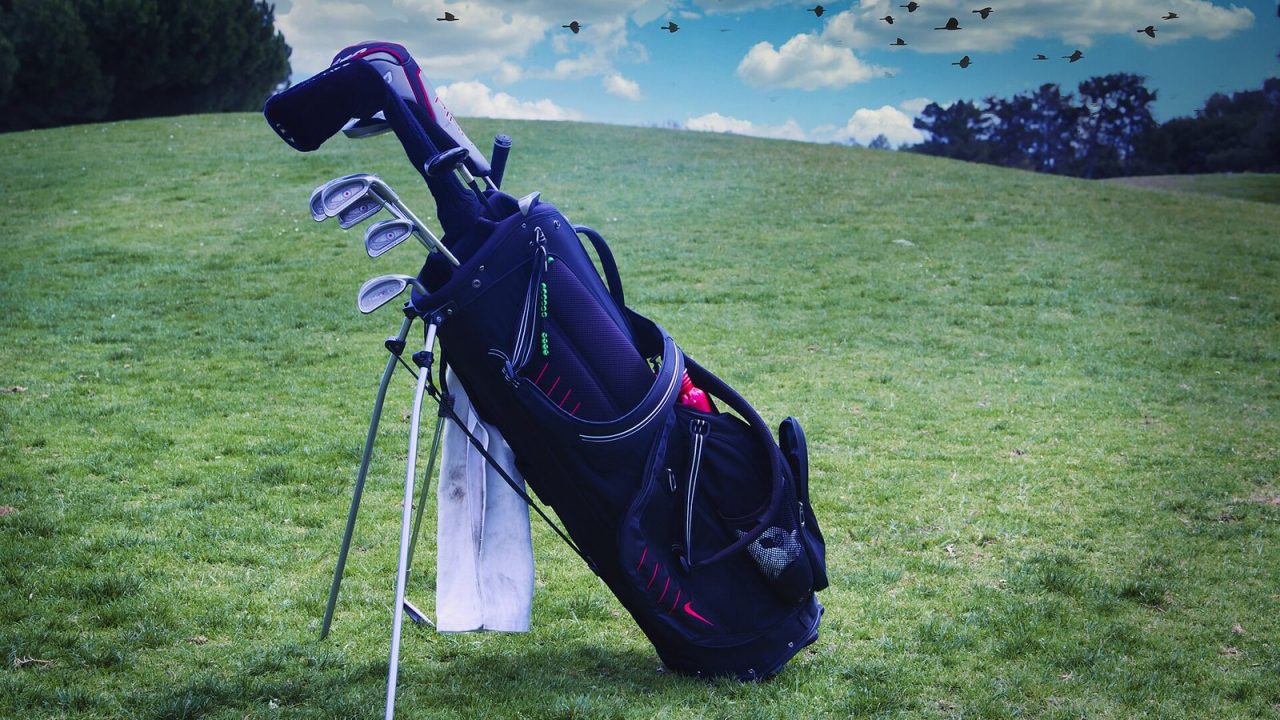
Walk into any golf shop and the choice can feel overwhelming: rows of drivers with adjustable heads, irons in half a dozen styles, wedges stamped with numbers that seem to mean nothing yet. The good news is that a first set does not need to be complicated. Beginners benefit most from a small number of forgiving clubs that make it easier to get the ball airborne and moving forward. Everything else can come later, once you know how you swing and how often you play.
This guide explains how to put together a sensible starter set, what to look for in each club, and how to avoid the most common early mistakes. If any of the club names are unfamiliar, start with our overview of woods, hybrids, irons, wedges and the putter.
Start With the Limit, Not the Maximum
The Rules of Golf cap the number of clubs you may carry. Rule 4.1b says a player must not start a round with more than 14 clubs or have more than 14 during the round. Breaking that limit in stroke play costs two penalty strokes for each hole where the breach happened, up to a maximum of four strokes in the round; in match play, a hole is deducted from your match score for each hole with a breach, up to two holes.
Fourteen is a ceiling, not a target. Many experienced golfers carry fewer, and for a beginner a half set of seven to ten clubs is often more useful than a full bag. Fewer clubs mean fewer decisions, a lighter bag and more practice with each club you do own. You will also learn to hit partial shots, such as a three-quarter 7-iron, which is a valuable skill in its own right.
The Core Clubs a Beginner Needs
A practical first set covers four jobs: starting the hole, moving the ball down the fairway, approaching the green and putting. A typical starter lineup looks like this:
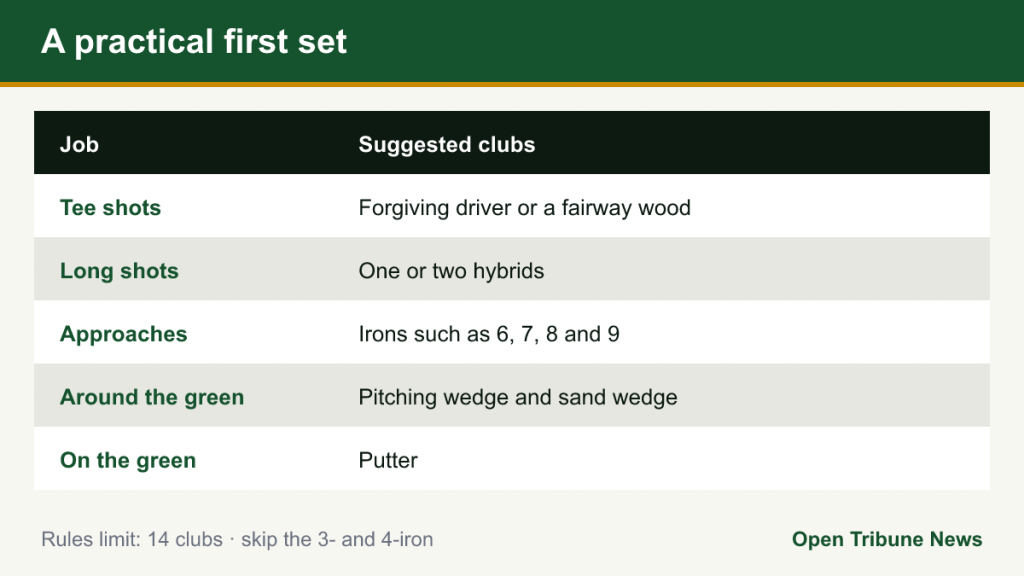
| Job | Suggested clubs | Why |
|---|---|---|
| Tee shots | A forgiving driver or a fairway wood | Many beginners find a 3-wood or 5-wood easier to control than a driver at first |
| Long shots from the fairway | One or two hybrids | Easier to launch than long irons |
| Mid and short approaches | A few irons, such as 6, 7, 8 and 9 (or every other iron in a half set) | The scoring clubs you will use most |
| Around the green | A pitching wedge and a sand wedge | Chips, pitches and bunker shots |
| On the green | A putter | The club you use on almost every hole |
For context, a traditional full men’s set has often been described as a driver, a 3-wood, irons from 3 to 9, a pitching wedge, a sand wedge and a putter, which is twelve clubs, with players adding two more from options such as a 5-wood, a hybrid, a gap wedge or a lob wedge. Modern sets have shifted toward hybrids at the top end, because hybrids typically replace the hardest-to-hit long irons (most commonly the 3 and 4).
Beginners can safely skip the 3-iron and 4-iron entirely. They can also skip specialty wedges until they can hit consistent short-game shots with a pitching and sand wedge.
Boxed Sets vs Building Club by Club
There are two main routes to a first set.
Boxed (complete) sets
Many manufacturers sell packaged sets that include a driver, a fairway wood, a hybrid, several irons, a wedge or two, a putter and often a bag. They are designed for newcomers, so the heads tend to be large and forgiving and the shafts are usually lighter and more flexible. The advantages are simplicity and a consistent feel across the set. The drawback is that you cannot mix and match: if the putter or driver does not suit you, it is still part of the package.
Building individually
Buying clubs one by one, whether new or used, lets you choose a driver you like, a hybrid that suits your eye and irons that fit your height and swing. It takes more effort and some knowledge of what to look for. A hybrid approach is common: start with a boxed set or a set of irons and replace individual clubs as your game develops.
Either route can work. The best choice depends on how much time you want to spend researching and how sure you are that you will stick with the game.
New or Used?
Golf clubs are durable, and a well-kept used club can perform almost as well as a new one. Irons, hybrids and woods from a few seasons ago are widely available through retailers, trade-in programs and private sellers. When buying used, check:
- Grips: worn, shiny or cracked grips are cheap to replace but should be factored in.
- Shafts: look for dents in steel shafts or cracks and deep scratches in graphite. A damaged shaft can fail.
- Faces and grooves: heavy wear on wedge grooves reduces spin, which matters more for skilled players than beginners.
- Specifications: note the shaft flex, length and loft so you know what you are buying.
- Conformity: for competition and handicap rounds, clubs must conform to the Equipment Rules. Clubs from mainstream manufacturers are designed to conform, but altered or unusual clubs can be an issue.
Rule 4.1a also matters for adjustable clubs: you may use a club with adjustable features, but you must not deliberately change its playing characteristics during a round. Make adjustments before you tee off.
Choose Forgiving Designs
“Forgiveness” describes how well a club holds its distance and direction when you miss the center of the face. Beginners miss the center often, so forgiving designs make a big difference.
Irons: cavity backs over blades
Traditional forged blades (often called muscle backs) concentrate mass behind the center of the face. They give skilled players feel and the ability to shape shots, but they are less forgiving. Cavity-back irons move weight to the perimeter of the head, lowering the center of mass and increasing the moment of inertia, so off-center strikes lose less. Game-improvement and super game-improvement irons go further, with wider soles and larger heads. For a first set, choose cavity backs.
Hybrids instead of long irons
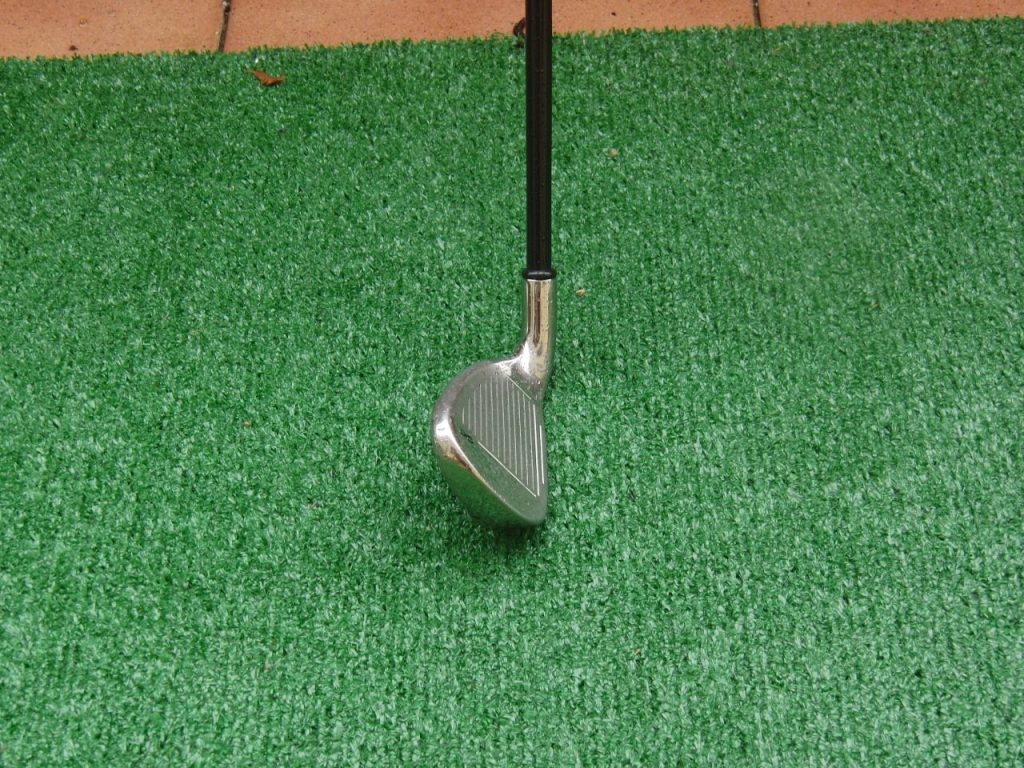
Hybrids combine a wood-like head with iron-like lengths and lie angles. Their low, deep center of gravity helps the ball launch higher with less effort, and their wider soles glide through rough more easily than a thin iron. Replacing anything longer than a 5-iron or 6-iron with hybrids is a common and sensible choice.
Woods: more loft is your friend
Drivers with more loft are generally easier to get airborne and tend to curve less sideways, because higher loft produces more backspin relative to sidespin. Many beginners do well with a driver around the higher end of the common loft range, or with a fairway wood off the tee while they learn.
Putters: whatever you can aim
Putters come in blade and mallet styles. Mallets usually have more forgiveness and alignment aids; blades are simpler and lighter in appearance. Try both, and pick the one you can aim square most consistently.
Shaft Flex and Weight Basics
The shaft affects how the club feels and how the ball flies. Two specifications matter most for a beginner:
- Flex describes how much the shaft bends during the swing. Common labels are L (ladies), A or senior, R (regular), S (stiff) and X (extra stiff). Flex is matched mainly to swing speed: slower swings generally suit more flexible shafts, which help the ball launch, while faster swings generally suit stiffer shafts, which help control. Labels are not standardized between brands, so one company’s “regular” may play differently from another’s.
- Material and weight: steel shafts are heavier and common in irons; graphite shafts are lighter, which can make it easier to generate clubhead speed, and are standard in drivers and fairway woods. Many beginners, seniors and juniors benefit from graphite in irons as well.
If you are unsure, regular flex is a common starting point for an average adult swing, while slower swingers often benefit from senior or ladies’ flex. Choosing a shaft that is too stiff is one of the most frequent mistakes newcomers make; it tends to produce low shots that drift to the right for a right-handed player.
Length, Lie and Grip Size
Standard off-the-rack clubs are built for an average-height adult. If you are notably tall or short, or have unusually long or short arms, standard lengths and lie angles may force you into an awkward posture. Signs that clubs do not fit include:
- The toe of an iron sitting well up in the air at address (lie too upright for you), or the heel up (too flat).
- Having to stand very hunched or very upright to address the ball.
- Grips that feel either thin and twisty or so thick your fingers barely wrap around them.
Juniors should use junior clubs sized for their height rather than cut-down adult clubs, which tend to be too heavy and too stiff.
When a Fitting Makes Sense
Club fitting means testing clubs with a trained fitter, usually with a launch monitor that measures ball speed, launch angle and spin. A full fitting is most valuable once your swing is reasonably repeatable; if your swing changes dramatically every week, the data will change too. That said, a basic fitting for length, lie and grip size can help almost anyone, because those measurements depend on your body more than your skill.
A sensible sequence for many newcomers is:
- Start with a forgiving boxed set or a used half set.
- Take lessons with a qualified coach to build fundamentals such as grip and posture. Our guide to grip, stance and posture covers what those lessons will focus on.
- Once you play regularly and your ball flight is fairly consistent, get a fitting before investing in a new driver or iron set.
Don’t Forget the Ball and the Bag
The ball is the one piece of equipment you use on every shot. Expensive multi-layer tour balls are designed for high swing speeds and spin control; beginners who lose several balls a round usually do better with durable, lower-compression balls. See our golf ball guide for the details.
A lightweight stand bag is ideal if you walk; a cart bag with more storage suits players who ride. Add a few tees, a ball marker, a pitch-mark repair tool, a towel and a glove, and you have everything you need to get started.
Common First-Set Mistakes
- Buying a low-lofted driver because tour players use one. Low loft magnifies sidespin and makes launch harder for slower swings.
- Carrying long irons you cannot yet hit consistently.
- Choosing shafts that are too stiff or too heavy.
- Ignoring the putter. It is often the most-used club in the bag, so choose one you can aim.
- Upgrading too early. New equipment rarely fixes a fundamental swing issue; lessons usually help more.
Start small, choose forgiveness and add specialist clubs only when you know which gaps in your game they will fill.