The Ryder Cup Explained: Format, History and Selection
How the Ryder Cup works: USA vs Europe, foursomes, four-ball and singles, the 14½ points needed to win, captain's picks, and a short history through 2025.
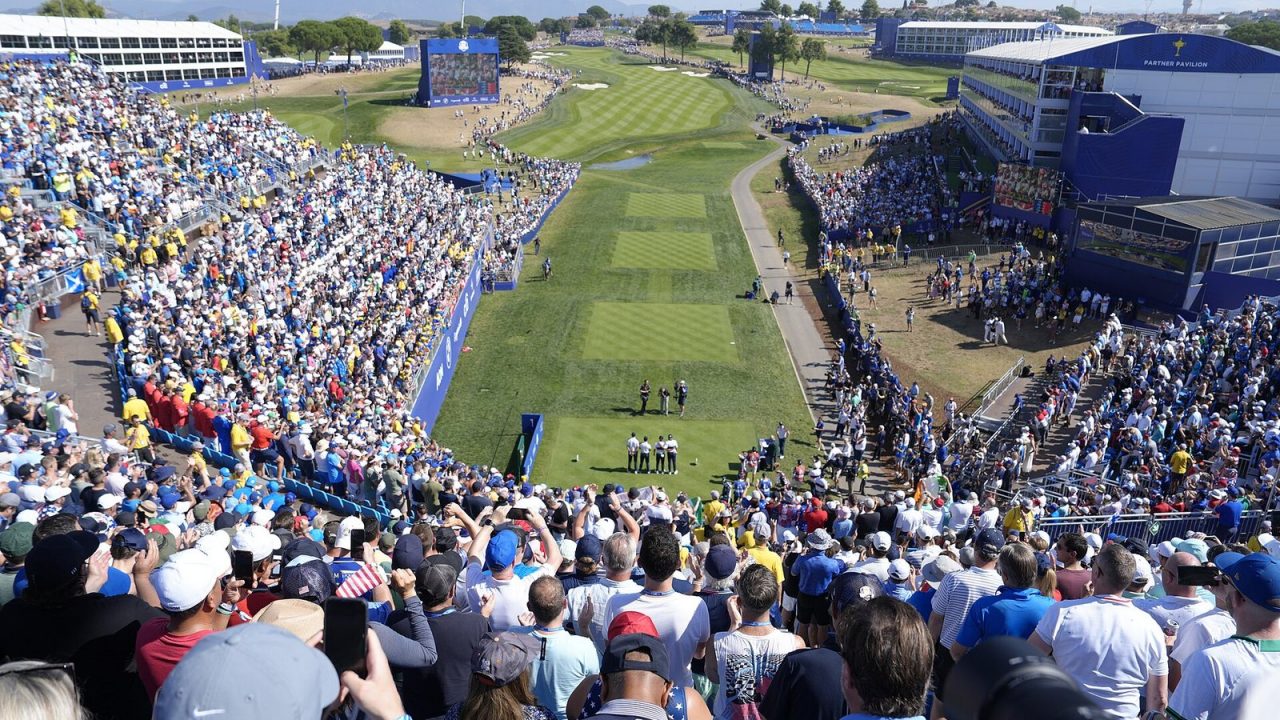
For three days every two years, golf’s most individual of sports becomes a team game. The Ryder Cup pits the United States against Europe in a contest of pure match play, with no prize money for the players, partisan crowds and pressure that many professionals say exceeds anything they feel in a major championship. It is one of the most watched events in golf.
This guide explains how the Ryder Cup works, from the session formats and scoring to how teams are picked, and gives a short history of how it grew from a transatlantic exhibition into a global spectacle.
The basics
- Teams: the United States vs Europe, 12 players each, plus a non-playing captain and vice-captains.
- Frequency: every two years, alternating between venues in the United States and Europe.
- Organizers: the PGA of America and Ryder Cup Europe.
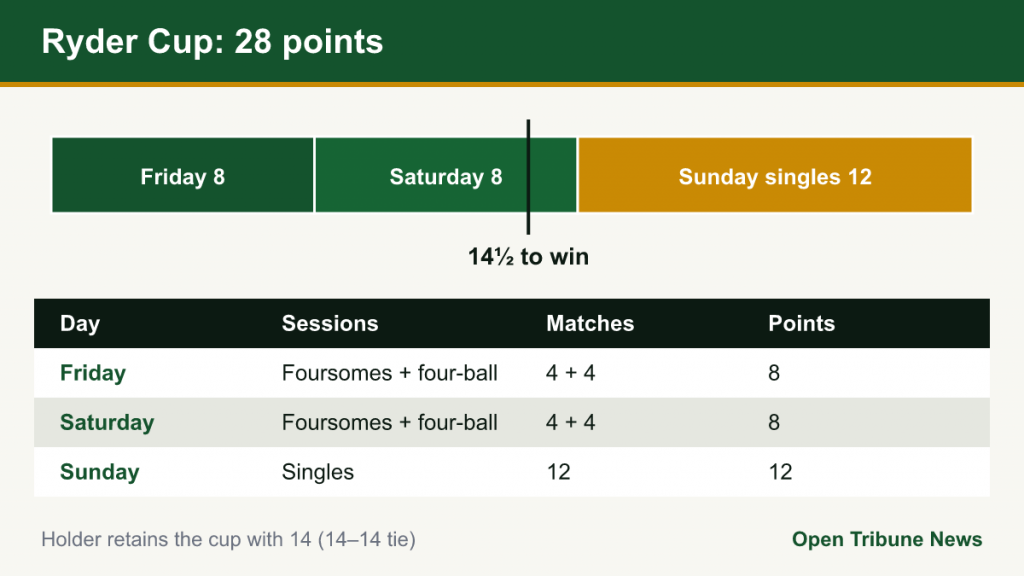
- Format: 28 matches over three days, all match play, each over 18 holes.
- Scoring: each match is worth one point; a halved match gives each side half a point.
The three formats
The Ryder Cup uses three kinds of match.
Foursomes (alternate shot)
Two players from each team share one ball and take turns hitting it. One partner tees off on the odd-numbered holes and the other on the even-numbered holes, and they alternate shots until the ball is holed. The team with the lower score wins the hole. Foursomes is the most demanding format for partnerships: you have to play from wherever your partner leaves the ball, and a single mistake affects both players.
Four-ball (best ball)
Two players from each team each play their own ball throughout. On each hole, the lower score of each pair is the team’s score. Four-ball tends to produce lots of birdies, because one partner can play safely while the other attacks.
Singles
One player against one player, head to head over 18 holes. All 12 players on each team play on the final day.
How the three days work
| Day | Sessions | Matches | Points available |
|---|---|---|---|
| Friday | One foursomes session, one four-ball session | 4 + 4 | 8 |
| Saturday | One foursomes session, one four-ball session | 4 + 4 | 8 |
| Sunday | Singles | 12 | 12 |
| Total | 28 | 28 |
The home team decides the order of the sessions on Friday and Saturday, which is one of several ways the host side shapes the event, along with course setup. Because only eight players take part in each team session, captains must decide who sits out, a key strategic decision. Pairings for each session are submitted by the captains without knowing exactly who the other side will send out.
Winning and retaining: 14½ and 14
There are 28 points available, so a team needs 14½ points to win outright. If the match finishes level at 14–14, the team that holds the cup retains it. That means the defending side needs only 14 points, while the challengers need 14½.
Matches are not extended: if a match is level after 18 holes, it is halved, with half a point to each team. This is different from individual match play events, where a level match goes to extra holes.
Because every match is played to a finish (or to the point it is decided), Sunday’s singles often produce dramatic swings, and captains spend a lot of thought on the order in which they send out their players.
How the teams are selected
Each side has its own qualification system, set by the PGA of America for the U.S. team and by Ryder Cup Europe for the European team. The systems change from edition to edition, but they share a basic structure: some players qualify automatically through a points list, and the rest are chosen by the captain.
For the 2025 edition
- United States: six players qualified automatically through the U.S. points list, which ran through the BMW Championship. Captain Keegan Bradley then made six captain’s picks.
- Europe: six players qualified automatically from a single Ryder Cup points list, and captain Luke Donald made six picks.
The balance between automatic places and picks has shifted over the years. Earlier editions had nine automatic qualifiers and three picks for each side, before both moved to a larger number of picks. Captains argue that picks let them choose players in form and players who suit particular partnerships or course setups.
Eligibility rules, such as nationality and tour membership requirements, are also set by each side.
The captain’s strategic puzzle
Because the format is fixed, the contest is shaped heavily by a handful of decisions made by each captain.
Building partnerships
Foursomes partners need compatible games. Many captains look at practical details: whether the two players use similar golf balls (in foursomes the partners hit the same ball, so one of them may have to play a model they would not normally use), whether one player is stronger off the tee and suits the odd or even holes on that course, and whether their temperaments mix well under pressure. Four-ball partners, by contrast, are often paired to balance a steady player with an aggressive birdie-maker.
Resting players
With only eight players in each team session, four sit out every time. Playing a star in all four team sessions, plus singles, means five rounds in three days. Captains have to balance momentum against fatigue, and the decision to bench an in-form player can be debated for years.
The singles order
On Sunday, each captain submits the order of the 12 singles players. A team trailing may front-load its strongest players to win early points and build momentum on the scoreboard; a leading team may spread its strength to make sure it reaches 14 or 14½ points. Because neither captain sees the other’s list in advance, the head-to-head pairings are partly a matter of chance.
How to follow a Ryder Cup
The scoreboard looks different from a stroke-play leaderboard. Each match shows which side is “up” and by how many holes, along with the hole being played. The overall score shows points won so far plus, often, the points each side is projected to win if every match finished as it currently stands. That projected score is a handy guide to momentum on Sunday afternoon, but matches can turn quickly, so the projection often changes hole by hole.
A short history
Samuel Ryder and the early matches
The trophy is named after Samuel Ryder, an English businessman who donated it. The first official match was played in 1927 at Worcester Country Club in Massachusetts, between teams representing Great Britain and the United States. The home side won each of the first five contests.
Great Britain & Ireland, then Europe
The United States dominated for decades. In 1973 the home side officially became Great Britain & Ireland, but American wins continued. In 1979, the team was expanded to include players from continental Europe, a change that transformed the competition. The arrival of stars from Spain, Germany and elsewhere made the matches far more competitive, and Europe soon began to win regularly.
Famous moments
- 1969, Royal Birkdale: the match was tied 16–16. In the final singles, Jack Nicklaus conceded Tony Jacklin’s short putt on the last green, halving their match and leaving the overall result a tie (the U.S., as holders, retained the cup). The concession became a celebrated act of sportsmanship.
- 1999, The Country Club, Brookline: the United States came back from 10–6 down going into the singles to win 14½–13½.
- 2012, Medinah: Europe matched that comeback, recovering from 10–6 down to win 14½–13½.
Europe’s modern run
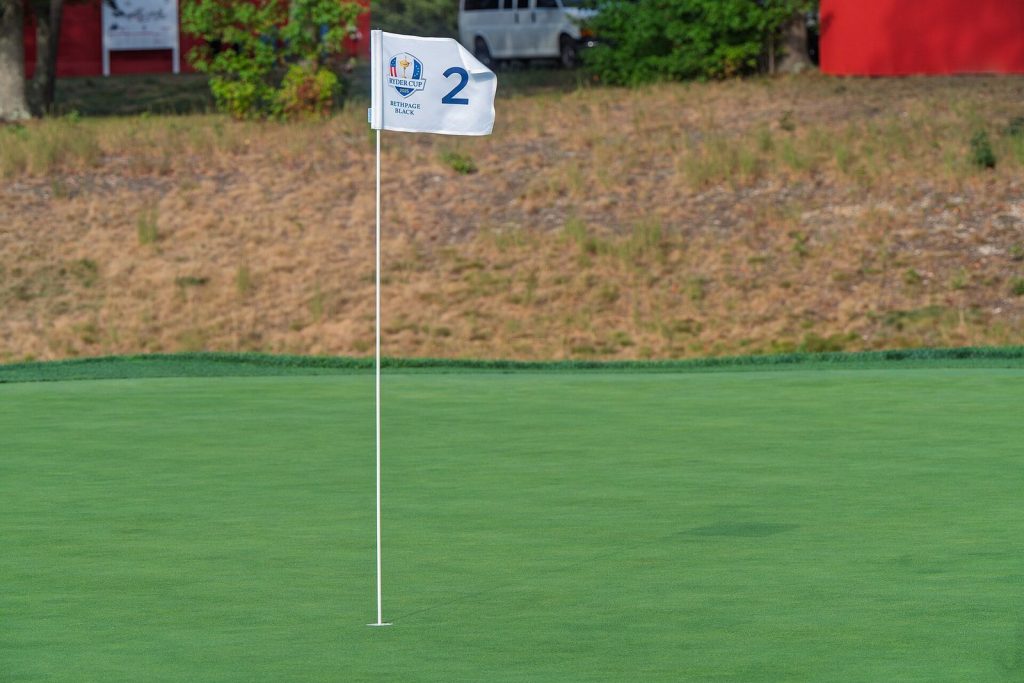
Since 2000, Europe has won nine of the twelve Ryder Cups played. In 2023 at Marco Simone in Rome, Europe won 16½–11½ under captain Luke Donald against Zach Johnson’s U.S. team. In 2025, at Bethpage Black in Farmingdale, New York, Europe won 15–13 under Donald again, against a U.S. team captained by Keegan Bradley, winning on American soil.
Overall record
Through the 2025 edition, the head-to-head record looks like this:
| Opponent era | U.S. wins | Opponent wins | Ties |
|---|---|---|---|
| Great Britain / GB&I (1927–1977) | 18 | 3 | 1 |
| Europe (1979–2025) | 9 | 13 | 1 |
| All matches | 27 | 16 | 2 |
The numbers tell the story: American dominance before 1979, and a contest Europe has had the better of since.
What makes the Ryder Cup different
- No prize money for the players. They play for their team, continent and country.
- Match play throughout. Unlike most professional golf, it is about winning holes against an opponent, not total strokes. Our guide to stroke play vs match play explains the scoring language, from “dormie” to “3 and 2.”
- Partnerships. Foursomes and four-ball reward chemistry as much as individual form.
- Atmosphere. Huge, vocal crowds and a first-tee grandstand create pressure rarely seen in other golf events.
- Captaincy. Unusually for golf, a non-playing leader makes decisions that can shape the result, from picks to pairings to the singles order.
Quick FAQ
Why are players from countries outside Europe and the U.S. not included?
The Ryder Cup is strictly USA vs Europe. Players from the rest of the world compete in a separate biennial team event, the Presidents Cup, against the United States.
What happens to a match that is all square after 18 holes?
It is halved, and each side receives half a point. There are no extra holes.
Is there a women’s equivalent?
Yes: the Solheim Cup, contested between the United States and Europe in women’s professional golf.