The Four Men’s Major Championships Explained
The Masters, PGA Championship, U.S. Open and The Open: when they are played, who runs them, how the venues work and how players get into the field.

Professional golf has dozens of tournaments each year, but four of them sit above all the rest. The men’s major championships, often just called “the majors,” are the events by which careers are measured. Players are remembered for how many majors they won far more than for their total number of tour victories, and Jack Nicklaus’s record of 18 major titles remains the benchmark every great player is compared against.
This guide explains how the four majors fit together: the order they are played in, who organizes each one, how their venues are chosen, how players earn a place in the field, and what gives each its own character. The deeper history of each event is a story for separate articles.
The majors at a glance
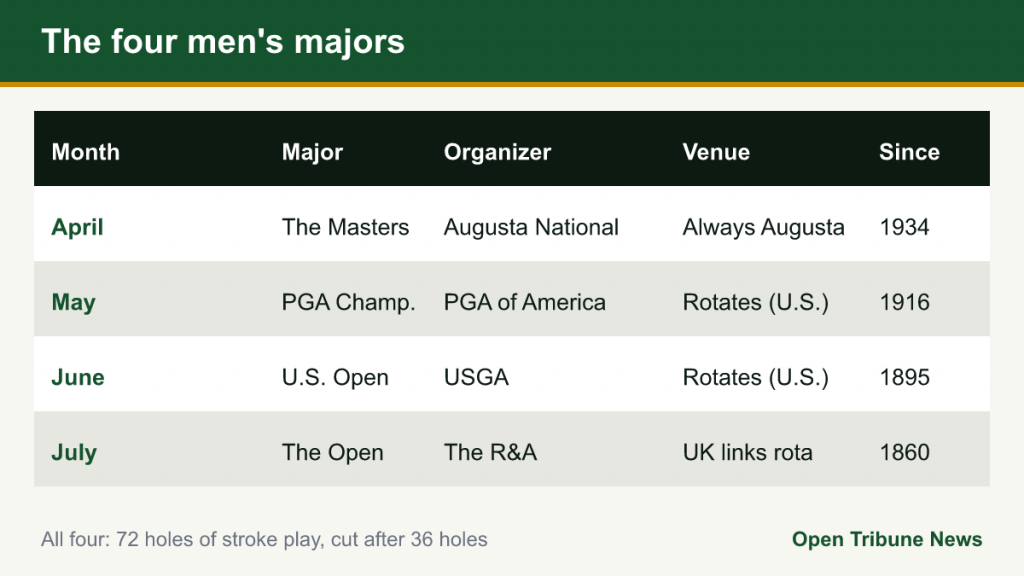
Since 2019 the four men’s majors have been played in a compact window between April and July. Here is the current order:
| Order | Championship | Usual month | Organizer | Venue model | First held |
|---|---|---|---|---|---|
| 1 | The Masters | April | Augusta National Golf Club | Always Augusta National, Georgia | 1934 |
| 2 | PGA Championship | May | PGA of America | Rotates around U.S. courses | 1916 |
| 3 | U.S. Open | June | USGA | Rotates around U.S. courses | 1895 |
| 4 | The Open | July | The R&A | Rotates among links courses in the UK | 1860 |
All four are 72-hole stroke-play events over four days, Thursday to Sunday, with a cut after 36 holes. None of them is run by the PGA Tour or the DP World Tour. That independence matters: each major sets its own invitation criteria, course setup and rules for ties, and the tours recognize the results for their own money lists and points races.
The Masters: the only fixed venue
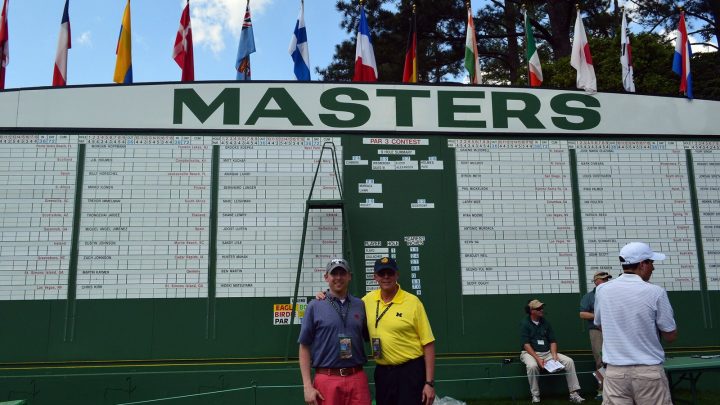
The season’s first major is played every April at Augusta National Golf Club in Augusta, Georgia. It is the only major that never moves. The club was founded by the great amateur champion Bobby Jones and investment banker Clifford Roberts, and the first tournament was held in 1934, under the name Augusta National Invitation Tournament. The name “Masters Tournament” was officially adopted in 1939.
Because the course never changes, the Masters has a familiarity no other major can match. Fans recognize individual holes, especially the stretch of the 11th, 12th and 13th known as Amen Corner, and returning players build years of local knowledge.
How players qualify: the Masters is an invitational. Players receive invitations by meeting published criteria, such as being a past champion (Masters winners have a lifetime invitation), a recent winner of another major, highly placed in the world ranking, or a winner of certain tour events. Leading amateurs are also invited. The field is the smallest of the four majors, and there is no open qualifying.
What makes it distinct: the green jacket presented to the winner, the Par 3 Contest held the day before the tournament, and the Champions Dinner hosted by the defending champion. Those traditions are covered in our history of the event.
The PGA Championship: the professionals’ major
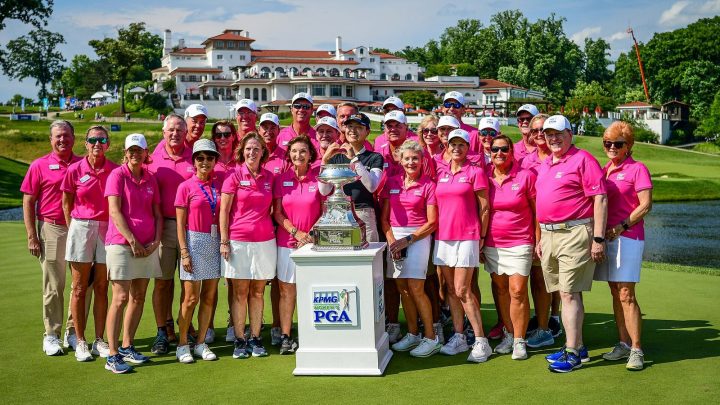
The PGA Championship is organized by the PGA of America, the association of club professionals and teaching pros in the United States (a separate organization from the PGA Tour). It was first played in 1916, won by Jim Barnes, and was a match-play event until 1957 before switching to stroke play in 1958.
For decades it was played in August, as the last major of the season. In 2019 it moved to May, on the weekend before Memorial Day, which turned it into the season’s second major and reshaped the whole calendar.
Venue model: the PGA Championship moves between courses across the United States, historically more often in the eastern half of the country. The venue is announced years in advance.
How players qualify: the field is built from exemption categories, including past champions, recent major winners and highly ranked players, plus winners of PGA Tour events over the preceding year. What sets it apart is that 20 places go to club professionals, determined by the leading finishers at the PGA Professional Championship. Watching a teaching pro from a local club tee it up alongside the world’s best is one of the event’s signatures.
The U.S. Open: the hardest test
The U.S. Open is run by the United States Golf Association, which also co-writes the Rules of Golf. It was first played in 1895 at Newport Country Club in Rhode Island and is scheduled in mid-June, finishing on the third Sunday of the month, Father’s Day in the United States.
Venue model: the championship rotates among a group of American courses, mixing historic venues with occasional newer sites. The USGA is known for demanding setups: narrow fairways, thick rough and firm, fast greens. Winning scores close to even par are common, and the event has a reputation as golf’s toughest examination.
How players qualify: the U.S. Open lives up to its name. The field is 156 players, and roughly half of them are fully exempt; the rest earn their spots through a two-stage process. Local qualifying is played over 18 holes at more than 100 sites, and the final stage is 36 holes in one day at a number of sites in the U.S. plus a few overseas. Entry is open to professionals and to amateurs with a low enough Handicap Index (0.4 or lower). Every June, a few players who started at local qualifying make it all the way to the championship.
Ties: since 2018 a tie after 72 holes is settled by a two-hole aggregate playoff, followed by sudden death if necessary.
The Open: the oldest major
The Open Championship, usually just called The Open (and often the “British Open” in the United States), is the oldest of the four. It was first played in 1860 at Prestwick in Scotland and is organized by The R&A. It takes place in mid-July, beginning on the Thursday before the third Friday of the month.
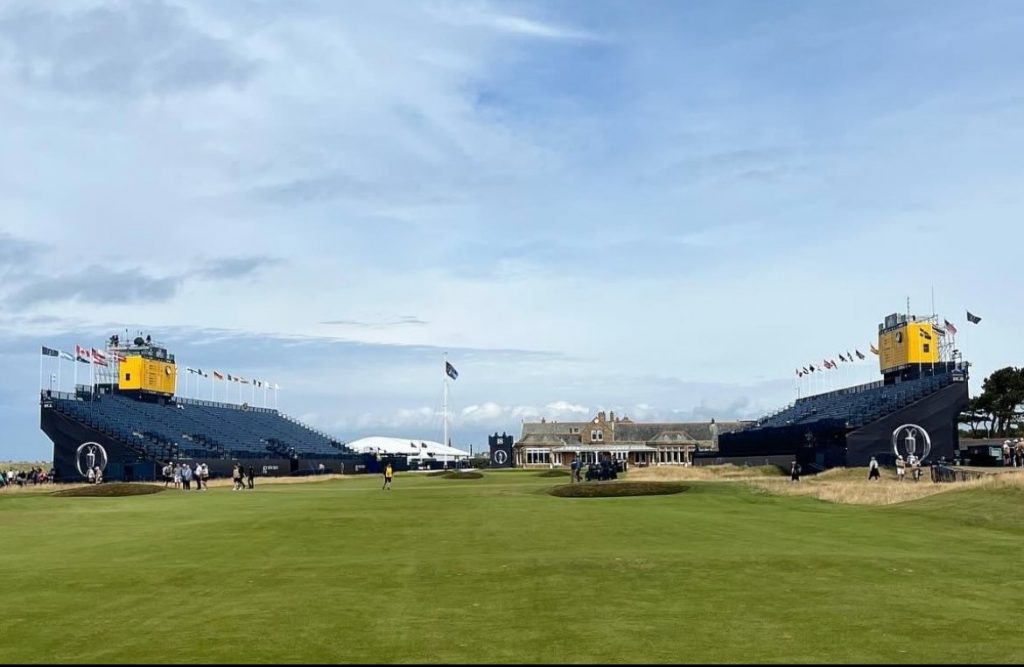
Venue model: The Open is always played on a links course, the sandy, coastal ground on which golf developed. Venues rotate among a group of courses in Scotland, England and Northern Ireland, often called the rota. St Andrews, the “home of golf,” hosts more often than any other venue, roughly every five years. Other rota courses include Carnoustie, Royal Troon, Royal Birkdale, Royal Liverpool, Royal St George’s, Royal Lytham & St Annes, Muirfield and Royal Portrush.
How players qualify: most of the 156-player field is exempt through categories such as past champions, major winners, world ranking and tour standings. Others earn spots through the Open Qualifying Series of designated events around the world, or by going through regional qualifying to Final Qualifying, where a handful of 36-hole events award the last places.
What makes it distinct: wind, firm ground and pot bunkers create a different style of golf, where players often play low running shots instead of high approaches. The winner receives the Claret Jug, presented to champions since 1873. Ties are decided by a three-hole aggregate playoff, then sudden death.
How the majors differ in style
It helps to think of the four majors as four different exams:
- The Masters tests creativity and nerve on undulating greens, with relatively little rough. The same holes every year reward experience.
- The PGA Championship often plays as a demanding but fair modern test, typically on long parkland courses, and tends to reward strong all-round ball-striking.
- The U.S. Open punishes missed fairways and rewards patience. Pars are valuable, and bogeys are expected.
- The Open brings the weather and the ground into play. The draw (which half of the field gets the better conditions) can matter, and imagination around the greens is essential.
That variety is why winning all four, the career Grand Slam, is such a rare feat. A player has to master very different conditions over a career.
Why the majors matter so much
Several things set the majors apart from regular tour events:
- Fields: they draw the strongest fields of the year, including players from every major tour, which is why they receive heavy weighting in the world ranking.
- Exemptions: a major win brings years of exemptions into other majors and top events.
- Legacy: careers are summarized by majors won. Nicklaus’s 18 and Tiger Woods’s 15 are the most-cited numbers in the sport.
- Independence: because they are run by four different organizations, the majors bring together players regardless of which tour they play on, making them the one place where the whole elite field reliably meets.
A few common questions
Is the Players Championship a major?
No. The Players, the PGA Tour’s flagship event, is often nicknamed the “fifth major” because of its strong field, but it is not one of the four majors.
Do amateurs play in the majors?
Yes. Leading amateurs receive invitations, for example through wins in top amateur championships, and amateurs can also qualify for the U.S. Open and The Open. The low amateur at each major is traditionally recognized.
Have the dates always been in this order?
No. Before 2019 the PGA Championship was held in August, after The Open. Its move to May produced the April-to-July sequence followed today.
What about women’s majors?
Women’s professional golf has its own set of five majors on the LPGA Tour, which is a separate subject with its own history.
How to follow a major week
Each major follows a similar rhythm. Practice rounds run Monday to Wednesday, with traditions such as the Par 3 Contest at Augusta slotted in. The first two rounds on Thursday and Friday use groups of three with morning and afternoon tee times, and the field is cut after 36 holes. On the weekend, players go out in pairs in reverse order of score, so the leaders tee off last. If you are new to reading the leaderboard, our guide to golf scoring, par, birdies and bogeys explains what the numbers mean.