The History of the Masters Tournament
From Bobby Jones and Clifford Roberts founding Augusta National to the green jacket, Amen Corner, the Par 3 Contest and Jack Nicklaus's six titles.
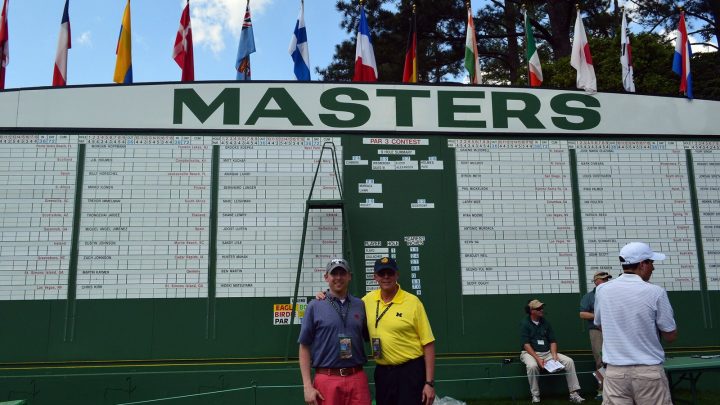
Every April, the golf season seems to begin in earnest at Augusta National Golf Club in Georgia. The Masters is the youngest of the four men’s major championships, yet it has built a set of traditions as rich as any event in sport: the green jacket, the Champions Dinner, the Par 3 Contest and the stretch of holes known as Amen Corner. It is also the only major played on the same course every year, which means its history is written on familiar ground.
This is the story of how the Masters began, how its traditions grew, and the records that define it, through the 2026 tournament.
Bobby Jones, Clifford Roberts and a new club
The Masters exists because of Bobby Jones, the greatest amateur golfer of his era. After an extraordinary competitive career, Jones retired from championship golf and set out to build his ideal course. He partnered with Clifford Roberts, an investment banker, to create a private club in Augusta, Georgia.
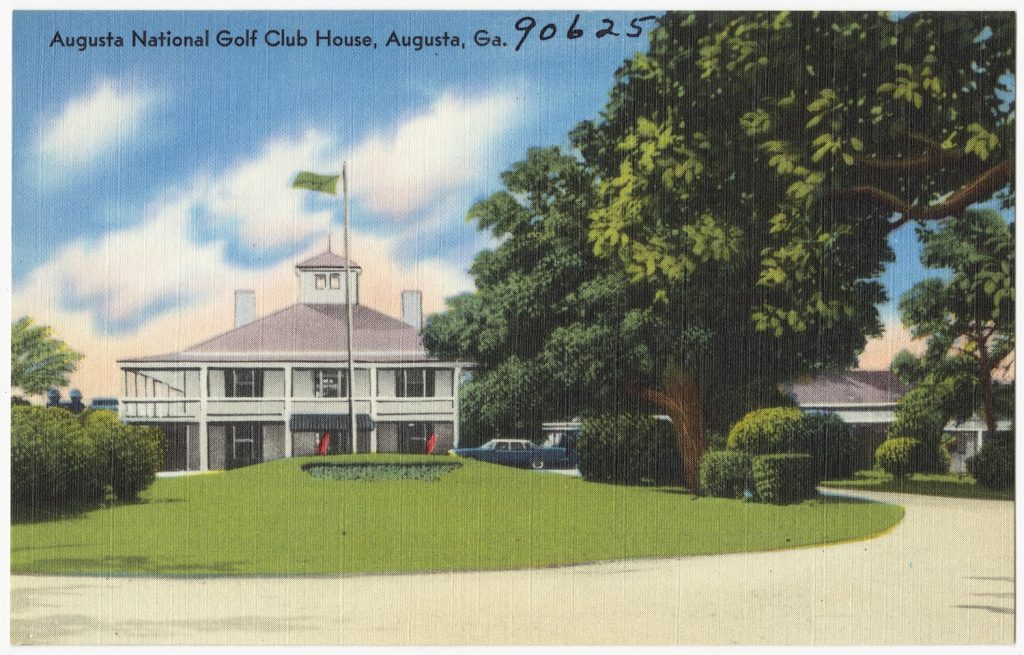
To design the course, Jones worked with the Scottish-born architect Alister MacKenzie. Work began in 1931, and the course formally opened in 1933. MacKenzie died before the first tournament was played and never saw his design host the event that made it famous.
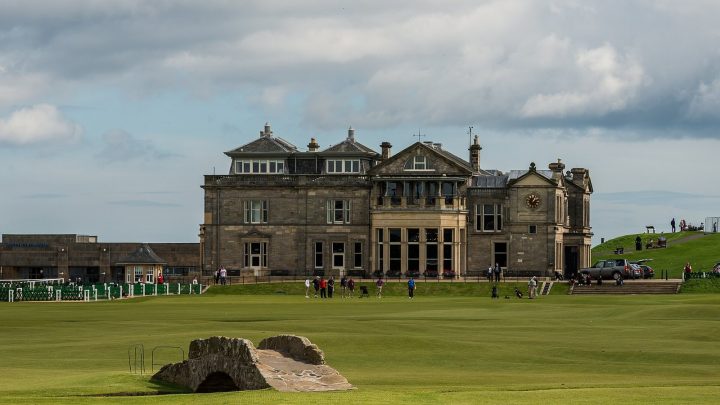
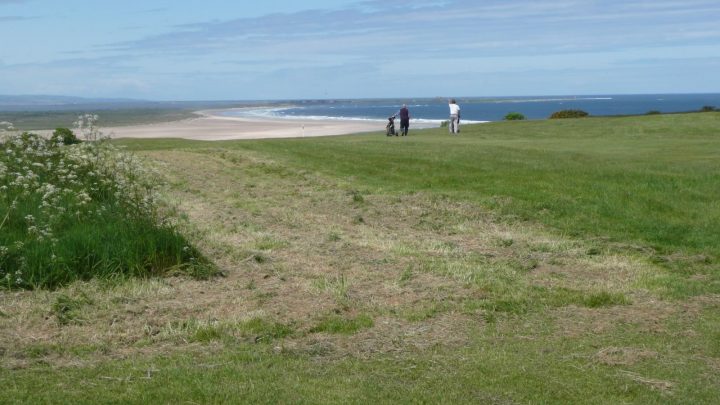
The design reflected ideas Jones admired from the links courses of Scotland: wide fairways, relatively little rough and greens with bold contours, so that strategy and the angle of approach mattered more than brute force. Over the decades the course has been lengthened and altered many times, but that strategic character remains.
The first tournament: 1934
The first event was held in 1934 under the name Augusta National Invitation Tournament. Horton Smith won and collected a first prize of $1,500. The name “Masters Tournament” was officially adopted in 1939.
The tournament’s profile soared early, thanks largely to one shot. In 1935, Gene Sarazen holed his second shot on the par-5 15th for a double eagle (albatross), a shot later known as “the shot heard ’round the world.” Three strokes gained on a single hole changed the tournament, and Sarazen went on to win a 36-hole playoff by five strokes.
The tournament was not held from 1943 to 1945 during the Second World War. It has otherwise been played every year, though in 2020 the COVID-19 pandemic pushed it to November 12–15, making it that season’s final major.
The green jacket
Members of Augusta National wear green jackets during the tournament. The tradition of presenting a green jacket to the champion began in 1949, when Sam Snead became the first winner to receive one. Earlier champions were later given jackets too.
The jacket ceremony, in which the previous year’s winner helps the new champion into the jacket, is one of the most recognizable images in golf. It has turned a simple club blazer into one of the most coveted prizes in sport.
Traditions that define the week
The Champions Dinner
On the Tuesday of tournament week, the defending champion hosts a dinner for past winners and chooses the menu. The tradition began in 1952, when it was hosted by defending champion Ben Hogan. Menus often reflect the host’s home country or personal tastes, and they have become a talking point each spring.
The Par 3 Contest
On the Wednesday, players compete on the club’s short par-3 course in a relaxed contest first held in 1960, when it was won by Sam Snead. Players often have family members caddie for them, and children in white caddie overalls have become part of the event’s charm. The contest is light-hearted, but there is a well-known superstition that no Par 3 Contest winner has gone on to win the Masters in the same week.
Lifetime invitations and amateurs
Masters champions receive a lifetime invitation to play, which is why former winners in their 60s and beyond can still be seen in the field. The Masters also gives special recognition to amateurs. A silver cup for the low amateur has been awarded since 1952, and several low amateurs, including Jack Nicklaus and Tiger Woods, later won the tournament as professionals.
Sudden-death playoffs
Early playoffs were played over 18 or even 36 holes. Sudden death was adopted in 1976 and first used in 1979, when Fuzzy Zoeller beat Ed Sneed and Tom Watson.
Amen Corner
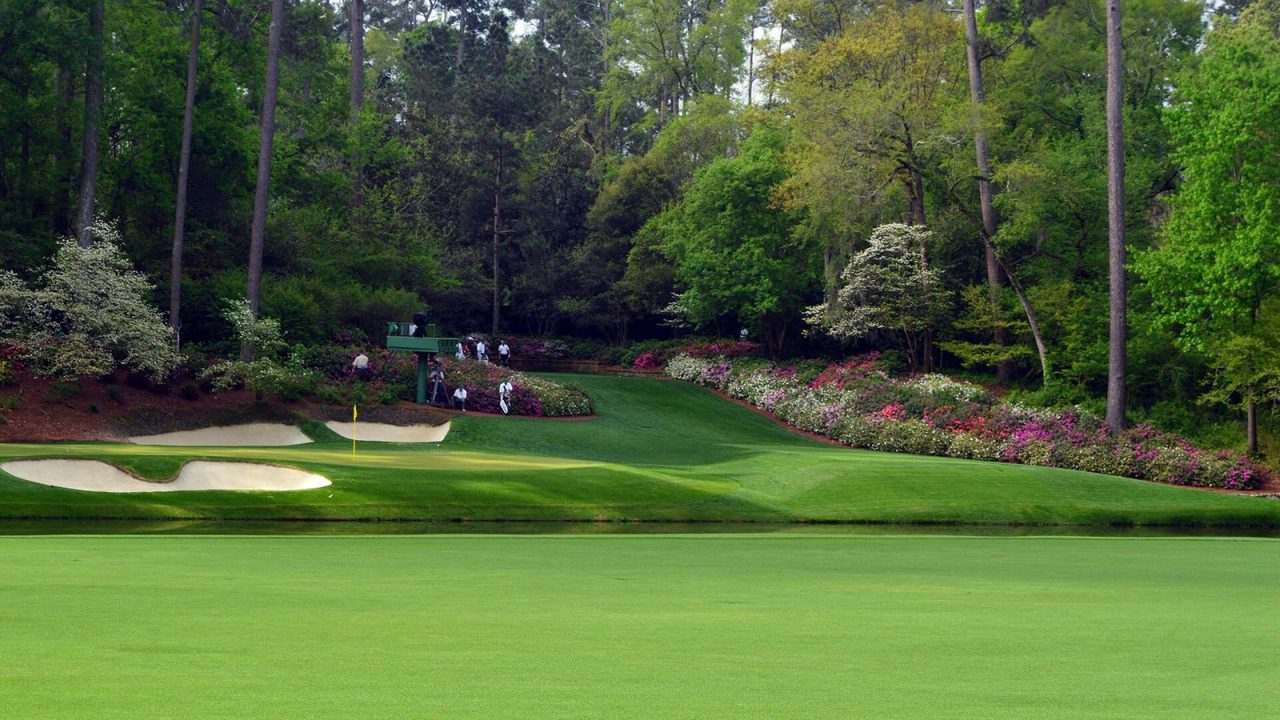
The most famous stretch of the course lies in its low southeastern corner, where Rae’s Creek winds past the 11th green, in front of the 12th green and near the 13th tee. The name “Amen Corner” was first used in print by Sports Illustrated writer Herbert Warren Wind, in his article on the 1958 Masters. Strictly, it describes the second shot at the 11th, all of the par-3 12th and the first two shots at the 13th.
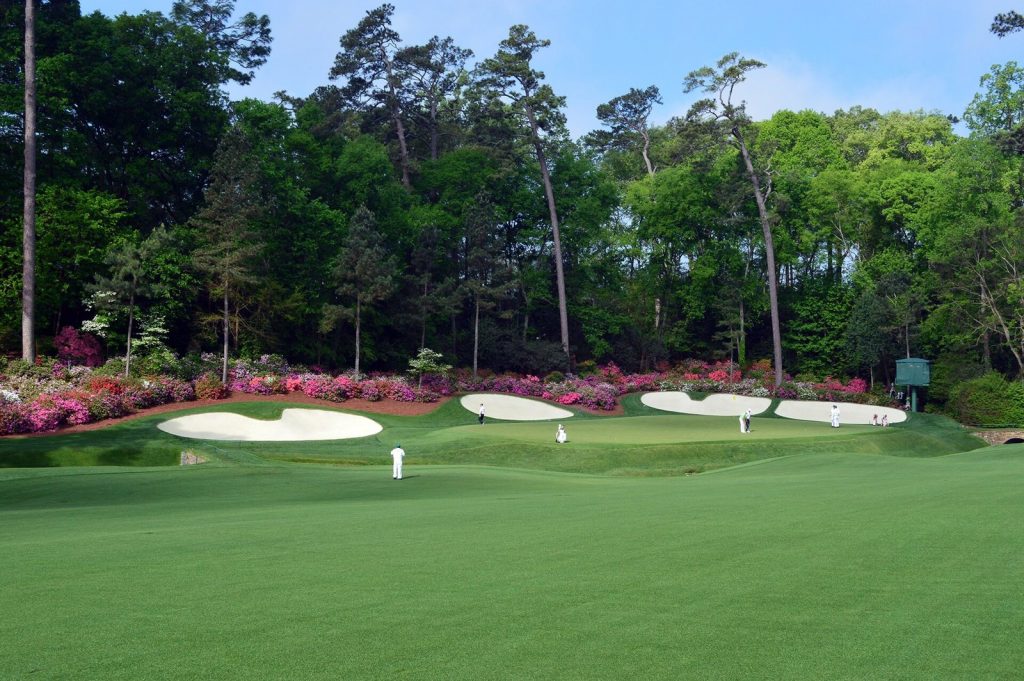
The par-3 12th, short but guarded by the creek and swirling winds, has decided many tournaments. Two stone bridges cross Rae’s Creek there: the Hogan Bridge after the 12th tee and the Nelson Bridge after the 13th tee, named for Ben Hogan and Byron Nelson.
Champions and milestones
Breaking barriers
For its first decades, the Masters was won only by Americans. Gary Player of South Africa became the first overseas winner in 1961. Seve Ballesteros of Spain followed with wins in 1980 and 1983, opening the door to a wave of European champions in the following years.
Arnold Palmer’s era
Arnold Palmer won four Masters, and his popularity, combined with the growth of televised golf, helped turn the event into a national spectacle. His enthusiastic galleries became known as “Arnie’s Army.”
Jack Nicklaus: six green jackets
Jack Nicklaus holds the record for most Masters titles with six, won between 1963 and 1986. His final win, in 1986 at age 46, made him the oldest Masters champion and is still remembered as one of the great final rounds in golf history, a back-nine charge that brought Augusta to its feet.
Tiger Woods: 1997 and beyond
Tiger Woods won his first Masters in 1997 at age 21, becoming the youngest champion, and did it by 12 strokes, the largest winning margin in the tournament’s history. He won five Masters in all, including back-to-back titles in 2001 and 2002 and a celebrated comeback victory in 2019.
Rory McIlroy’s breakthrough
After years of near misses at Augusta, Rory McIlroy won the 2025 Masters in a playoff over Justin Rose, completing the career Grand Slam of all four majors. He won again in 2026, by one stroke, becoming only the fourth player to win back-to-back Masters titles, after Nicklaus (1965–66), Nick Faldo (1989–90) and Woods (2001–02).
Records at a glance (through 2026)
| Record | Holder |
|---|---|
| Most wins | Jack Nicklaus, 6 |
| Next most | Tiger Woods, 5; Arnold Palmer, 4 |
| Oldest winner | Jack Nicklaus, 46 (1986) |
| Youngest winner | Tiger Woods, 21 (1997) |
| Largest winning margin | Tiger Woods, 12 strokes (1997) |
| Lowest 72-hole score | Dustin Johnson, 268 (2020) |
| Back-to-back winners | Nicklaus, Faldo, Woods, McIlroy |
| First winner | Horton Smith (1934) |
How Masters week unfolds
The history and traditions above come together in a week that follows a familiar pattern each April:
- Early in the week: practice rounds, with players learning or refreshing their knowledge of the greens, where most of Augusta’s difficulty lies.
- Tuesday evening: the Champions Dinner, hosted by the defending champion.
- Wednesday: the Par 3 Contest on the club’s short course, a relaxed afternoon before the real competition.
- Thursday and Friday: the first two rounds, after which the field is cut.
- Saturday and Sunday: the weekend rounds, with the leaders going out last. The back nine on Sunday, which runs through Amen Corner and the reachable par-5 13th and 15th, has produced many of the tournament’s most famous swings.
- Sunday evening: the green jacket ceremony.
Because the course is so familiar, Masters history has a geography. Sarazen’s 1935 albatross happened at the 15th; Amen Corner has hosted triumph and collapse in equal measure; and the 18th green, at the top of the hill, is where Nicklaus, Woods and McIlroy celebrated their wins.
A tournament shaped by its founders
Much of what makes the Masters distinctive traces back to the two men who created it. Jones gave the event its sporting ideals and his own prestige as the finest amateur of his time, which drew the best professionals to an invitational event from the start. Roberts, as the club’s long-time chairman, shaped how the tournament was run, presented and protected. Their shared vision explains why the Masters still feels like an invitation to a private club rather than a standard tour stop.
Why the Masters feels different
Several things set the Masters apart from the other majors, which are covered in our guide to the four men’s major championships:
- One course, every year. Viewers know the holes, and players accumulate experience at Augusta over decades.
- An invitational field. The Masters invites players through its own criteria, keeping the field smaller than other majors.
- Tradition and control. The club runs the event with a distinct style, from its broadcast arrangements to its terminology, such as calling spectators “patrons.”
- Timing. As the first major of the year, it sets the tone for the season.
The course itself has evolved continually, with tees moved back and holes reshaped as equipment and players changed. Yet the essence Jones and MacKenzie intended, a strategic course where the greens and the creek create drama, still defines the tournament nearly a century after the first tee shot in 1934.