Choosing a Driver: Loft, Head Size and Adjustability Explained
What driver specs really mean: loft and launch, the 460cc head limit, forgiveness and MOI, adjustable hosels and weights, and the 46-inch length rule.
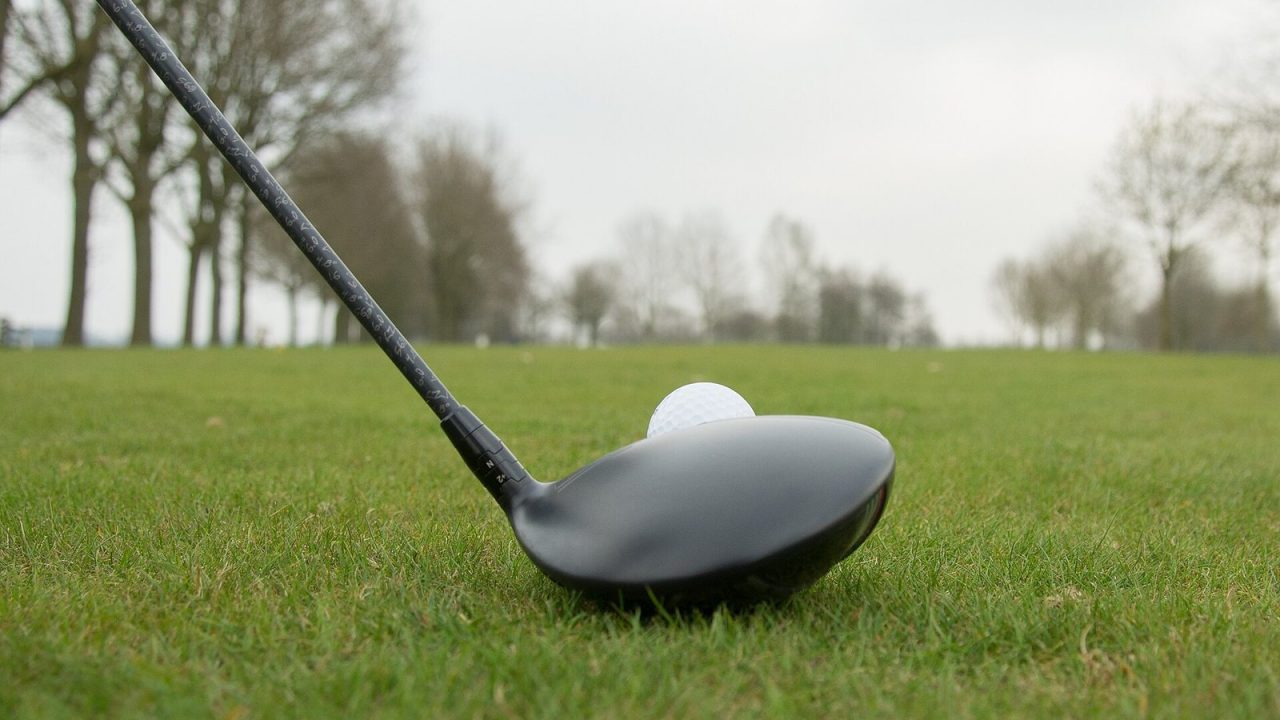
The driver is the most technologically advanced club in the bag and often the most expensive. It is also the club with the most confusing specifications. Lofts in fractions of a degree, adjustable hosels with letters and numbers, sliding weights, and shafts in a dozen weights and flexes can make choosing one feel like a science project.
This guide explains what the key driver specifications mean, how they affect ball flight, and what the Equipment Rules allow, so you can understand a fitting or a spec sheet with confidence. It does not rank models; the right driver is the one that suits your swing. For background on where the driver sits in a set, see our explainer on golf club types.
Loft: The Most Important Number
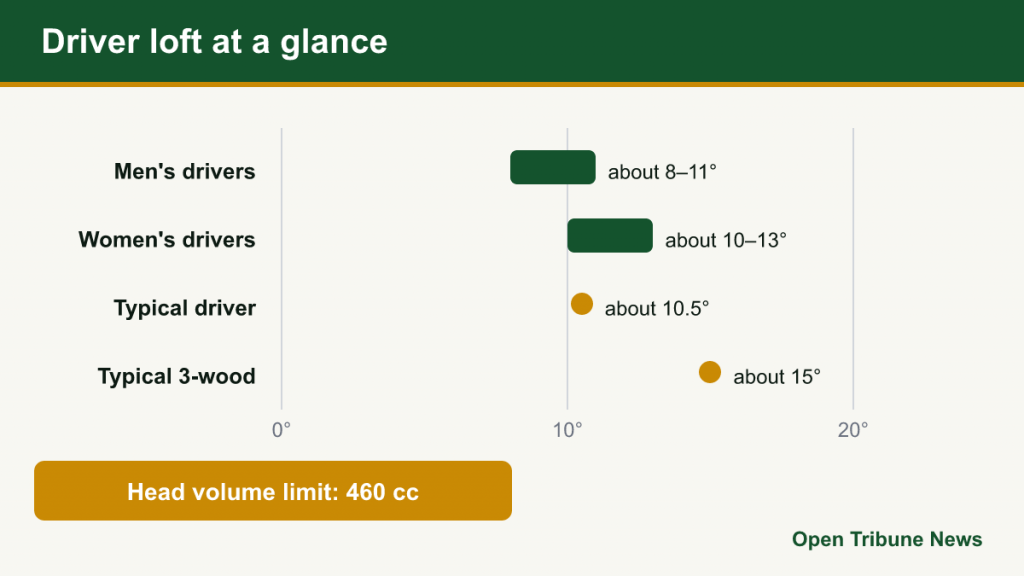
Loft is the angle of the clubface relative to vertical. On drivers it typically sits around 10.5 degrees, with men’s models commonly ranging from about 8 to 11 degrees and women’s from about 10 to 13 degrees. For comparison, a typical 3-wood has around 15 degrees.
Loft influences two things that matter enormously off the tee:
- Launch angle. More loft generally sends the ball off the face at a higher angle.
- Spin. More loft generally adds backspin. Some spin is essential to keep the ball in the air; too much makes it climb and lose distance, while too little makes it fall out of the sky early.
The ideal combination depends on swing speed and how you deliver the club. As a general principle, slower swingers usually benefit from more loft, because they need help getting the ball airborne and keeping it there. Faster swingers can often use less loft, though plenty of strong players use more loft than you might expect.
Loft also affects direction. Extra loft tends to reduce the effect of sidespin relative to backspin, so many golfers find a higher-lofted driver curves less. One of the most common mistakes amateurs make is choosing too little loft because that is what they see on television.
Bear in mind that the loft stamped on the club and the loft you deliver at impact are not the same thing. Your hands, shaft lean and angle of attack all change the effective loft, which is why launch monitor data is so valuable in a fitting.
Head Size: The 460cc Limit
Driver heads have grown enormously over the decades, from small wooden heads made of persimmon to today’s large titanium and composite heads. Bigger heads allow designers to spread weight around the perimeter, which makes the club more stable on off-center hits.
The governing bodies capped this growth in 2004. Under the Equipment Rules written jointly by The R&A and the USGA, the volume of a clubhead must not exceed 460 cubic centimeters, plus a small manufacturing tolerance. Most modern drivers aimed at the general market are built at or near this limit. Some players prefer slightly smaller heads, which can feel easier to work the ball with and may help players who like a lower or more penetrating flight, but for most golfers a full-size head offers the most forgiveness.
Center of Gravity and Forgiveness (MOI)
Two design concepts explain much of how a driver behaves:
Center of gravity (CG)
The CG is the balance point of the clubhead. Its location affects launch and spin:
- Low and back CG: higher launch, typically more spin and more stability. Good for players who need help getting the ball up.
- Low and forward CG: lower spin and a more penetrating flight, often favored by faster swingers who generate too much spin.
- Toward the heel: helps the face close, reducing a slice; many “draw-biased” drivers use this principle.
Moment of inertia (MOI)
MOI measures how much a clubhead resists twisting when it strikes the ball away from the center of the face. A high-MOI head loses less ball speed and direction on mishits, which is what manufacturers mean by “forgiveness.” Large heads with weight placed far from the center tend to have higher MOI. The Equipment Rules also set a maximum MOI for driver heads, so forgiveness cannot be increased without limit.
There is usually a trade-off: designs that minimize spin with forward weighting tend to be less forgiving than those with weight placed low and back.
The Face and the Spring-Like Effect
A thin, flexible driver face behaves a little like a trampoline, flexing at impact and returning energy to the ball. To prevent this “spring-like effect” from adding too much distance, the governing bodies limit it. The limit is often expressed through the coefficient of restitution (COR), capped at 0.830, and is tested on the face using a measurement called characteristic time. Faces are engineered to approach that limit at the center and to keep ball speed as high as possible on off-center hits.
Practically, this means no conforming driver can be dramatically “hotter” than another at the center of the face. Differences between models show up more in forgiveness, launch, spin and feel than in maximum ball speed.
Adjustable Hosels and Movable Weights
Adjustable drivers became widespread in the 2010s. Most current models include at least one of these features:
- Adjustable hosel. A sleeve connecting the shaft to the head can be rotated into different positions, changing loft (often by a degree or two either way), face angle and sometimes lie angle. Note that changing the loft through the hosel also tends to change the face angle at address: adding loft usually makes the face look more closed, reducing loft more open.
- Movable or interchangeable weights. Weights in tracks or ports let you shift the CG toward the heel (to fight a slice), the toe, or the front or back (to change spin).
- Interchangeable shafts. Because the hosel sleeve detaches, shafts can be swapped easily, which is a big advantage during fitting.
The Rules of Golf allow adjustable clubs, with one important limitation. Under Rule 4.1a, you must not make a stroke with a club whose playing characteristics you have deliberately changed during the round, whether by using an adjustable feature or by physically altering it. The penalty for making a stroke with such a club is disqualification. Make your adjustments on the range before your round, and leave them alone once you tee off.
Length: Why Longer Is Not Always Better
The Equipment Rules set an overall maximum club length of 48 inches. In practice, standard driver lengths on retail models have crept upward over the years, to around 45 inches or slightly more.
A longer shaft can increase clubhead speed, but it also makes it harder to find the center of the face. Because mishits cost far more distance than a little extra speed gains, many golfers hit a slightly shorter driver farther on average. Some tour players use drivers shorter than standard for that reason.
The 46-inch Model Local Rule
In 2021 The R&A and the USGA announced Model Local Rule G-10, available from January 1, 2022. It allows the organizers of professional and elite amateur competitions to limit the length of clubs, other than putters, to 46 inches. It is an optional Local Rule, not part of the Rules of Golf themselves, so it does not apply to recreational golf. The governing bodies described it as a targeted option for elite competition rather than an answer to the wider debate on distance.
Shafts: Weight, Flex and Feel
The shaft is often called the engine of the club, and in drivers it is almost always graphite, which is much lighter than steel; some driver shafts weigh under 50 grams. Key variables are:
- Weight: lighter shafts can help slower swingers gain speed; heavier shafts can help faster or more aggressive swingers control the club.
- Flex: ratings such as ladies, senior, regular, stiff and extra stiff, matched broadly to swing speed and tempo. Flex labels are not standardized between brands.
- Profile: where the shaft bends most (often called kick point or bend point) influences launch and feel.
For beginners choosing their first driver, our guide to building your first golf set covers sensible starting points.
How to Choose: A Practical Checklist
- Know your miss. If you slice, a draw-biased head, more loft and a heel-weighted setting can help. If you hook, look for a neutral or fade-biased setting.
- Prioritize forgiveness unless you consistently find the center of the face.
- Don’t fear loft. Higher loft often adds carry and accuracy for average swing speeds.
- Test with data. A launch monitor shows ball speed, launch angle and spin; the best driver for you produces good numbers on your average swing, not your best one.
- Check the shaft as well as the head. A great head with the wrong shaft will underperform.
- Set it and forget it. Find your preferred adjustable settings in practice, and do not change them during a round.
Common Driver Myths
- “Low loft means more distance.” Only for players who already launch the ball high with plenty of speed. For many golfers it means less carry.
- “A new driver will fix my slice.” It can reduce the curve, but an open clubface relative to the swing path is a technique issue best addressed with a coach.
- “Longer shafts always go farther.” Only if you still hit the center of the face.
- “Adjustability is a gimmick.” Used properly, it is a fitting tool that lets one head suit a range of players.