The Open Championship: History, the Claret Jug and the Rota
Golf's oldest major, from Prestwick in 1860 and the Challenge Belt to the Claret Jug, the links rota of host courses and Harry Vardon's record six wins.
Of the four men’s majors, only one can call itself simply “The Open.” First played in 1860, it is the oldest of the majors and the only one played outside the United States, always on a links course in the United Kingdom. It is where golf’s history feels closest: the same stretches of coastal turf, the same exposure to wind and weather, and a trophy whose engraved names run back to the 1870s.
This article traces the championship from a one-day event for eight professionals at Prestwick to the global event staged by The R&A today, explaining the Challenge Belt, the Claret Jug, the rota of host courses and the players who shaped its story. For how The Open fits alongside the other three majors, see our guide to the major championships.
Prestwick, 1860: The First Open
By the mid-19th century, golf in Scotland had a small but growing class of professionals: men who made clubs and balls, caddied, and played money matches for wealthy patrons. When the leading professional of the era, Allan Robertson of St Andrews, died in 1859, the question of who was now the best player had no obvious answer.
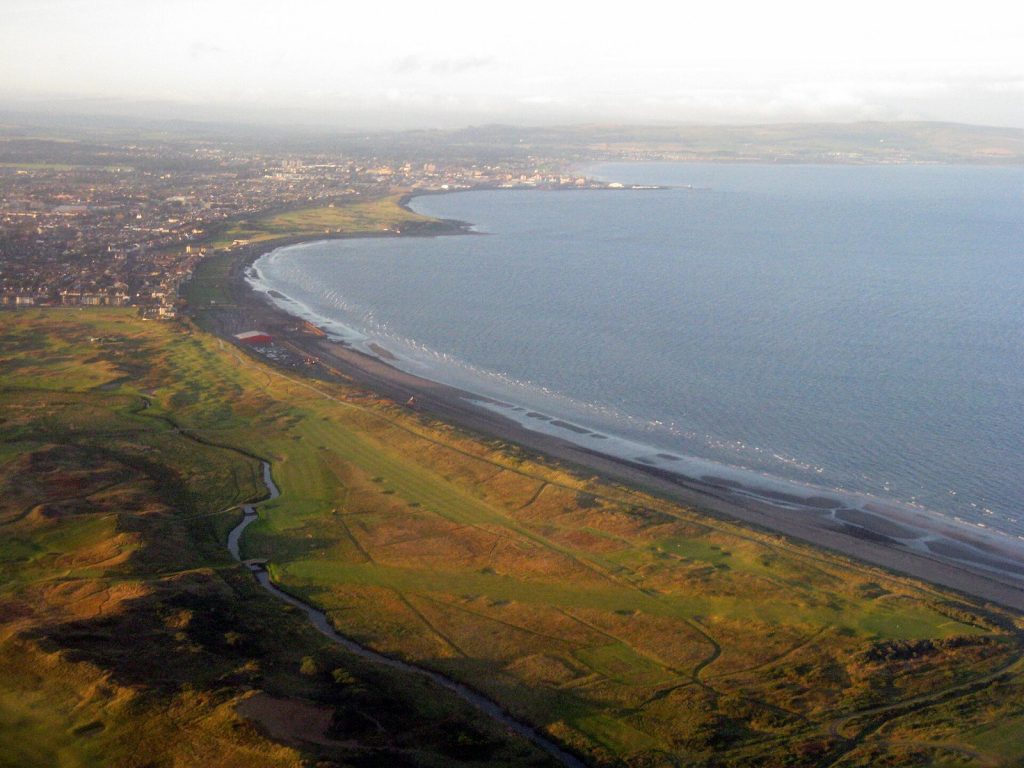
Prestwick Golf Club, on the Ayrshire coast, organized a competition to settle it. On 17 October 1860, eight professionals played three rounds of Prestwick’s 12-hole course in a single day. Willie Park Sr. of Musselburgh won and received the prize: the Challenge Belt.
The following year, 1861, the event was opened to amateurs as well as professionals, and it has been known as the Open ever since.
From the Challenge Belt to the Claret Jug
The rules of the Challenge Belt stated that any player who won it three times in a row would keep it. In 1868, 1869 and 1870, a teenage prodigy, Young Tom Morris, son of the champion Old Tom Morris, did exactly that, and the belt became his property.
That left the championship without a trophy, and in 1871 no Open was held at all. In 1872 a new prize was agreed: a silver claret jug. Young Tom Morris won again in 1872, but the jug was not ready in time. The Claret Jug has been presented to the champion since 1873, and Young Tom’s name, as the 1872 winner, is the first engraved on it.
More than 150 years later, the Claret Jug is one of the most recognizable trophies in sport, and the names engraved on it form a continuous record of the game’s greatest players.
Who Runs The Open
The championship has been run by The R&A for well over a century. Originally the Royal and Ancient Golf Club of St Andrews took on the role; since 2004 the governing and championship functions have belonged to a separate organization, The R&A, which also writes the Rules of Golf with the USGA. For more on how St Andrews came to hold that position, see the origins of golf.
The Open is played in July, the last of the four men’s majors in the calendar. It uses the standard major format: 72 holes of stroke play over four days, with a 36-hole cut to the top 70 and ties. If players are tied after 72 holes, The Open uses a four-hole aggregate playoff rather than sudden death.
The Rota: Links Courses Only
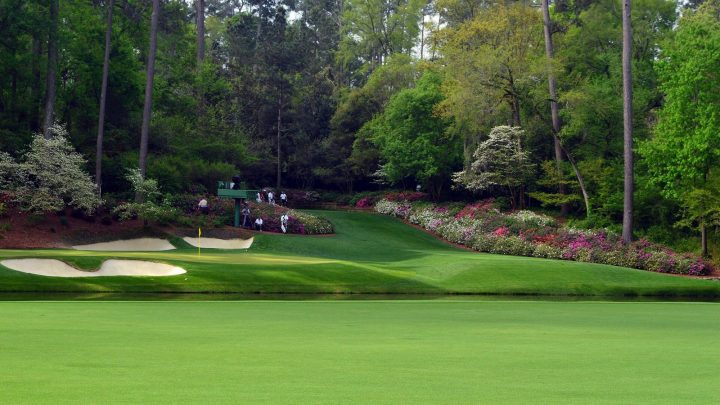
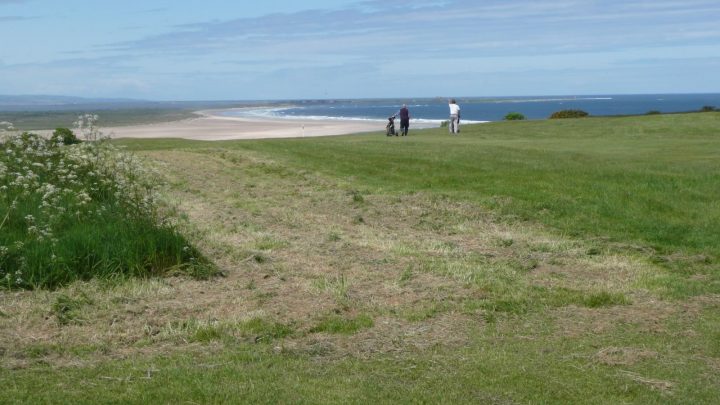
Unlike the Masters, which is always played at Augusta National, The Open moves among a small group of links courses known as the rota. Links golf is played on sandy coastal land with firm, fast turf, deep pot bunkers and constant exposure to wind, and it rewards low, controlled shots and creativity on the ground as much as power through the air.
The current rota is made up of ten courses:
| Course | Location |
|---|---|
| The Old Course, St Andrews | Fife, Scotland |
| Muirfield | East Lothian, Scotland |
| Carnoustie | Angus, Scotland |
| Royal Troon | Ayrshire, Scotland |
| Turnberry | Ayrshire, Scotland |
| Royal St George’s | Kent, England |
| Royal Liverpool | Merseyside, England |
| Royal Lytham & St Annes | Lancashire, England |
| Royal Birkdale | Merseyside, England |
| Royal Portrush | County Antrim, Northern Ireland |
Turnberry remains on the list, but The R&A said in 2021 that it would not stage the championship there in the foreseeable future. Royal Portrush returned to the rota in 2019, when Shane Lowry won, and again in 2025, when Scottie Scheffler won the 153rd Open with a score of 267 (17 under par), four strokes ahead of Harris English. The 2026 championship, the 154th, was played at Royal Birkdale, where Ryan Fox of New Zealand won with a total of 270, ten under par.
Prestwick, the original host, staged the championship many times in its early decades but is no longer on the rota; modern crowds, infrastructure and course length have narrowed the list to venues that can handle a modern major.
St Andrews: The Spiritual Home
The Old Course holds a special place in the rotation. The 150th Open was staged there in July 2022 and won by Cameron Smith of Australia with 268, 20 under par, one stroke ahead of Cameron Young. Smith’s final-round 64 was the lowest closing score by a champion at St Andrews.
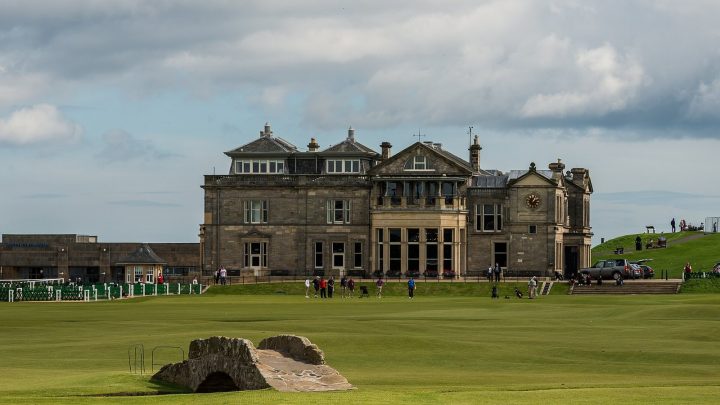
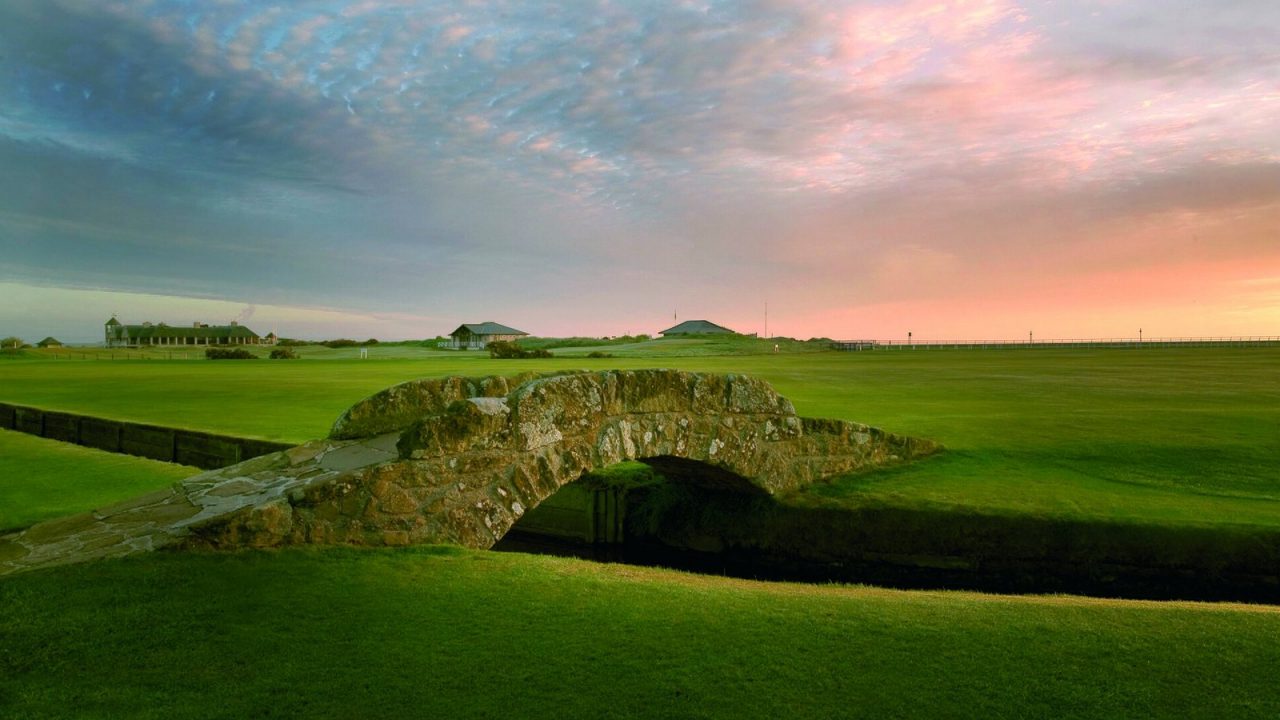
The Old Course’s features, such as the shared double greens, the Swilcan Bridge on the 18th and the Road Hole 17th, are among the most recognizable sights in the sport, and a win at St Andrews is regarded by many players as the pinnacle of a career.
Legends and Records
Harry Vardon and the Great Triumvirate
The record for most Open wins belongs to Harry Vardon of Jersey, who won six times between the 1890s and 1914. Vardon, along with James Braid and J.H. Taylor, formed the “Great Triumvirate” that dominated the game around the turn of the 20th century, and their rivalry helped popularize golf far beyond Scotland. Vardon also won the 1900 U.S. Open, toured North America to great acclaim, and popularized the overlapping grip that still carries his name.
Bobby Jones
The great American amateur won The Open three times, part of a career that culminated in his 1930 Grand Slam. His success, along with that of Walter Hagen and others, began a long period of strong American participation and success.
Scoring records
The lowest 72-hole total in Open history is 264 (20 under par), set by Henrik Stenson at Royal Troon in 2016. Stenson closed with a record final-round 63 to finish three shots clear of Phil Mickelson and became the first Scandinavian man to win a major. Cameron Smith matched the 20-under-par mark at St Andrews in 2022.
Interruptions
The championship has been interrupted only by war and, most recently, by the COVID-19 pandemic. No Opens were played during the First World War, with the event resuming in 1920, and it was cancelled in 2020, the first cancellation since the Second World War.
Memorable Opens Across the Eras
A championship this old has produced more than its share of famous weeks. A few stand out for what they say about the event:
- The age extremes, 1867 and 1868. Old Tom Morris won in 1867 aged 46 years and 102 days, still the oldest champion. A year later his son, Young Tom, won aged 17 years and 156 days, still the youngest.
- Turnberry, 1977. Tom Watson won with 268, 12 under par, one stroke ahead of Jack Nicklaus. Their battle, often called the “Duel in the Sun,” became one of the most celebrated head-to-head finishes in major history. Watson went on to join Peter Thomson as a five-time champion, one short of Vardon’s record.
- Carnoustie, 1999. Paul Lawrie won a playoff over Justin Leonard and Jean van de Velde with a 72-hole total of 290, six over par, a reminder of how severe a links can play in the wind.
- St Andrews, 2000. Tiger Woods won by eight strokes at 19 under par. He won again at St Andrews in 2005, leading from start to finish, and at Royal Liverpool in 2006.
- Turnberry, 2009. More than three decades after his first win there, Tom Watson reached a playoff at 59 years old, eventually losing to Stewart Cink.
Vardon’s six titles came in 1896, 1898, 1899, 1903, 1911 and 1914, a span of nearly two decades that reflects how long the great champions of the early era stayed competitive on links courses.
What Makes The Open Different
- Weather and draw. Because links courses are so exposed, conditions can change dramatically between the morning and afternoon waves, and a player’s tee time can matter as much as his form.
- The ground game. Firm turf means the ball can run a long way after landing. Players often use putters from off the green and play bump-and-run shots that would be unusual elsewhere.
- Pot bunkers. Small, deep, steep-faced bunkers can cost a full shot or more; sometimes the only escape is sideways or backward.
- A global field. As an “Open,” it offers routes into the field through qualifying, and exemptions draw leading players from tours around the world.
For viewers, that makes The Open unusually unpredictable. A tip for following it: check the weather forecast alongside the tee sheet. When a front moves through mid-afternoon, the players who teed off in the morning may have enjoyed a far easier course, and leaderboards can be shaped as much by timing as by talent over the first two days. Watch, too, how players attack the par 5s and short par 4s downwind and simply try to survive the holes into the wind; on a links, par is a moving target, and a round of even par in a gale can be worth more than a 66 on a calm morning.
If the Masters is golf’s springtime garden party, as our history of the Masters describes, The Open is its wind-swept test of craft: older, rougher around the edges and, for many, the purest championship of all.