Jack Nicklaus and the Record 18 Majors
Jack Nicklaus's career in context: amateur titles, the 1962 U.S. Open playoff over Palmer, all 18 majors, 19 runner-ups, the 1986 Masters and his design legacy.
For decades, one number has defined greatness in men’s golf: 18. That is how many professional major championships Jack Nicklaus won between 1962 and 1986, still the record. But the total alone undersells his career. Nicklaus was also runner-up in majors 19 times, contended for a quarter of a century, won his last major at 46, and then built a second career shaping hundreds of golf courses around the world.
This article traces the career of “the Golden Bear,” from amateur prodigy to elder statesman, with a full breakdown of the 18 titles.
An Amateur Prodigy
Jack William Nicklaus was born on January 21, 1940, in Columbus, Ohio. He developed quickly as a junior golfer and became one of the finest amateurs of his era, winning the U.S. Amateur twice, in 1959 and 1961. His 1959 victory came when he beat the defending champion, Charles Coe, 1 up with a birdie on the final hole. That same year he won both of his matches for the United States in the Walker Cup. At Ohio State University he won the 1961 NCAA individual title, becoming the first player to win the NCAA title and the U.S. Amateur in the same year.
His most striking amateur performance came in a professional major. At the 1960 U.S. Open, still an amateur, he finished second, two strokes behind Arnold Palmer, with a total of 282. It was an early sign that the sport’s next great champion had arrived, and that his rivalry with Palmer would shape the decade.
Nicklaus turned professional in late 1961.
1962: Beating Palmer at Oakmont
Nicklaus’s first professional win came at the biggest possible stage. At the 1962 U.S. Open at Oakmont Country Club near Pittsburgh, Pennsylvania, he tied Arnold Palmer after 72 holes. Oakmont, in western Pennsylvania, was Palmer country, and much of the crowd was on his side. In the 18-hole playoff, Nicklaus shot 71 to Palmer’s 74 and won by three strokes.
The victory established Nicklaus as Palmer’s rival rather than his understudy, and it set the tone for a career built on composure, course management and an ability to perform when the pressure was greatest. With Gary Player, Palmer and Nicklaus would come to be known as golf’s “Big Three.”
The 18 Majors, Year by Year
| Championship | Wins | Years |
|---|---|---|
| Masters | 6 | 1963, 1965, 1966, 1972, 1975, 1986 |
| PGA Championship | 5 | 1963, 1971, 1973, 1975, 1980 |
| U.S. Open | 4 | 1962, 1967, 1972, 1980 |
| The Open | 3 | 1966, 1970, 1978 |
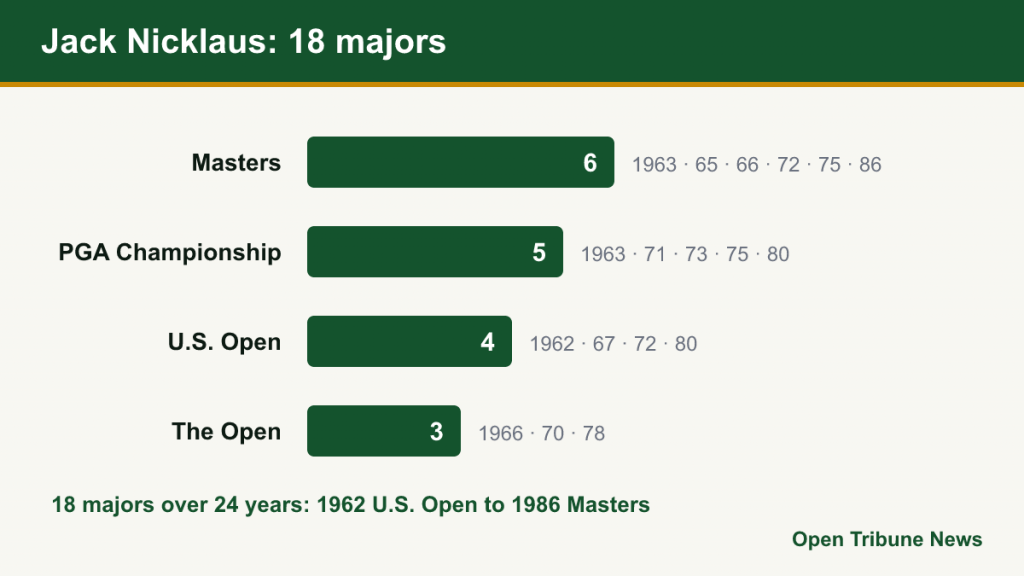
A few patterns stand out:
- Longevity. His majors span 24 years, from the 1962 U.S. Open to the 1986 Masters.
- Balance. He won every major at least three times. He completed the career Grand Slam at the 1966 Open at Muirfield, then won each major a second time by 1971 and a third time by 1978, achieving what is often called the triple career Grand Slam.
- Augusta. Six Masters titles remain the tournament record. Our history of the Masters places those wins in the tournament’s wider story.
- The big years. 1963, 1966, 1972, 1975 and 1980 each brought two major titles.
Signature Victories
Several of the 18 wins stand out for what they revealed about Nicklaus’s game:
- 1963 Masters. In only his second year as a professional, he became the youngest Masters champion at that time.
- 1965 Masters. He set a 72-hole tournament record of 271, breaking Ben Hogan’s 274 from 1953, and won by nine strokes over Arnold Palmer and Gary Player. His third-round 64 contained eight birdies and no bogeys. Bobby Jones, Augusta’s co-founder, called it “the greatest performance in all of golfing history.”
- 1966 Masters. He became the first player to win back-to-back Masters titles, beating Gay Brewer and Tommy Jacobs in an 18-hole playoff.
- 1967 U.S. Open. At Baltusrol he set a U.S. Open scoring record of 275, closing with a 65 to finish four strokes clear of Palmer.
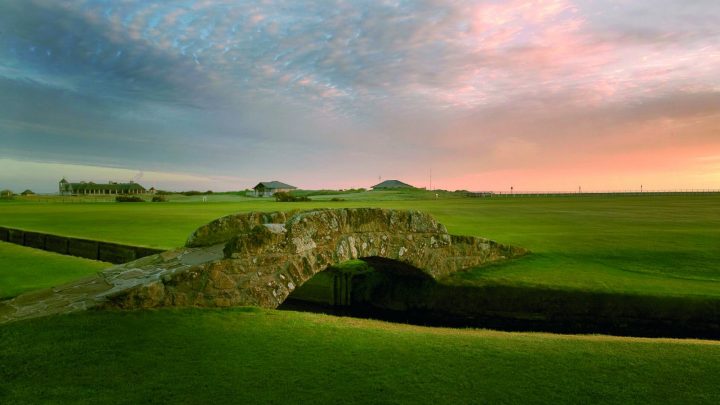
- 1970 Open. At St Andrews he beat Doug Sanders in an 18-hole playoff, a win made emotional by the death of his father earlier that year.
- 1972 U.S. Open. At Pebble Beach, on the 17th hole of the final round, his 1-iron tee shot struck the flagstick and finished inches from the hole. The win was his 13th major, matching Bobby Jones’s total.
- 1975 Masters. A long birdie putt on the 16th in the final round helped him hold off Tom Weiskopf and Johnny Miller for a record fifth green jacket.
- 1978 Open. Victory at St Andrews completed his third career Grand Slam, making him the only player to win each of the majors three times.
- 1980, two majors. At Baltusrol he lowered the U.S. Open record to 272, opening with a 63 and beating Isao Aoki by two. At Oak Hill he won the PGA Championship by seven strokes and was the only player to finish under par over 72 holes.
He also lost some memorable battles. At Turnberry in 1977 he shot 65 and 66 over the final two rounds and still lost The Open to Tom Watson, who finished 65, 65, in the famous “Duel in the Sun.” Nicklaus later called it the most thrilling one-on-one battle of his career.
His consistency was recognized off the course as well: he was named PGA Player of the Year five times, in 1967, 1972, 1973, 1975 and 1976.
Nineteen Runner-Ups: The Hidden Record
Many historians argue that Nicklaus’s second-place finishes are almost as impressive as his wins. He finished runner-up in majors 19 times, counting the 1960 U.S. Open he played as an amateur: four times at the Masters, four at the U.S. Open, seven at The Open and four at the PGA Championship.
Combine 18 wins and 19 seconds and you have 37 finishes in the top two of a major. Over two decades, Nicklaus was not just occasionally in contention; he was the standard against which everyone else in the biggest events was measured. His seven runner-up finishes at The Open, combined with three wins, reflect how well his game suited links golf. For more on that championship, see our history of The Open.
The 1986 Masters: Winning at 46
By the mid-1980s many observers thought Nicklaus’s major-winning days were over. He had not won a major since 1980. At the 1986 Masters, played April 10–13, he began the final round chasing the leaders.
What followed is one of the most famous back nines in golf. Nicklaus shot 30 on the inward nine at Augusta for a final-round 65 (seven under par). He made an eagle at the par-5 15th, a birdie at the 16th, and took sole possession of the lead with a birdie at the 17th before two-putting the 18th for par. His total of 279 (nine under) left him one stroke ahead of Tom Kite and Greg Norman. Seve Ballesteros, who had led at one stage, found the water with his approach at the 15th, and Norman’s bogey on the final hole ended his challenge.
At 46, Nicklaus became the oldest winner of the Masters. It was his sixth green jacket and 18th professional major.
Beyond the Majors
Tour wins
Nicklaus won 73 PGA Tour events, third on the all-time list, and 117 professional tournaments worldwide. After turning 50 he won 10 times on the Senior PGA Tour (now PGA Tour Champions), including eight senior major championships, among them the U.S. Senior Open in 1991 and 1993 and four titles at The Tradition. He said farewell to the Masters and to The Open in 2005, playing his final Open at St Andrews.
The 1969 Ryder Cup concession
One of the most celebrated acts of sportsmanship in golf came at the 1969 Ryder Cup. In the final singles match against Tony Jacklin, with the overall contest on the line, Nicklaus conceded Jacklin’s short par putt on the last hole. The match was halved, and the Ryder Cup ended in a tie. See our Ryder Cup explainer for how the event works.
Honors
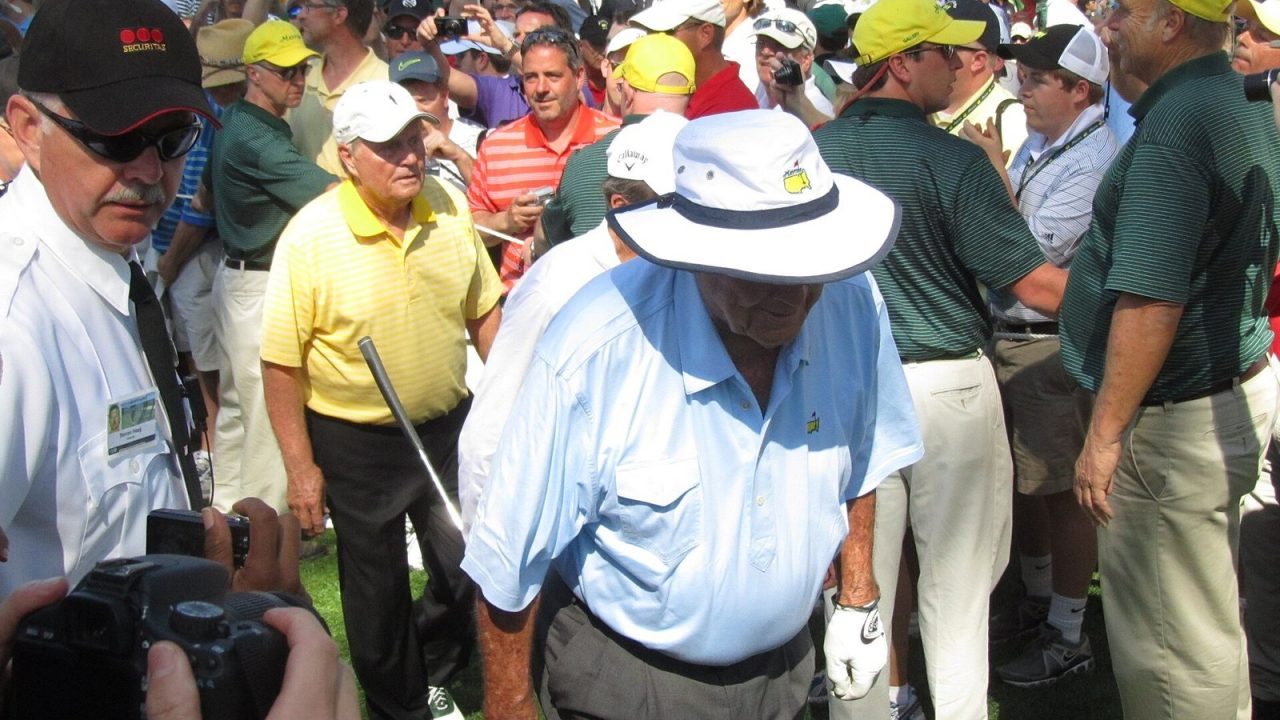
Nicklaus received the Presidential Medal of Freedom in 2005 and the Congressional Gold Medal in 2015. Since 2010 he has been an honorary starter at the Masters, first alongside Arnold Palmer and later also with Gary Player, reuniting the Big Three on the first tee at Augusta.
The Course Design Legacy
Nicklaus’s influence extends far beyond his playing career. His company, Nicklaus Design, became one of the most prolific golf course design businesses in the world; by the end of 2005 it had 299 courses open for play, close to 1 percent of the world’s courses at the time.
The most personal of his designs is Muirfield Village Golf Club in central Ohio, near his hometown of Columbus. The course opened in 1974 and shares its name with Muirfield in Scotland, where Nicklaus won his first Open in 1966. Two years later he founded the Memorial Tournament, first played at Muirfield Village in 1976, which succeeded the Columbus Pro-Am (1966–1975) and grew into one of the PGA Tour’s most prestigious events. Nicklaus won his own tournament in 1977. The Memorial is today one of the PGA Tour’s player-hosted Signature Events.
Why 18 Still Matters
Every era since has measured its best player against Nicklaus. The question “can anyone catch Jack?” framed much of the coverage of Tiger Woods’s career, which reached 15 majors. Comparisons across eras are always imperfect: fields are deeper now, equipment and course conditions have changed, and players travel and train differently. But the combination of winning, contending and lasting that Nicklaus produced remains unique.
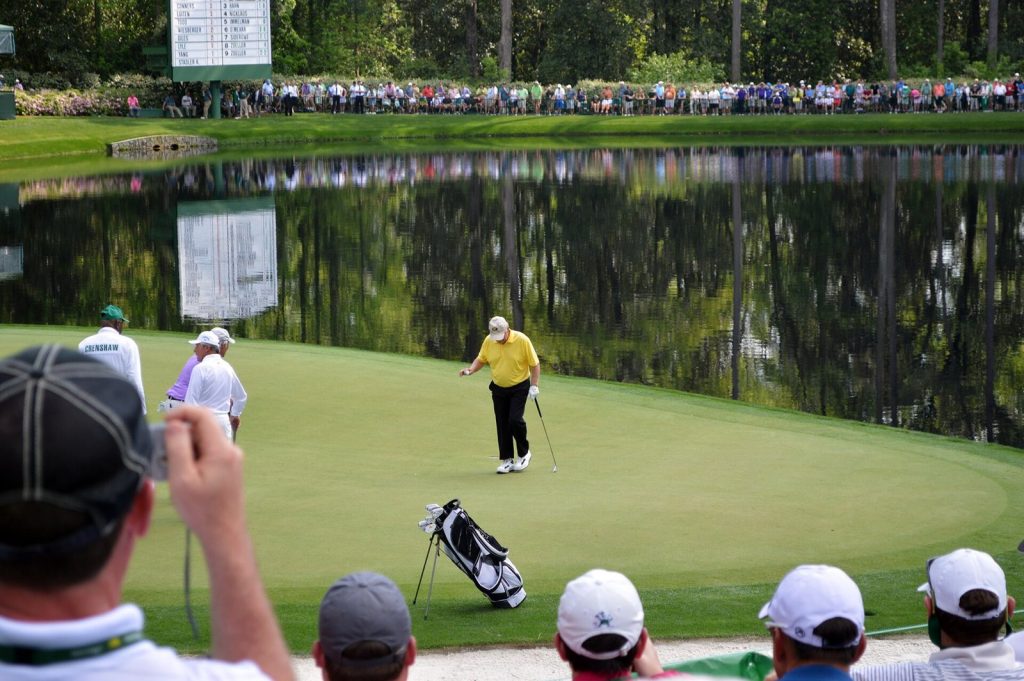
Perhaps the best summary of his career is the simplest: for 25 years, whenever a major championship was decided, Jack Nicklaus was very often one of the players deciding it.