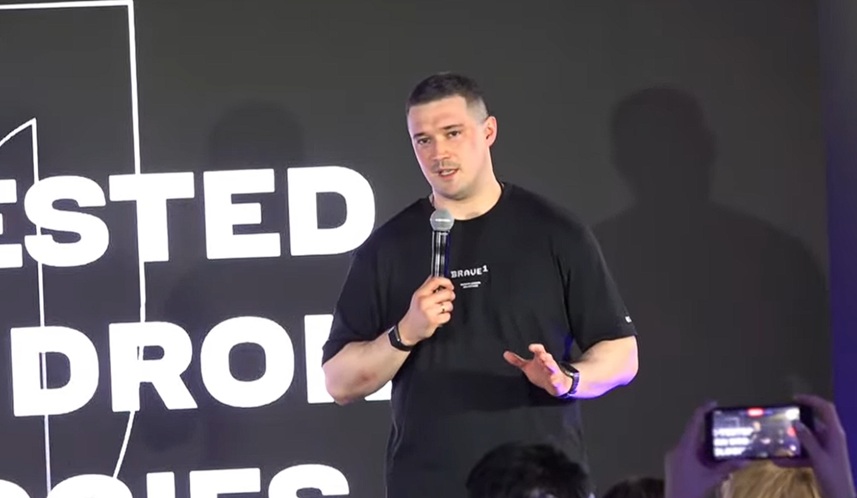
Former Ukrainian Deputy Prime Minister and Minister of Digital Transformation Mykhailo Fedorov has publicly disclosed details of a private conversation with President Volodymyr Zelensky, revealing that he was offered an advisory position which he ultimately turned down. The revelation comes amid ongoing discussions about governmental restructuring and the roles of key figures in Ukraine’s wartime administration. Fedorov, who became one of the youngest ministers in Ukrainian history when he joined the government, has been a central figure in Ukraine’s digital revolution and technological advancement during one of the most challenging periods in the nation’s history.
The 34-year-old former minister, who served in the Ukrainian government since 2019, explained that President Zelensky approached him with the proposal to continue his service in a different capacity. However, Fedorov made the decision to decline the offer, choosing instead to pursue other opportunities outside the immediate governmental structure. This decision marks a significant moment in Ukrainian politics, as Fedorov was widely regarded as one of the most effective and innovative members of the cabinet, particularly in leveraging technology for both civilian and defense purposes.
Fedorov’s Legacy in Digital Transformation
Mykhailo Fedorov’s tenure as Minister of Digital Transformation was marked by unprecedented achievements in modernizing Ukraine’s governmental services and digital infrastructure. Under his leadership, Ukraine launched the Diia application, a groundbreaking digital platform that allows citizens to access over 120 government services through their smartphones. The app became a model for digital governance worldwide, with several countries expressing interest in adopting similar systems. During the full-scale Russian invasion that began in February 2022, Fedorov pivoted quickly to use his technological expertise for defense purposes, famously appealing to tech companies globally via social media to support Ukraine and establishing what became known as the “IT Army of Ukraine.”
His ministry also oversaw the implementation of digital passports, driver’s licenses, and other identification documents that became legally equivalent to their physical counterparts. This digital transformation proved crucial during the war, allowing displaced Ukrainians to access essential services even when separated from their physical documents. The success of these initiatives earned Fedorov international recognition and established Ukraine as a leader in e-governance, despite the ongoing military conflict.
Political Context and Government Dynamics
The offer of an advisory role and subsequent refusal must be understood within the broader context of Ukrainian governmental dynamics during wartime. President Zelensky has made several cabinet changes since the beginning of the full-scale invasion, seeking to optimize government performance under extraordinary circumstances. Advisory positions in the Ukrainian presidential administration carry significant influence but differ substantially from ministerial roles in terms of direct executive authority and public accountability. Such positions typically involve providing expert consultation on specific policy areas without the day-to-day responsibilities of running a ministry.
Fedorov’s decision to decline suggests a desire either to take a break from government service or to pursue opportunities that he believes might be more impactful outside the traditional governmental framework. Given his background as a successful entrepreneur and his extensive network in the global tech community, there is speculation that he may be considering ventures in the private sector or international organizations focused on digital development and post-war reconstruction efforts.
Future Implications and Expert Analysis
The departure of such a prominent figure from active government service raises questions about talent retention in Ukrainian politics and the challenges of maintaining innovative leadership during prolonged conflict. Political analysts note that Fedorov represents a new generation of Ukrainian leaders who bring private sector efficiency and technological innovation to government. His choice to step away, even from an advisory capacity, may indicate personal considerations or a strategic decision to contribute to Ukraine’s development through alternative channels. Whatever his next steps may be, Fedorov’s impact on Ukrainian digital infrastructure and his role in mobilizing international tech support during the war will remain significant chapters in the country’s modern history.
Expert Opinion: Fedorov’s refusal of the advisory position likely signals his intention to leverage his international reputation and technological expertise in ways that transcend traditional government roles. Given Ukraine’s eventual reconstruction needs, estimated at over $400 billion, figures like Fedorov may prove more valuable operating at the intersection of private enterprise, international investment, and governmental coordination rather than within formal administrative structures.