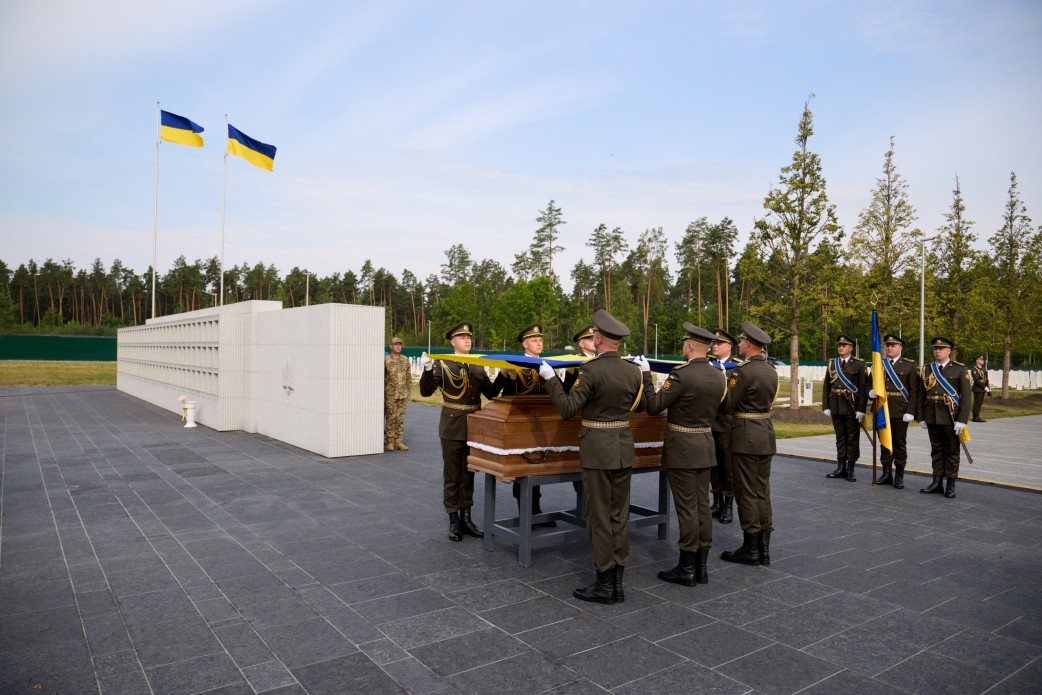
In a solemn ceremony that drew significant attention both domestically and internationally, Ukraine has reinterred the remains of Yevhen Konovalets, the founding leader of the Organization of Ukrainian Nationalists (OUN), at the National Military Memorial Cemetery. The reburial marks a significant moment in Ukraine’s ongoing efforts to honor historical figures associated with the country’s struggle for independence, particularly as the nation continues to fight for its sovereignty in the face of Russian aggression.
The ceremony was attended by government officials, military personnel, and members of the public who gathered to pay their respects to one of the most controversial yet influential figures in Ukrainian nationalist history. The event included military honors, religious rites, and speeches commemorating Konovalets’s role in the early twentieth-century Ukrainian independence movement.
Who Was Yevhen Konovalets?
Yevhen Konovalets was born in 1891 in what was then the Austro-Hungarian Empire, in a region that is now part of western Ukraine. He emerged as a military and political leader during the tumultuous period following World War I, when various Ukrainian factions sought to establish an independent state amid the collapse of empires and the rise of Soviet power. Konovalets commanded the Sich Riflemen, a Ukrainian military unit that fought for independence during the Ukrainian-Soviet War of 1917-1921.
After the failure of the initial independence struggle, Konovalets went into exile and became instrumental in founding the Organization of Ukrainian Nationalists in 1929 in Vienna. The OUN was established to continue the fight for Ukrainian independence through various means, including political activism and, at times, violent resistance. Konovalets served as the organization’s first leader, working to unite various Ukrainian nationalist factions under a single umbrella.
Assassination and Historical Legacy
Konovalets’s life was cut short in 1938 when he was assassinated in Rotterdam, Netherlands, by a Soviet NKVD agent named Pavel Sudoplatov. The Soviet operative reportedly used a bomb disguised as a box of chocolates to kill the Ukrainian nationalist leader. His death was part of a broader Soviet campaign to eliminate leaders of anti-Soviet movements abroad. For decades, Konovalets’s remains were buried in Rotterdam, far from his homeland.
The decision to repatriate and reinter his remains comes at a time when Ukraine is actively reassessing its historical narrative and honoring figures who fought against Soviet domination. The move has drawn both praise from those who view Konovalets as a freedom fighter and criticism from others who point to the OUN’s controversial wartime activities, including alleged collaboration with Nazi Germany during World War II and involvement in ethnic violence. Historians continue to debate the organization’s complex legacy, with perspectives varying significantly depending on national and political viewpoints.
Contemporary Significance and National Identity
The reburial ceremony takes on added significance in the context of Ukraine’s current struggle against Russian invasion. Since 2022, Ukraine has emphasized its distinct national identity and historical resistance to Russian and Soviet imperialism. Government officials have framed the reinterment as part of a broader effort to honor those who dedicated their lives to Ukrainian independence, regardless of the complicated historical circumstances they faced.
The National Military Memorial Cemetery, where Konovalets now rests, serves as the country’s primary burial ground for military heroes and significant national figures. The site has become increasingly important as Ukraine continues to lose soldiers in its defense against Russian forces, with the cemetery serving as a symbol of national sacrifice and resilience. The inclusion of Konovalets among those honored at the site reflects the government’s view of historical continuity between past independence struggles and the current conflict.
Expert Opinion: The reinterment of Konovalets represents Ukraine’s broader effort to construct a national narrative centered on resistance to external domination, particularly from Moscow. While this move will likely strengthen domestic unity during wartime, it may complicate Ukraine’s relationships with some European neighbors who have different historical memories of the OUN’s activities. As Ukraine continues its Euro-Atlantic integration path, navigating these sensitive historical questions will require careful diplomatic balancing.