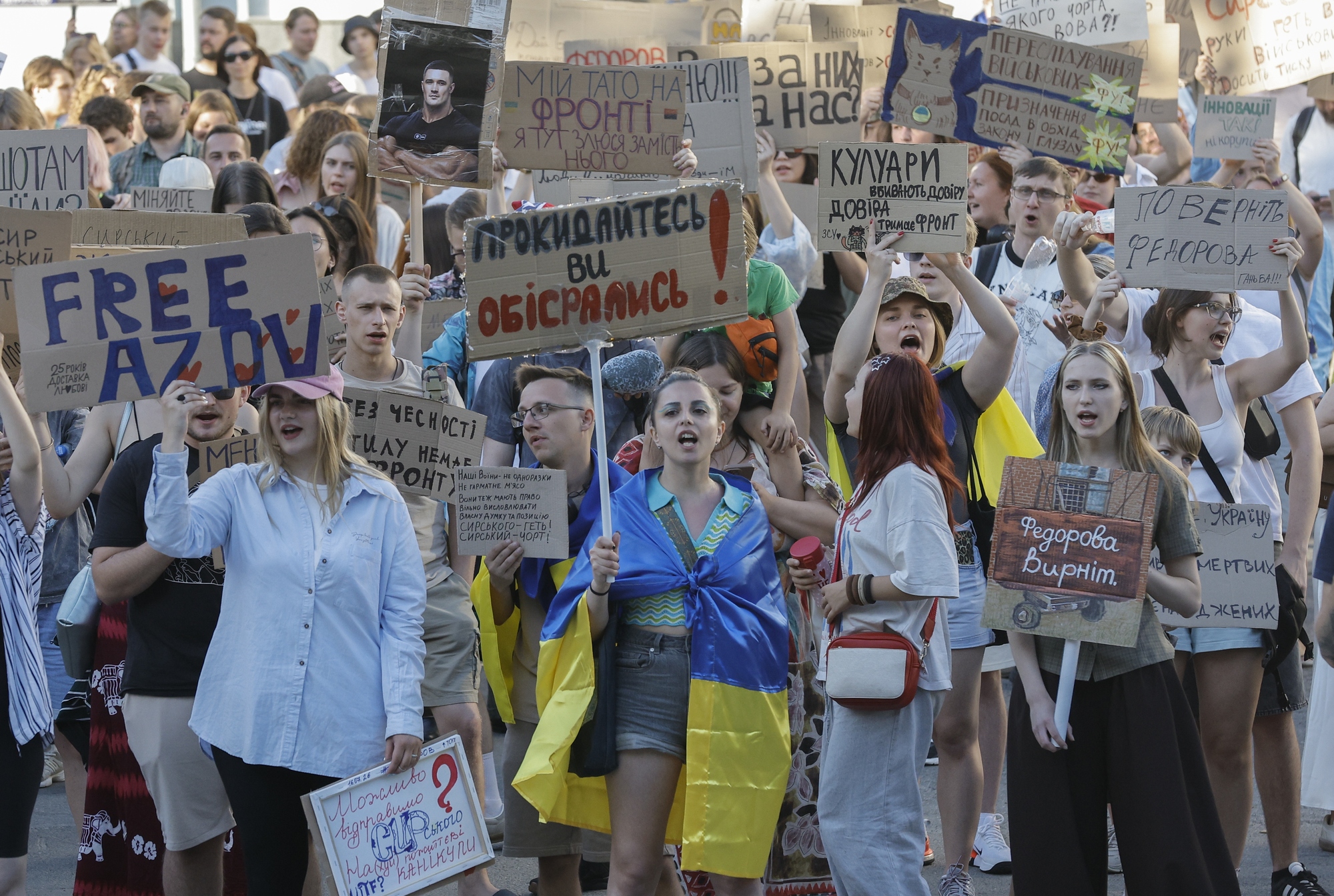
Protests in the Ukrainian capital entered their fourth consecutive day as thousands of citizens gathered in central Kyiv to demand accountability from government officials and changes in military leadership. According to reports from Interfax, more than 5,000 people assembled in the streets, marking a significant escalation in public demonstrations that have captured national attention. The rallies, initially sparked by the dismissal of a key government figure, have evolved to include broader demands regarding the country’s military command structure during an ongoing conflict that has tested the nation’s resilience for over three years.
The protesters have now added a new demand to their list of grievances: the appointment of Mykhailo Drapatyi, the current Commander of the Joint Forces of the Armed Forces of Ukraine, to the position of Commander-in-Chief. This represents a notable shift in the nature of the demonstrations, transforming what began as a reaction to a single personnel decision into a broader movement calling for comprehensive changes in Ukraine’s military leadership hierarchy. The growing crowds suggest deepening public engagement with questions of wartime governance and military strategy.
Background of the Political Crisis
The protests were initially triggered by the dismissal of Mykhailo Fedorov, who had served in a significant governmental capacity. Fedorov had been widely recognized for his work in digital transformation and technological modernization of government services, earning praise both domestically and internationally for Ukraine’s rapid digitalization efforts during wartime. His removal from office caught many observers by surprise and prompted immediate public backlash, with citizens taking to the streets to express their discontent with the decision. The circumstances surrounding his dismissal remain a subject of intense debate, with various political factions offering competing narratives about the reasons behind the move.
Ukraine’s political landscape has been marked by significant turbulence as the country continues to navigate the challenges of an ongoing military conflict while simultaneously managing internal governance issues. Public trust in government institutions has become a crucial factor in maintaining national unity during wartime, making personnel decisions at the highest levels particularly sensitive. The demonstrations reflect broader concerns among Ukrainian citizens about transparency, accountability, and the direction of both civilian governance and military leadership as the conflict continues with no clear end in sight.
Mykhailo Drapatyi and Military Leadership Questions
Mykhailo Drapatyi, whose appointment as Commander-in-Chief is now being demanded by protesters, currently serves as the Commander of the Joint Forces of the Armed Forces of Ukraine. In this role, he oversees coordinated military operations and has gained recognition for his strategic capabilities during the ongoing conflict. His potential elevation to the top military position would represent a significant reshuffling of Ukraine’s command structure, which has already undergone notable changes since the full-scale invasion began in February 2022. The most prominent previous change came in early 2024 when General Oleksandr Syrskyi replaced Valerii Zaluzhnyi as Commander-in-Chief, a decision that itself generated considerable public discussion and debate.
Military leadership transitions during active conflict are historically complex and carry substantial risks. Nations at war must balance the need for fresh strategic perspectives against the dangers of disrupting established command relationships and operational continuity. The protesters’ specific demand for Drapatyi suggests a level of public awareness and engagement with military affairs that reflects Ukraine’s unique circumstances as a society mobilized for an existential struggle. Public opinion regarding military leadership has become an increasingly significant factor in Ukrainian politics, with citizens closely following battlefield developments and forming strong views about the effectiveness of various commanders.
Implications for Ukrainian Democracy and Governance
The sustained nature of these protests, now entering their fourth day with growing numbers, demonstrates the vitality of civil society in Ukraine despite the extraordinary pressures of wartime. The right to peaceful assembly and public expression of political demands remains a cornerstone of Ukrainian democratic practice, even as the country faces unprecedented security challenges. International observers have noted that Ukraine’s ability to maintain democratic norms during conflict will be crucial for its aspirations toward European integration and continued Western support. The protests also highlight the complex relationship between civilian oversight and military operations that all democracies must navigate, particularly during times of national crisis.
As the demonstrations continue, Ukrainian authorities face difficult decisions about how to respond to public demands while maintaining governmental stability and military effectiveness. The coming days will likely prove crucial in determining whether a resolution can be reached that addresses protesters’ concerns while preserving the institutional continuity necessary for effective wartime governance. The international community continues to watch developments closely, recognizing that Ukraine’s internal political dynamics have significant implications for the broader geopolitical situation in Eastern Europe and beyond.
Expert Opinion: The scale and persistence of these demonstrations suggest a Ukrainian public increasingly willing to assert itself on matters of governance and military leadership, even during wartime. This dynamic creates both opportunities and challenges: while robust civic engagement strengthens democratic legitimacy, sustained political turbulence could complicate military operations and strategic planning. The resolution of this crisis will likely set important precedents for how Ukraine balances democratic accountability with wartime decision-making authority in the months ahead.