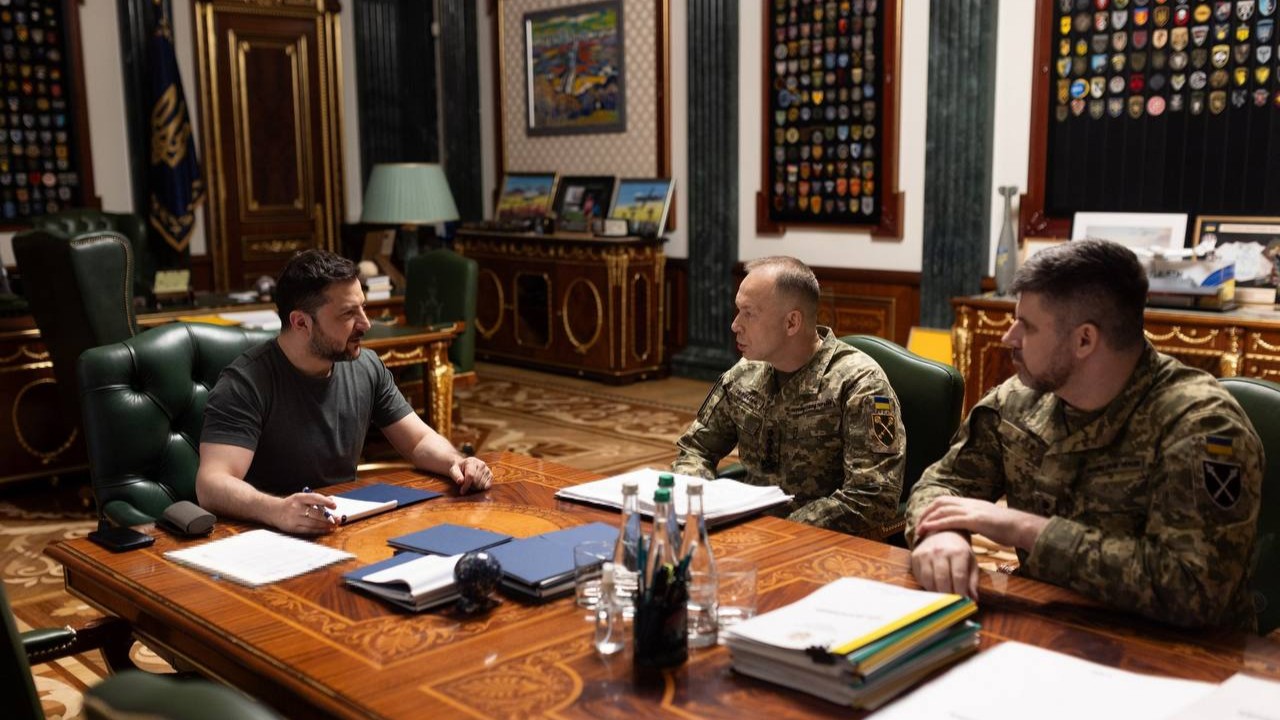
In a significant development within Ukraine’s wartime leadership structure, President Volodymyr Zelensky has made a decisive choice to retain Commander-in-Chief Oleksandr Syrskyi while parting ways with Defense Minister Rustem Umerov’s predecessor in a cabinet reshuffle. According to sources within Ukraine’s parliamentary defense committee speaking to LIGA.net, this decision reflects the president’s strategic priorities during one of the most critical phases of the ongoing conflict with Russia. The choice underscores the delicate balance between military command continuity and administrative reform that Kyiv must navigate as the war enters its third year.
The decision to maintain Syrskyi at the helm of Ukraine’s armed forces while allowing changes at the ministerial level reveals much about how the Ukrainian leadership views the current military situation. Parliamentary sources indicate that the president’s calculus centered on the fundamental difference between tactical military leadership and defense administration. While a defense minister handles procurement, international coordination, and institutional reform, the commander-in-chief bears direct responsibility for battlefield operations and troop morale during active combat. Removing a wartime military commander carries far greater risks to operational continuity than reshuffling civilian leadership.
The Weight of Battlefield Experience
Oleksandr Syrskyi’s appointment as Commander-in-Chief came in February 2024, replacing the popular General Valerii Zaluzhnyi in a move that initially sparked controversy among Ukrainian soldiers and the public. However, Syrskyi brought decades of military experience to the position, including his instrumental role in planning the defense of Kyiv during the war’s opening weeks and leading the successful Kharkiv counteroffensive in September 2022. These battlefield credentials, according to defense committee members, make him irreplaceable during active hostilities. The institutional knowledge he possesses about current operations, troop positions, and ongoing strategic planning cannot be easily transferred to a successor without significant disruption.
Historical precedent also weighs heavily in such decisions. Throughout military history, nations at war have been extremely cautious about changing field commanders during active operations. The risks of disrupting command chains, losing institutional momentum, and potentially damaging troop morale are well-documented. Winston Churchill famously struggled with the decision to replace commanders during World War II, understanding that such changes could have cascading effects on military effectiveness. Ukraine’s leadership appears to have internalized these lessons, prioritizing stability in direct military command even while being willing to make changes in other governmental positions.
Administrative Reform Versus Operational Continuity
The distinction between the roles of defense minister and commander-in-chief is crucial to understanding Zelensky’s decision. The defense minister in Ukraine, as in most modern democracies, serves primarily as a civilian administrator responsible for defense policy, budget allocation, international military cooperation, and ensuring the armed forces have the resources they need. This role, while critically important, operates at a different level than direct battlefield command. A new defense minister can be briefed on ongoing programs and policies relatively quickly, whereas a new commander-in-chief would need to develop relationships with subordinate commanders, understand the nuances of multiple front lines, and earn the trust of troops already engaged in combat.
Sources within the Verkhovna Rada’s defense committee emphasized that the president’s decision also reflects practical considerations about accountability and reform. Defense ministries worldwide frequently face criticism regarding procurement efficiency, corruption concerns, and bureaucratic obstacles. By maintaining the option to change ministerial leadership, the president preserves a mechanism for addressing these institutional challenges without disrupting military operations. This approach allows Ukraine to signal to international partners that it remains committed to defense sector reform while maintaining battlefield effectiveness.
Looking Ahead: Implications for Ukraine’s War Effort
The decision carries significant implications for Ukraine’s military strategy in the coming months. With Syrskyi remaining in position, there will be continuity in how Ukraine approaches its defensive operations in the east and any potential counteroffensive planning. International military advisors and NATO partners have established working relationships with the current command structure, and maintaining these connections facilitates the continued flow of Western military assistance and intelligence sharing. The stability in military leadership also sends a message to Russia that Ukraine’s command structure remains solid despite the pressures of prolonged warfare.
As Ukraine continues to face one of the most challenging periods of the conflict, with intense fighting in the Donetsk region and ongoing Russian pressure along multiple axes, the premium on leadership stability cannot be overstated. The president’s choice reflects a pragmatic assessment that winning the war requires both effective battlefield command and efficient administrative support, but that these two functions carry different weights when it comes to the consequences of leadership changes. For now, Syrskyi will continue to direct Ukraine’s military operations while new ministerial appointments work to strengthen the institutional foundations supporting the war effort.
Expert Opinion: This decision reveals Zelensky’s increasingly sophisticated approach to wartime governance, distinguishing between positions where continuity is existentially important and those where change can drive necessary reform. The calculus suggests Ukrainian leadership expects the high-intensity phase of conflict to continue, making any disruption to operational command potentially catastrophic. Western allies will likely view this stability positively, as it ensures their substantial military investments remain under consistent strategic direction.