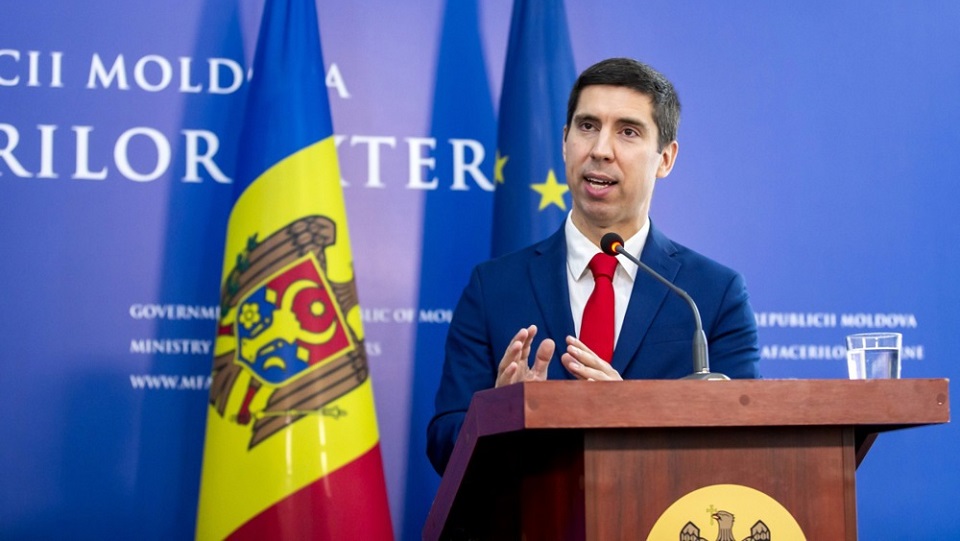
Moldova’s Foreign Minister Mihai Popșoi has announced that Chisinau intends to significantly increase defense spending, with a particular focus on acquiring air defense interceptor systems. The statement comes amid growing regional security concerns as the conflict in neighboring Ukraine continues to affect the small Eastern European nation. Popșoi emphasized the urgent need for modern air defense capabilities, noting that such systems are in high demand globally and “don’t sit on store shelves” — highlighting the challenges Moldova faces in rapidly modernizing its military infrastructure.
The foreign minister’s remarks underscore Moldova’s increasingly precarious security situation. As a country sandwiched between Ukraine and Romania, Moldova has found itself on the front lines of European security concerns since Russia’s full-scale invasion of Ukraine in February 2022. The country has experienced multiple incidents involving Russian missiles and drones entering its airspace, prompting urgent calls for enhanced defensive capabilities.
Moldova’s Defense Modernization Efforts
Moldova has historically maintained one of the smallest and least-equipped militaries in Europe, a legacy of its post-Soviet neutrality stance enshrined in its constitution. The country’s defense budget has traditionally hovered around 0.4% of GDP, far below the NATO recommended threshold of 2%. However, the geopolitical upheaval caused by the war in Ukraine has forced Chisinau to fundamentally reassess its security posture. In recent months, Moldova has announced plans to gradually increase military spending, with some proposals suggesting a target of 1% of GDP by 2025.
The acquisition of air defense interceptors represents a significant departure from Moldova’s previous defense strategy. The country currently relies on outdated Soviet-era equipment, including aging S-125 surface-to-air missile systems that date back to the 1960s. These systems are considered largely obsolete against modern aerial threats, including cruise missiles and advanced drones. Western partners, including the United States and European Union members, have expressed willingness to assist Moldova in modernizing its defense capabilities, though the process remains complicated by the country’s constitutional neutrality and limited financial resources.
Regional Security Context and International Support
The urgency of Moldova’s air defense needs has been highlighted by several incidents since the war began. Russian missiles and Iranian-made Shahed drones targeting Ukrainian infrastructure have repeatedly violated Moldovan airspace, with debris falling on Moldovan territory on multiple occasions. In October 2022, missile fragments landed in the northern village of Naslavcea, causing damage but fortunately no casualties. Such incidents have galvanized public support for increased defense spending, even among traditionally neutrality-minded Moldovans.
International partners have stepped up support for Moldova’s security needs. The European Union has provided substantial assistance through the European Peace Facility, while individual member states including Germany, France, and Romania have offered military equipment and training. The United States has also increased its security cooperation with Chisinau, providing non-lethal military aid and conducting joint training exercises. However, the supply of sophisticated air defense systems remains complicated by global shortages — as Popșoi noted, these systems are in extremely high demand as countries worldwide seek to bolster their defenses in an increasingly unstable security environment.
Future Challenges and Strategic Implications
Moldova’s path toward enhanced air defense capabilities faces numerous obstacles beyond mere availability. The country must navigate its constitutional neutrality while seeking defensive weapons, manage the significant financial burden of modern military systems, and train personnel to operate sophisticated equipment. Additionally, the presence of Russian troops in the breakaway region of Transnistria adds another layer of complexity to Moldova’s security calculations. Despite these challenges, the government appears committed to strengthening national defense, viewing it as essential for maintaining sovereignty in an increasingly dangerous neighborhood. The coming months will likely see continued diplomatic efforts to secure the necessary systems and partnerships to protect Moldovan airspace.
Expert Opinion: Moldova’s pursuit of air defense capabilities reflects a broader regional trend of Eastern European nations reassessing their security postures in response to Russian aggression. While Chisinau faces significant financial and constitutional constraints, the political will to enhance defense capabilities appears stronger than at any point since independence. The success of Moldova’s modernization efforts will likely depend heavily on sustained Western support and the country’s ability to balance neutrality with practical security needs.