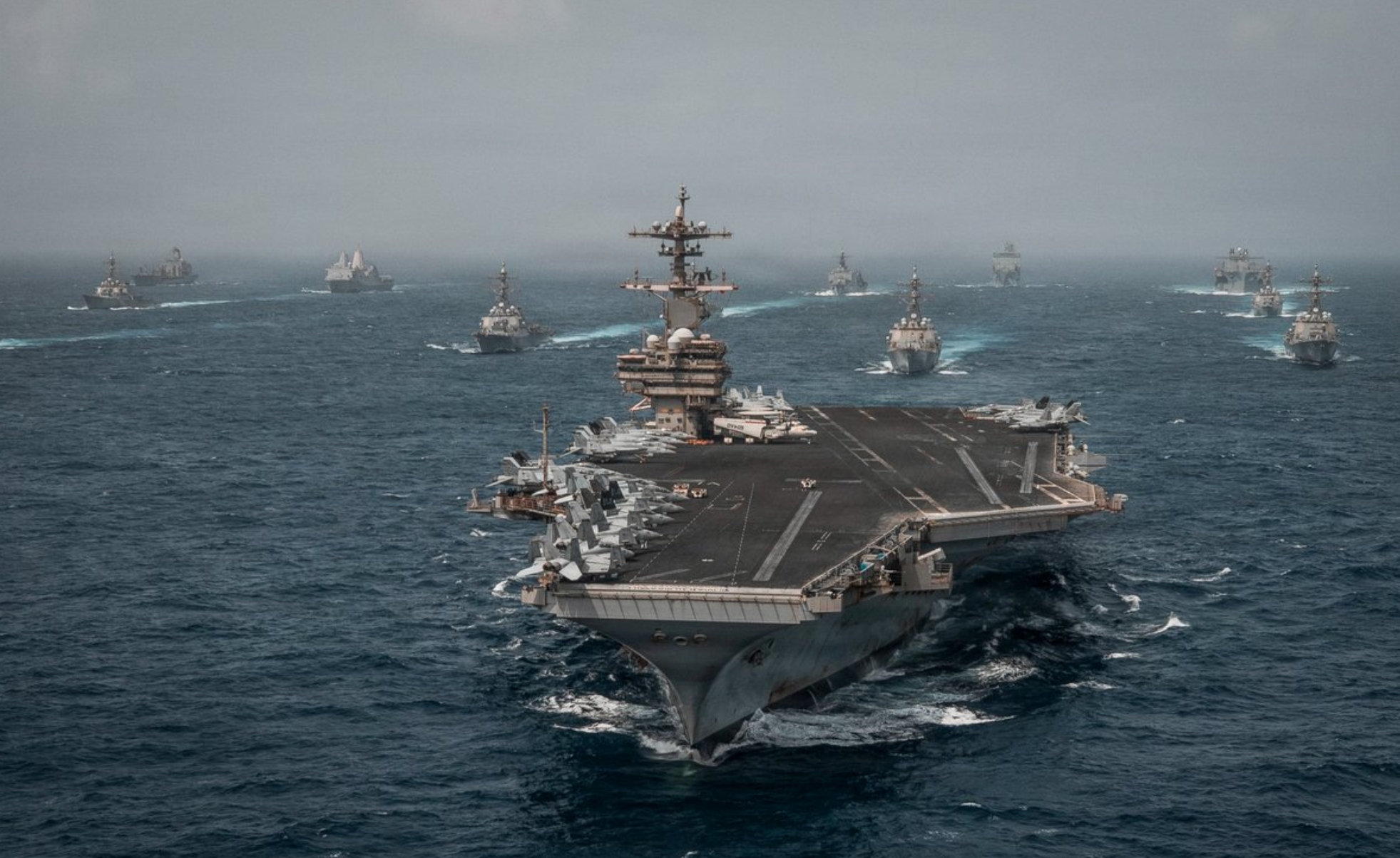
The United States has reinstated its naval blockade operations targeting vessels en route to Iranian ports, marking a significant escalation in the ongoing tensions between Washington and Tehran. According to recent reports, more than 20 American warships are currently operating in the Middle East region, establishing a formidable maritime presence aimed at intercepting and monitoring shipping traffic headed toward Iran. This move represents one of the most substantial naval deployments in the region in recent years and signals Washington’s commitment to maintaining maximum pressure on the Iranian government.
Strategic Maritime Operations in the Middle East
The naval blockade involves a coordinated effort by the United States Navy’s Fifth Fleet, which is headquartered in Bahrain and responsible for operations throughout the Persian Gulf, Red Sea, and Arabian Sea. The deployment includes aircraft carriers, guided-missile destroyers, cruisers, and support vessels capable of conducting round-the-clock surveillance and interdiction operations. These warships are equipped with advanced radar systems, satellite communications, and weapons platforms that enable them to monitor and, if necessary, intercept commercial vessels suspected of carrying prohibited cargo to Iranian ports.
The strategic importance of this waterway cannot be overstated. The Strait of Hormuz, which connects the Persian Gulf to the Gulf of Oman and the broader Arabian Sea, remains one of the world’s most critical chokepoints for global oil transportation. Approximately 20 percent of the world’s petroleum passes through this narrow strait daily, making any military activity in the area a matter of international concern. American naval commanders have emphasized that their operations are designed to enforce international sanctions while ensuring freedom of navigation for legitimate commercial traffic.
Historical Context and Diplomatic Tensions
The resumption of naval blockade activities comes against a backdrop of decades-long hostility between the United States and Iran. Relations between the two nations deteriorated sharply following the 1979 Islamic Revolution, which overthrew the American-backed Shah and established the current theocratic government. The subsequent hostage crisis, during which Iranian students held 52 American diplomats for 444 days, set the stage for persistent mutual antagonism that continues to this day. Over the years, the United States has implemented various rounds of economic sanctions targeting Iran’s oil exports, banking sector, and military capabilities.
The current escalation follows the collapse of the 2015 Joint Comprehensive Plan of Action, commonly known as the Iran nuclear deal. That agreement, negotiated between Iran and six world powers including the United States, had temporarily limited Tehran’s nuclear program in exchange for sanctions relief. However, the subsequent withdrawal from the agreement and the reimposition of sanctions fundamentally altered the diplomatic landscape. Iran has since accelerated its uranium enrichment activities, bringing the country closer to weapons-grade material and raising alarm among Western governments and regional allies.
Regional Implications and International Response
Military analysts suggest that the naval blockade serves multiple strategic objectives beyond simply restricting Iranian trade. The visible presence of American warships demonstrates Washington’s commitment to its regional allies, particularly Israel, Saudi Arabia, and the United Arab Emirates, all of whom view Iran as an existential threat. Additionally, the blockade aims to limit Iran’s ability to export weapons and provide material support to proxy forces throughout the region, including Hezbollah in Lebanon, the Houthis in Yemen, and various militia groups in Iraq and Syria.
International reactions to the resumed blockade have been mixed. European allies have expressed concern about the potential for military confrontation in such a vital waterway, calling for diplomatic solutions to the ongoing crisis. Meanwhile, Iran has condemned the American naval presence as an act of aggression and a violation of international maritime law. Tehran has repeatedly threatened to close the Strait of Hormuz if its oil exports are blocked, a move that would trigger a global energy crisis and potentially ignite a wider regional conflict. The coming weeks will be critical in determining whether diplomatic channels can prevent further escalation or whether the region is headed toward an even more dangerous confrontation.
Expert Opinion: The deployment of over 20 warships represents the most substantial American naval concentration in the Persian Gulf region since the height of tensions in 2019-2020, indicating Washington’s shift toward a more aggressive containment strategy. This buildup significantly raises the risk of accidental confrontation, particularly given Iran’s history of asymmetric responses through fast-attack boats and drone operations. Market observers should anticipate increased volatility in global oil prices as shipping insurance rates for the region are likely to surge in response to the heightened military posture.