
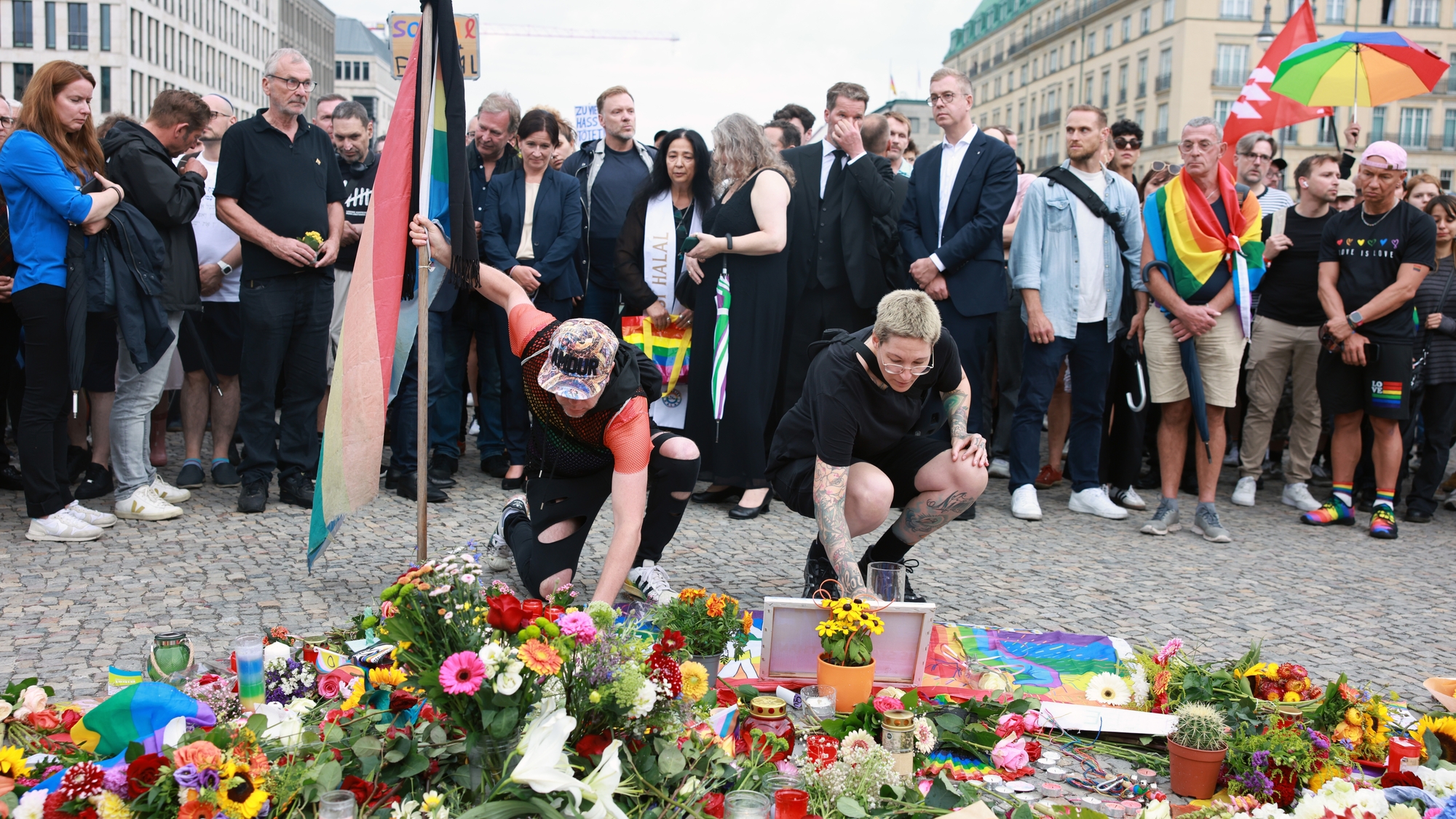
Berlin police have shot and killed a suspect believed to be responsible for an attack targeting LGBTQ individuals in the German capital, marking what authorities are now describing as an act of Islamist terrorism. The dramatic confrontation between law enforcement and the alleged perpetrator concluded a tense security operation that has sent shockwaves through the city and reignited debates about extremism, public safety, and the protection of minority communities in Germany.
The incident unfolded in the heart of Berlin, prompting a swift and decisive response from local police forces. According to official statements released by the metropolitan police department, officers were forced to use lethal force when confronting the suspect, who posed an immediate threat. The German Interior Ministry has classified the attack as an “Islamist terror act,” signaling the involvement of radical extremist ideology in the assault. This designation triggers enhanced investigative protocols and places the case under the jurisdiction of federal counter-terrorism units.
Rising Concerns Over Extremist Violence in Germany
The attack comes against a troubling backdrop of increasing extremist violence across Europe, with Germany experiencing a notable uptick in both far-right and Islamist-motivated incidents in recent years. Security analysts have long warned that LGBTQ communities remain particularly vulnerable targets for radical extremists who view them as symbols of Western liberal values. The Federal Office for the Protection of the Constitution, Germany’s domestic intelligence agency, has documented a steady rise in threats against minority groups, with hate crimes reaching record levels in several categories over the past decade.
Germany has grappled with the challenge of Islamist terrorism since the devastating 2016 Christmas market attack in Berlin, when a radicalized individual drove a truck into crowds, killing 12 people and injuring dozens more. That tragedy exposed significant gaps in the country’s security apparatus and led to sweeping reforms in intelligence sharing and surveillance capabilities. However, experts argue that the threat landscape has evolved, with smaller-scale attacks by lone actors becoming increasingly difficult to predict and prevent.
LGBTQ Community Faces Heightened Security Concerns
The LGBTQ community in Berlin, historically one of the most vibrant and visible in Europe, now faces renewed anxiety following this attack. Berlin has long been celebrated as a haven of tolerance and acceptance, with its Schöneberg district serving as a historic center of gay culture since the early 20th century. The city hosts one of Europe’s largest Pride celebrations annually, drawing hundreds of thousands of participants from around the world. Community leaders have expressed both grief over the violence and determination to resist intimidation from extremist elements.
Human rights organizations across Germany have called for enhanced protection measures and stronger anti-hate legislation in response to the attack. The Lesbian and Gay Federation in Germany released a statement condemning the violence and urging authorities to take decisive action against all forms of extremism that target sexual minorities. International observers have also weighed in, with LGBTQ advocacy groups from neighboring countries expressing solidarity with the Berlin community and calling for a coordinated European response to rising hate crimes.
Political Response and Security Implications
German political leaders have responded to the incident with statements condemning the violence and pledging additional resources for counter-terrorism efforts. The Interior Ministry’s swift classification of the attack as Islamist terrorism indicates that federal authorities are treating the matter with the highest level of seriousness. This designation will likely influence both the ongoing investigation and broader policy discussions about radicalization prevention programs, surveillance authorities, and community integration initiatives.
The shooting of the suspect by police also raises questions that will need to be addressed through standard review procedures. German law enforcement agencies operate under strict guidelines regarding the use of lethal force, and any such incident triggers automatic investigations to ensure proper protocols were followed. Authorities have indicated that the suspect presented an immediate danger that left officers with no alternative, though full details of the confrontation have yet to be released pending the completion of preliminary investigations.
Expert Opinion: This incident represents a concerning intersection of Islamist radicalization and targeted violence against minority communities that European security services have long anticipated. The attack suggests that despite enhanced surveillance capabilities, lone-actor threats remain exceptionally difficult to neutralize preemptively. Moving forward, German authorities will likely face pressure to balance civil liberties with expanded monitoring of extremist networks while also investing heavily in community-based deradicalization programs.