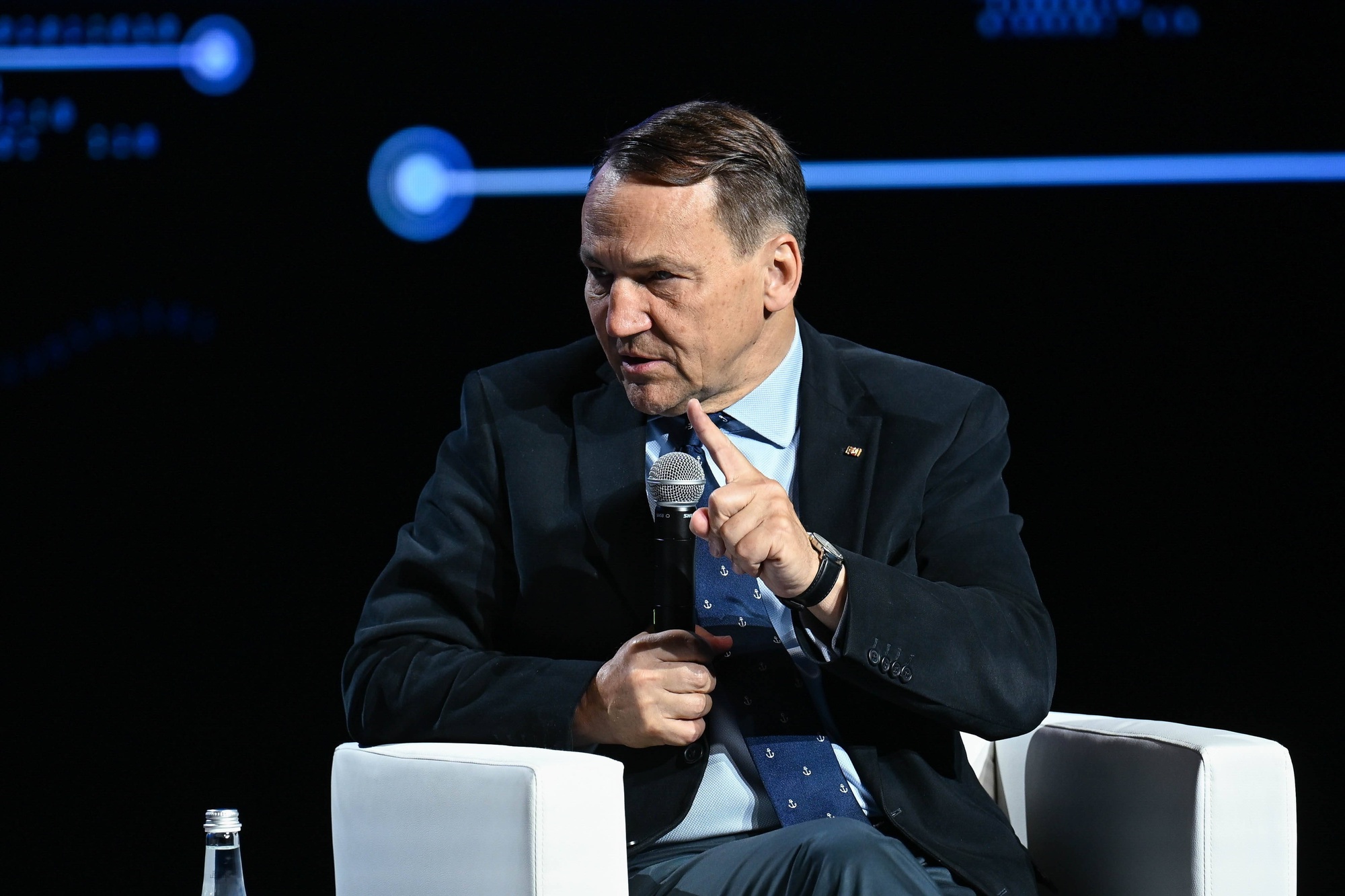
Poland’s Foreign Minister Radosław Sikorski has issued a stark warning about potential Russian false flag operations, suggesting that Moscow may attempt to stage provocations using drones falsely attributed to Ukraine. The diplomatic alert comes amid heightened tensions in Eastern Europe and reflects growing concerns among NATO allies about Russian disinformation tactics and hybrid warfare strategies designed to undermine Western support for Ukraine.
In his warning, Sikorski drew a direct and provocative comparison between the current Russian regime and Nazi Germany during World War II. This historical parallel references the well-documented Nazi practice of staging false flag attacks to justify military aggression, most notably the Gleiwitz incident of 1939, where German operatives disguised as Polish soldiers attacked a German radio station to create a pretext for the invasion of Poland. The Foreign Minister’s comparison underscores the severity with which Polish officials view the current threat landscape.
Historical Context of False Flag Operations
False flag operations have been a recurring element in modern warfare and geopolitical manipulation. The term originates from naval warfare, where ships would fly false colors to deceive enemies before attacking. In the contemporary context, such operations involve staging attacks that appear to come from a different source to manipulate public opinion or justify military action. Russia has been accused of employing such tactics multiple times in recent history, including alleged apartment bombings in 1999 that preceded the Second Chechen War and various incidents in eastern Ukraine since 2014.
The specific concern about drone-based provocations reflects the evolving nature of modern hybrid warfare. Unmanned aerial vehicles have become increasingly prevalent in the ongoing conflict between Russia and Ukraine, with both sides utilizing drones for reconnaissance, artillery spotting, and direct attacks. This proliferation creates opportunities for attribution confusion, where the origin of a drone attack can be deliberately obscured or misrepresented. Western intelligence agencies have repeatedly warned that Russia might exploit this ambiguity to stage incidents that could be blamed on Ukraine.
Poland’s Strategic Position and Security Concerns
Poland occupies a crucial position as NATO’s eastern flank and has emerged as one of Ukraine’s most vocal and consistent supporters since Russia’s full-scale invasion began in February 2022. The country has provided substantial military aid, hosted millions of Ukrainian refugees, and served as a primary logistics hub for Western assistance flowing into Ukraine. This prominent role makes Poland particularly sensitive to potential Russian provocations designed to fracture the Western coalition supporting Kyiv.
Polish authorities have dealt with several concerning incidents involving unidentified aerial objects crossing into their territory from the conflict zone. In November 2022, a missile landed in the Polish village of Przewodów, killing two people. While initial reports suggested it might have been a Russian attack, subsequent investigations determined it was likely a Ukrainian air defense missile that went astray during an intense Russian bombardment of Ukrainian infrastructure. The incident highlighted the delicate nature of managing such events and the potential for escalation or manipulation.
International Response and NATO Solidarity
Sikorski’s warning aligns with broader Western efforts to preemptively expose and counter Russian disinformation campaigns. Intelligence agencies from multiple NATO countries have adopted a strategy of publicly revealing anticipated Russian operations before they occur, a tactic designed to neutralize their effectiveness. By alerting the international community to the possibility of drone-based false flag attacks, Polish officials aim to ensure that any such incidents would be met with immediate skepticism rather than knee-jerk reactions that could benefit Moscow’s strategic objectives.
The timing of this warning is particularly significant as debates continue in Western capitals about the nature and extent of support for Ukraine. Some political factions in Europe and the United States have called for negotiations or reduced military assistance, positions that Russian propaganda actively encourages. A successful false flag operation designed to portray Ukraine as recklessly endangering NATO territory could potentially strengthen these voices and complicate efforts to maintain unified Western support for Kyiv’s defense against Russian aggression.
Expert Opinion: The Polish Foreign Minister’s preemptive warning represents a sophisticated counter-intelligence approach that has become standard practice among NATO allies. By publicly identifying potential Russian provocations before they occur, Western governments effectively inoculate public opinion against disinformation. As tensions remain elevated along NATO’s eastern border, we should expect continued vigilance and similar preemptive disclosures whenever intelligence suggests impending Russian information operations targeting alliance cohesion.