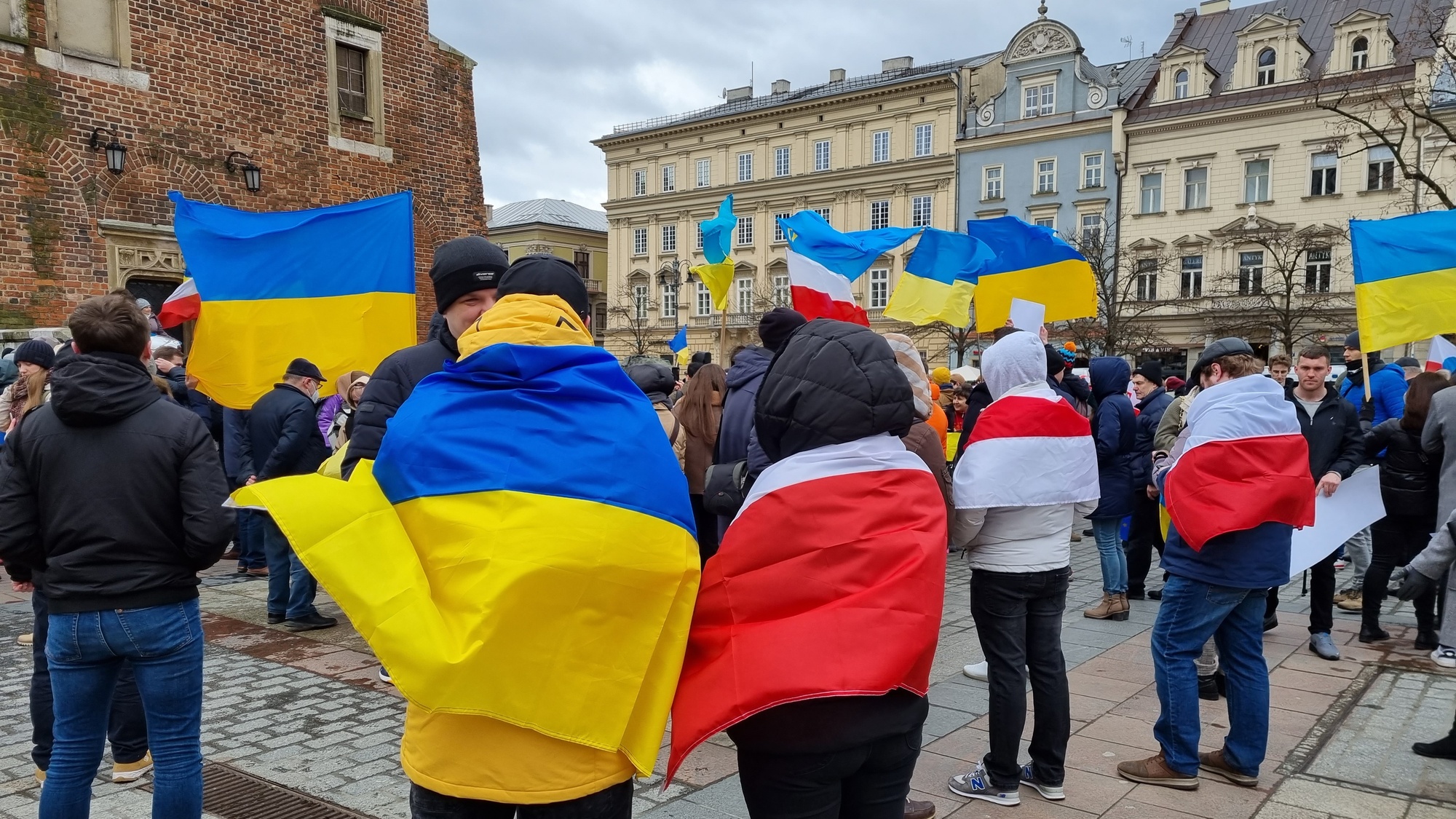
In a significant display of solidarity, demonstrations against Ukrainophobia erupted across more than twenty cities throughout Poland, marking one of the largest coordinated responses to rising tensions between Polish citizens and Ukrainian refugees. The protests came as Polish activists formally submitted a petition to Prime Minister Donald Tusk and the Ministry of Internal Affairs, demanding concrete action regarding a series of attacks targeting Ukrainians living in the country. The demonstrations reflect growing concerns within Polish civil society about the treatment of refugees who fled the war-torn nation following Russia’s full-scale invasion in February 2022.
The wave of protests represents a grassroots movement seeking to counter what organizers describe as an alarming rise in xenophobic incidents against Ukrainian nationals. Poland has been one of the primary destinations for Ukrainian refugees since the outbreak of the full-scale war, hosting approximately one million registered refugees according to recent government statistics. This massive influx, while initially met with overwhelming hospitality from ordinary Polish citizens, has gradually given way to growing social tensions as the conflict shows no signs of ending.
Historical Context and the Evolution of Polish-Ukrainian Relations
The relationship between Poland and Ukraine carries complex historical baggage that spans centuries, including territorial disputes, ethnic conflicts during World War II, and the sensitive topic of the Volyn massacre of 1943. Despite these historical grievances, modern Poland has emerged as one of Ukraine’s strongest supporters in its fight against Russian aggression. The country has served as a crucial transit hub for Western military aid, accepted millions of refugees, and advocated fiercely for Ukrainian interests within the European Union and NATO. However, the extended duration of the refugee crisis has strained this solidarity, with some political factions exploiting historical wounds to fuel anti-Ukrainian sentiment.
The petition submitted to Polish authorities reportedly details numerous incidents of violence, discrimination, and harassment directed at Ukrainian refugees and workers. These incidents have ranged from verbal abuse and workplace discrimination to physical assaults that have alarmed both Ukrainian community leaders and Polish human rights organizations. Activists are demanding that the government implement stronger hate crime legislation, improve police response to xenophobic incidents, and launch public awareness campaigns promoting tolerance and understanding between the two neighboring nations.
Government Response and Political Implications
The timing of these protests carries significant political weight, as Poland navigates a complex domestic landscape where refugee policy has become a divisive issue. The current government, led by Prime Minister Donald Tusk and his Civic Coalition, has generally maintained a pro-Ukrainian stance while also acknowledging the legitimate concerns of Polish citizens regarding the strain on public services and the labor market. However, opposition parties, particularly those aligned with nationalist movements, have increasingly employed anti-refugee rhetoric in their political messaging, creating a charged atmosphere that organizers say has emboldened those who harbor xenophobic views.
International observers and human rights organizations have noted that Poland’s experience mirrors broader European trends, where initial enthusiasm for accepting Ukrainian refugees has given way to what some analysts call “compassion fatigue.” Countries across the European Union have grappled with similar challenges, attempting to balance humanitarian obligations with domestic political pressures. The Polish demonstrations, however, represent a counter-movement of citizens actively pushing back against this trend, arguing that solidarity with Ukraine remains both a moral imperative and a strategic necessity for European security.
Looking Forward: Calls for Unity and Understanding
Organizers of the nationwide protests have emphasized that their movement transcends politics, appealing to fundamental human values and the shared democratic ideals that bind Poland and Ukraine together. They point to the countless examples of successful integration, where Ukrainian refugees have contributed positively to Polish communities, filled critical labor shortages, and enriched the cultural fabric of their host cities. The activists argue that isolated incidents of tension should not be allowed to overshadow the broader narrative of successful coexistence and mutual support.
As winter approaches and the war in Ukraine continues with no clear resolution in sight, the question of how Poland manages its refugee population will remain a critical test of European solidarity. The protests across more than twenty Polish cities serve as a powerful reminder that significant portions of Polish society remain committed to standing with their Ukrainian neighbors, even as political and economic pressures mount. The outcome of the petition and the government’s response will likely shape the trajectory of Polish-Ukrainian relations for years to come.
Expert Opinion: The scale of these pro-Ukrainian demonstrations suggests that civil society in Poland is actively resisting the normalization of xenophobic attitudes that have gained traction in political discourse. This grassroots mobilization could prove decisive in maintaining the Polish-Ukrainian alliance, which remains crucial for European security architecture. The government’s response to the activists’ petition will serve as a bellwether for whether solidarity or fatigue ultimately defines Poland’s approach to the refugee crisis.