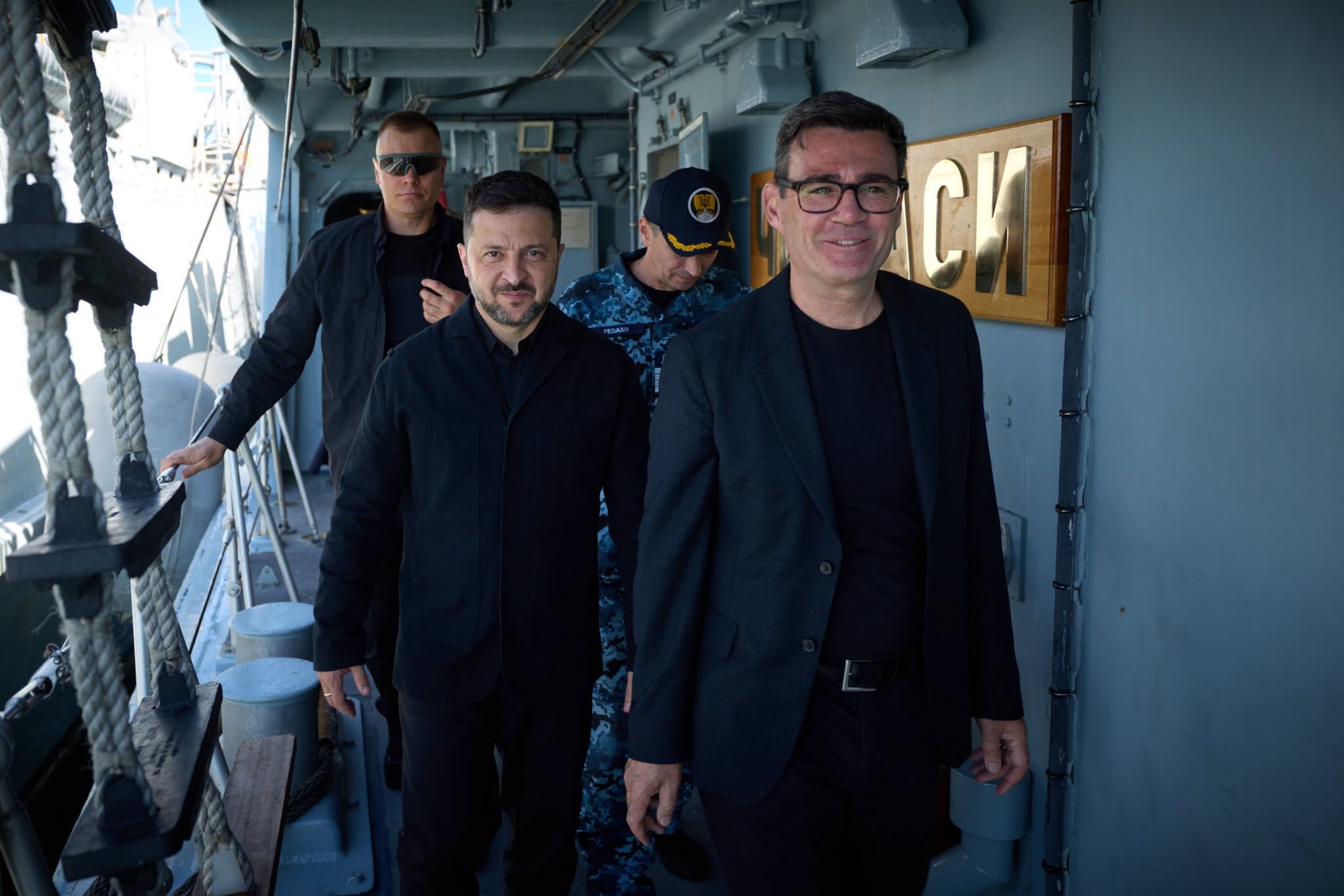
Ukrainian President Volodymyr Zelensky recently made a significant visit to the United Kingdom, where he inspected the minesweeper vessel “Cherkasy” – a ship that Ukraine received from Britain in January 2023. The visit underscored the ongoing naval cooperation between the two nations and highlighted the critical importance of mine clearance operations that will be essential for restoring safe maritime navigation in the Black Sea region once the conflict with Russia concludes. The Cherkasy represents both a symbol of international support for Ukraine and a practical tool for post-war reconstruction efforts.
The transfer of the minesweeper to Ukraine was part of a broader package of military assistance that the United Kingdom has provided to Kyiv since Russia’s full-scale invasion began in February 2022. Britain has been one of Ukraine’s most steadfast allies, providing various forms of military equipment including anti-tank missiles, air defense systems, and naval vessels. The decision to provide a minesweeper was particularly forward-thinking, acknowledging that the aftermath of the war will require extensive demining operations both on land and at sea.
The Critical Role of Mine Clearance in Post-War Recovery
The Black Sea has become one of the most heavily mined bodies of water in modern history due to the ongoing conflict. Both defensive and offensive mining operations have scattered explosive devices throughout shipping lanes and coastal waters, creating a massive humanitarian and economic hazard. According to naval experts, clearing these mines will take years, if not decades, and will require specialized vessels like the Cherkasy. The ship is equipped with advanced sonar systems and mine detection technology that will be invaluable in making Ukrainian waters safe again for commercial shipping and fishing operations.
The importance of mine clearance extends far beyond safety concerns. Ukraine’s economy has historically relied heavily on maritime exports, particularly grain shipments that travel through Black Sea ports. Before the war, approximately 90% of Ukraine’s grain exports passed through these waters, making them a vital artery for global food security. The presence of mines has severely disrupted this trade, contributing to food price increases worldwide. Restoring safe navigation will be essential not only for Ukraine’s economic recovery but also for stabilizing global food markets.
Historical Context of the Vessel and Ukrainian Naval Forces
The name “Cherkasy” carries historical significance for Ukraine, honoring the central Ukrainian city that has played an important role in the nation’s history. The vessel joins a Ukrainian naval force that has faced extraordinary challenges since 2014, when Russia’s annexation of Crimea resulted in the loss of much of Ukraine’s Black Sea fleet. Despite these setbacks, the Ukrainian Navy has demonstrated remarkable resilience, employing innovative tactics including the use of unmanned surface vessels to counter Russian naval dominance. The addition of the British minesweeper represents an important step in rebuilding Ukraine’s naval capabilities.
The United Kingdom’s decision to provide the minesweeper reflects a long history of British naval support for allied nations. Britain possesses extensive expertise in mine countermeasures, developed over decades of operations worldwide. British mine clearance specialists have worked in conflicts ranging from the Persian Gulf to the Falkland Islands, accumulating knowledge that has been shared with Ukrainian crews. Training programs accompanying the vessel transfer have ensured that Ukrainian sailors can operate the ship effectively and maintain its sophisticated detection systems.
Looking Ahead: Maritime Security and Reconstruction
President Zelensky’s visit to inspect the Cherkasy serves as a reminder that Ukraine is already planning for post-war reconstruction even as the conflict continues. The international community has pledged billions of dollars toward Ukraine’s recovery, and maritime infrastructure will be a priority. Experts estimate that demining the Black Sea could cost hundreds of millions of dollars and require coordinated international efforts involving multiple nations and organizations. The Cherkasy will be at the forefront of these operations, helping to restore one of the world’s most important shipping corridors to full functionality.
The vessel also symbolizes the broader transformation of Ukraine’s relationships with Western nations. Once the war ends, Ukraine will likely emerge with stronger ties to NATO countries than ever before, with naval cooperation being just one dimension of this partnership. The skills and equipment provided during the conflict will form the foundation for a modernized Ukrainian military capable of defending the nation’s sovereignty and contributing to regional security for decades to come.
Expert Opinion: Naval analysts suggest that the Black Sea mine clearance operation following the conflict’s conclusion could become one of the largest demining efforts in maritime history. The presence of vessels like the Cherkasy, combined with international technical assistance, positions Ukraine to gradually restore its critical maritime infrastructure, though experts warn the process may take 5-10 years to fully complete. This operation will likely establish new international protocols for post-conflict maritime recovery.