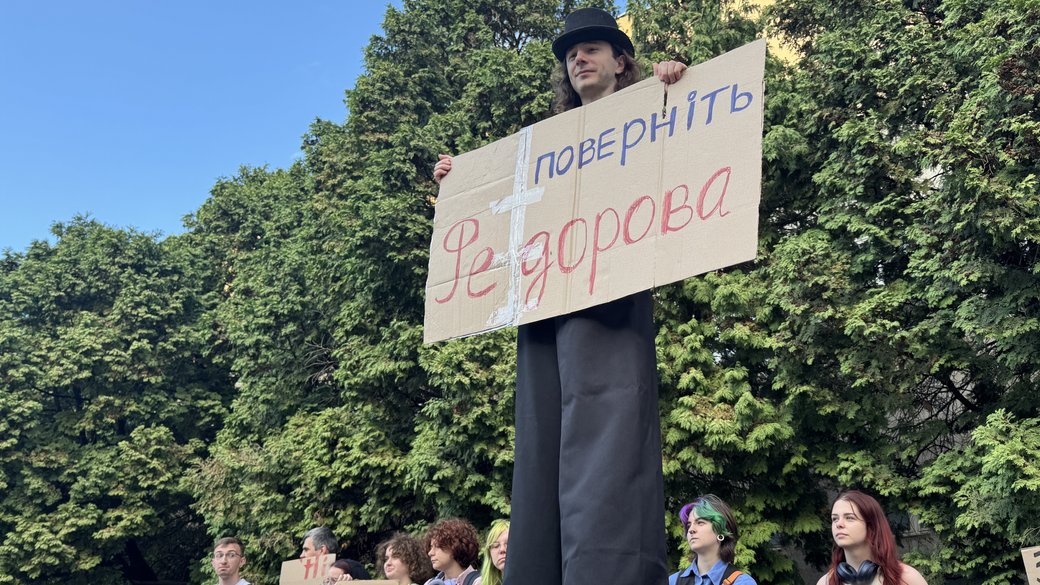
For the twelfth consecutive day, Ukrainian citizens have taken to the streets demanding the reinstatement of Mykhailo Fedorov as Minister of Defense. The protests, which began nearly two weeks ago following Fedorov’s dismissal from the cabinet position, have shown no signs of slowing down as demonstrators gathered in Kyiv and several other major cities across the country. The sustained nature of these demonstrations reflects the deep public sentiment surrounding defense leadership during Ukraine’s ongoing conflict with Russia.
The protests have drawn thousands of participants who view Fedorov’s removal as a significant setback for Ukraine’s defense capabilities. Demonstrators have been carrying banners, chanting slogans, and organizing peaceful marches through city centers, calling on President Volodymyr Zelensky and government officials to reverse the decision. The movement has gained momentum through social media coordination, with protest organizers sharing information about gathering points and times across multiple platforms.
Background on the Dismissal and Public Reaction
Mykhailo Fedorov, who previously served as Ukraine’s Minister of Digital Transformation before being appointed to the defense portfolio, had earned a reputation as a reformist figure within the Ukrainian government. His tenure at the Ministry of Digital Transformation was marked by significant achievements in digitizing government services and creating the Diia mobile application, which became a model for e-governance initiatives worldwide. When he transitioned to the defense ministry, many Ukrainians hoped he would bring similar innovation and efficiency to military administration.
The circumstances surrounding Fedorov’s dismissal have not been fully disclosed by government officials, leading to speculation and frustration among his supporters. In times of active military conflict, changes in defense leadership naturally attract intense scrutiny from both the public and international observers. Ukraine’s Western allies, who have provided substantial military and financial support, have historically emphasized the importance of stable and effective defense institutions.
The Broader Context of Wartime Governance
The protests occur against the backdrop of Ukraine’s ongoing defensive war, which has now entered its third year following Russia’s full-scale invasion in February 2022. Throughout this period, the Ukrainian government has undergone several cabinet reshuffles, balancing the need for effective wartime governance with political considerations. Defense ministry leadership has been particularly sensitive, given the ministry’s central role in coordinating military operations, procurement, and international defense cooperation.
Historical precedent shows that public engagement in defense matters is not unusual for Ukraine. Since the Euromaidan protests of 2013-2014, Ukrainian civil society has maintained an active role in monitoring and influencing government decisions, particularly those related to national security. Volunteer organizations, civil society groups, and ordinary citizens have contributed significantly to Ukraine’s defense efforts, creating a sense of shared ownership over military matters that makes defense leadership changes especially consequential in the public eye.
Protest Dynamics and Geographic Spread
Beyond the capital, demonstrations have spread to cities including Lviv, Kharkiv, Odesa, and Dnipro, indicating that support for Fedorov extends across different regions of the country. Local organizers have adapted their approaches to suit their communities, with some cities seeing larger gatherings while others have focused on smaller but consistent daily vigils. The decentralized nature of the protests suggests organic grassroots support rather than centrally organized political opposition.
Authorities have generally allowed the protests to proceed without interference, maintaining Ukraine’s commitment to democratic freedoms even during wartime. Security forces have maintained a presence at major gathering points but have not attempted to disperse crowds. This approach reflects the delicate balance Ukrainian officials must strike between maintaining order and respecting citizens’ rights to peaceful assembly and expression of political views.
Looking Ahead: Potential Outcomes
As the protests enter their second week, questions remain about whether sustained public pressure will influence government decision-making. Government officials have not publicly responded to the demonstrators’ demands, though sources suggest internal discussions are ongoing. The situation highlights the complex relationship between democratic accountability and executive authority during wartime, a challenge faced by governments throughout history when balancing military necessity with civilian oversight and public opinion.
Expert Opinion: The sustained twelve-day protest movement demonstrates the remarkable civic engagement that has characterized Ukrainian society since 2014. While the government is unlikely to reverse major personnel decisions solely based on street pressure during active conflict, these demonstrations serve as an important barometer of public sentiment that officials cannot entirely ignore. The outcome will likely depend on whether Fedorov’s supporters can maintain momentum while articulating specific policy concerns beyond the personal appointment issue.