
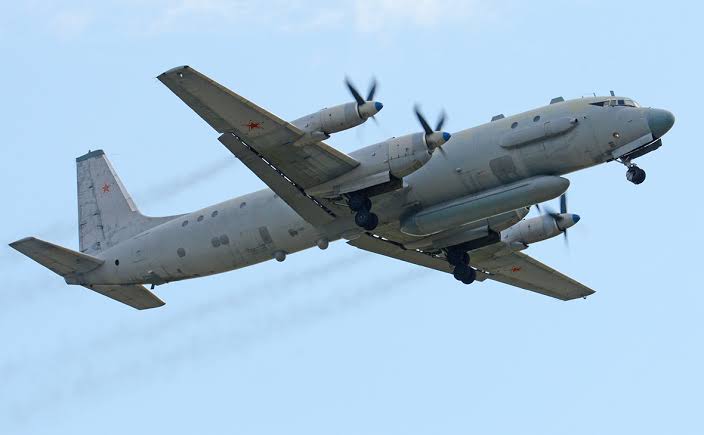
Finnish border authorities have reported a suspected airspace violation by a Russian military surveillance aircraft, marking another incident in the ongoing tensions between NATO’s northern flank and Moscow. According to official statements from Finnish border guards, a Russian Il-20 reconnaissance plane remained in Finnish airspace for approximately three minutes before departing. The incident has prompted an immediate investigation by Finnish authorities and is expected to draw attention from NATO partners concerned about Russian military activity near alliance borders.
Details of the Incident and Finnish Response
The Il-20, a Soviet-era turboprop aircraft designed for electronic intelligence gathering and reconnaissance missions, was detected entering Finnish airspace by military radar systems. Finnish border guards confirmed that the aircraft spent three minutes within the country’s sovereign airspace before returning to international or Russian airspace. While Finnish authorities have launched a formal investigation into the incident, the brief duration suggests it may be classified as a technical violation rather than a deliberate provocation. However, given the current geopolitical climate, any unauthorized military aircraft movement near NATO territory receives heightened scrutiny.
Finland’s military and border protection services maintain constant vigilance along the country’s 1,340-kilometer border with Russia, the longest shared border between Russia and any EU member state. The Finnish Defence Forces operate sophisticated radar and monitoring systems capable of tracking aircraft movements across the region. This infrastructure became even more strategically significant following Finland’s accession to NATO in April 2023, which fundamentally altered the security architecture of Northern Europe.
Historical Context and Previous Violations
This incident is not an isolated occurrence. Russian military aircraft have violated Finnish airspace on multiple occasions over the past decade, with incidents becoming more frequent since Russia’s full-scale invasion of Ukraine in February 2022. Similar violations have been reported by other Nordic and Baltic nations, including Sweden, Estonia, Latvia, and Lithuania. These incidents typically involve reconnaissance aircraft or fighter jets that briefly enter foreign airspace before departing, often without responding to radio communications from the affected country’s air traffic control or military authorities.
The Il-20, NATO reporting name “Coot-A,” is based on the civilian Ilyushin Il-18 airliner and has been in service with the Russian military since the 1970s. Despite its age, the aircraft remains a valuable intelligence asset, equipped with electronic sensors and surveillance equipment capable of monitoring communications, radar emissions, and other military activities. Russia operates these aircraft for both tactical reconnaissance and strategic intelligence gathering along NATO’s borders.
Geopolitical Implications and NATO Response
Finland’s membership in NATO means that any violation of its airspace is now a concern for the entire 32-member alliance. Under Article 5 of the NATO treaty, an armed attack against one member is considered an attack against all, though airspace violations typically fall short of triggering collective defense obligations. Nevertheless, such incidents are closely monitored by NATO’s Allied Air Command and contribute to the alliance’s assessment of Russian military behavior and intentions.
Security analysts note that Russian military aircraft frequently test NATO air defenses by flying close to or briefly entering allied airspace. These activities serve multiple purposes: they probe response times and procedures, gather intelligence on radar capabilities, and signal military presence in contested regions. Since Finland and Sweden joined NATO, the alliance now controls virtually the entire Baltic Sea coastline, significantly limiting Russia’s strategic options in the region.
Looking Ahead: Finland’s Security Posture
Finnish authorities are expected to summon Russia’s ambassador to provide an explanation for the incident, following standard diplomatic protocols for airspace violations. The Finnish government has historically taken a measured but firm approach to such provocations, documenting each incident while avoiding unnecessary escalation. However, officials have made clear that Finland will defend its sovereignty and territorial integrity with all available means.
The incident serves as a reminder of the persistent tensions along NATO’s eastern frontier and the importance of continued vigilance in an era of heightened great power competition. As Finland continues to integrate into NATO’s command structures and participate in allied exercises, its role in monitoring Russian military activity near Europe’s northern borders becomes increasingly vital to collective Western security.
Expert Opinion: This incident reflects a pattern of Russian probing activity that has intensified since NATO’s Nordic expansion. While a three-minute incursion does not constitute a major crisis, it underscores Moscow’s willingness to test boundaries and challenge the new security reality in the Baltic region. Western military planners should anticipate continued gray-zone activity as Russia adapts to the strategic disadvantage created by Finnish and Swedish NATO membership.