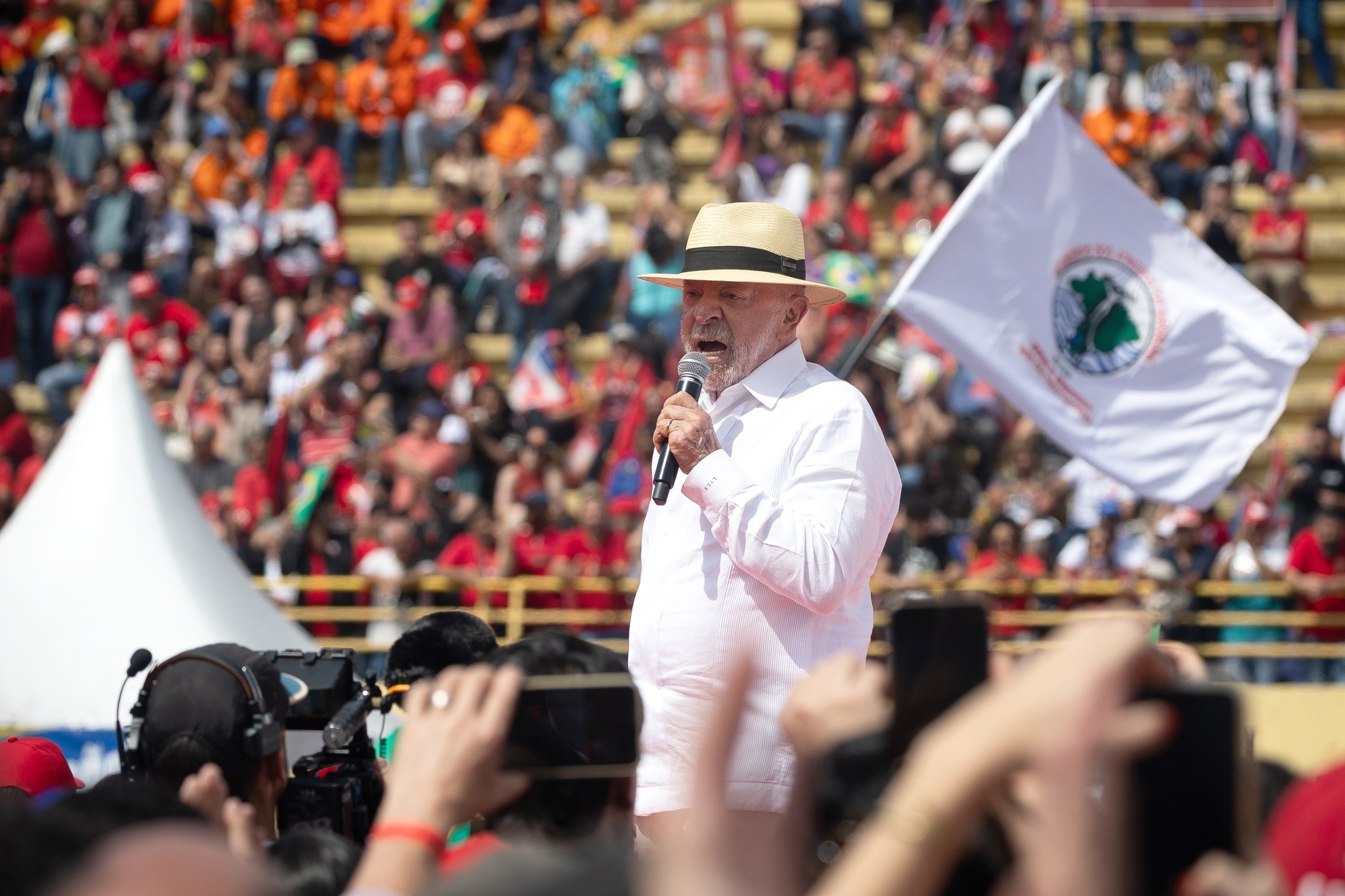
Brazil’s political landscape is heating up as the country officially enters its presidential campaign season, with incumbent President Luiz Inácio Lula da Silva announcing his intention to seek an unprecedented fourth term in office. At 80 years old, Lula remains one of the most influential political figures in Latin American history, and his decision to run again sets the stage for what promises to be a fiercely contested election. The campaign is expected to center on Brazil’s economic direction, social programs, and the country’s role on the global stage.
The announcement comes as Brazil continues to navigate complex economic challenges, including inflation concerns and efforts to boost growth in Latin America’s largest economy. Lula, who first served as president from 2003 to 2010 before returning to power in 2023, has built his political legacy on social welfare programs and policies aimed at reducing poverty and inequality. His Workers’ Party has maintained strong support among Brazil’s working class and rural populations, though critics argue that his administration has not done enough to address corruption and fiscal responsibility.
The Bolsonaro Factor: A Political Dynasty Emerges
Perhaps the most significant development in this electoral cycle is the emergence of a new challenger from the right-wing opposition. The son of former President Jair Bolsonaro is positioning himself as the main competitor to Lula’s reelection bid, marking the rise of what some analysts are calling a political dynasty in Brazilian conservative politics. Jair Bolsonaro, who served as president from 2019 to 2022, remains a polarizing figure who was barred from running for office until 2030 due to electoral violations. His son’s candidacy represents an attempt to maintain the family’s political influence and appeal to the substantial voter base that supported his father.
The Bolsonaro family continues to command significant loyalty among conservative voters, evangelical Christians, and those who favor tough-on-crime policies and free-market economics. The younger Bolsonaro’s campaign is expected to focus on criticizing Lula’s economic policies, questioning government spending on social programs, and appealing to voters concerned about security issues. Political observers note that this generational shift in the opposition could either energize or complicate the right-wing coalition that nearly won the 2022 election.
Historical Context: Brazil’s Democratic Journey
Brazil’s democracy has undergone significant evolution since the end of military rule in 1985. The country has experienced dramatic political swings between left and right, with power alternating between the Workers’ Party and various center-right coalitions. Lula’s first two terms from 2003 to 2010 were marked by significant economic growth, expansion of social programs like Bolsa Família, and increased international prestige for Brazil. However, his chosen successor Dilma Rousseff was impeached in 2016, and Lula himself spent time in prison on corruption charges that were later annulled on procedural grounds, allowing his political comeback.
The 2022 election that returned Lula to power was one of the most closely contested in Brazilian history, with Lula defeating Bolsonaro by a margin of less than two percentage points. The aftermath saw unprecedented scenes of political violence, including supporters of the outgoing president storming government buildings in Brasília in January 2023. This historical context underscores the high stakes of the upcoming election and the deep divisions that continue to characterize Brazilian society.
What’s at Stake for Brazil and Beyond
The outcome of this election will have implications far beyond Brazil’s borders. As the world’s ninth-largest economy and home to the majority of the Amazon rainforest, Brazil plays a crucial role in global climate discussions and international trade. Under Lula, Brazil has sought to strengthen ties with other emerging economies through groups like BRICS while also maintaining relationships with Western powers. The election will determine whether Brazil continues on this diplomatic path or shifts toward the more nationalist, Western-aligned approach favored by the Bolsonaro camp. Environmental policy, indigenous rights, and Amazon preservation are also likely to be central issues, with the two camps offering starkly different visions for Brazil’s natural resources.
Expert Opinion: This election represents a critical juncture for Brazilian democracy, testing whether the country’s institutions can manage another high-stakes contest between deeply polarized political forces. The emergence of a second-generation Bolsonaro candidate suggests that Brazil’s political divide may persist for years, potentially institutionalizing the left-right conflict that has defined the past decade. International observers will be watching closely to see whether Brazil can conduct a peaceful transfer of power regardless of the outcome.