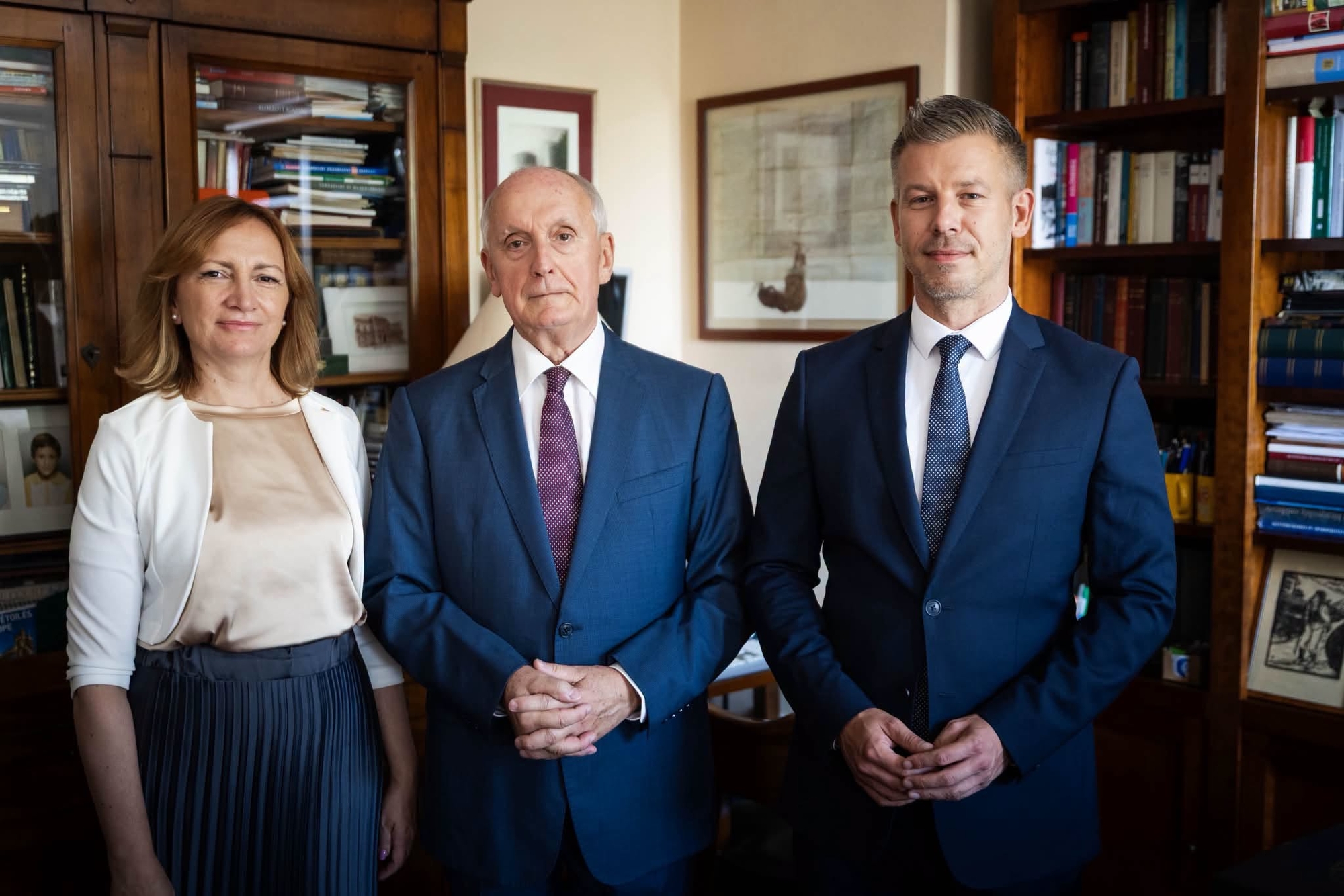
In a significant political development in Hungary, the opposition Tisza party has nominated Peter Darak, a 73-year-old former chairman of the Supreme Court, as their candidate for the country’s presidency. The decision was reached through a secret ballot within the party’s parliamentary faction, marking an important step in the ongoing political dynamics of the Central European nation. This nomination comes at a crucial time when opposition forces are seeking to consolidate their position against the ruling Fidesz party led by Prime Minister Viktor Orban.
The selection of Darak represents a strategic choice by Tisza, as the former top judge brings significant judicial experience and credibility to the ticket. His background at the helm of Hungary’s highest court positions him as a candidate with deep knowledge of constitutional matters and the rule of law — issues that have been at the center of Hungary’s tensions with the European Union in recent years. The nomination signals the opposition’s intent to field candidates with strong institutional backgrounds and reputations for independence.
Background on Hungary’s Presidential System
Hungary operates as a parliamentary republic where the president serves primarily a ceremonial role, though the position carries significant symbolic importance. The president is elected by the National Assembly rather than through a direct popular vote, which means parliamentary mathematics play a crucial role in determining who occupies the position. The current political landscape in Hungary has been dominated by Viktor Orban’s Fidesz party since 2010, though recent shifts have seen the Tisza party emerge as a formidable opposition force under the leadership of Peter Magyar, a former Fidesz insider turned critic.
The presidential office in Hungary has faced turbulence in recent years. Former President Katalin Novak resigned in February 2024 following controversy over her pardon of a man convicted in a child abuse case, creating a political crisis that damaged the ruling party’s standing. This unexpected vacancy and the subsequent public outcry created an opening for opposition parties to challenge the government’s grip on key institutions. The current acting arrangements have heightened the importance of selecting a new president who can restore dignity and stability to the office.
Peter Darak’s Judicial Career and Qualifications
Peter Darak’s lengthy career in Hungary’s judicial system spans decades, culminating in his appointment as chairman of the Curia, which is Hungary’s Supreme Court. Throughout his tenure, he was known for his measured approach to legal matters and his commitment to judicial independence — principles that have become increasingly contentious in Hungarian politics given the European Union’s ongoing concerns about the state of the judiciary under Orban’s government. His nomination by an opposition party could be seen as a statement about restoring judicial credibility and separation of powers.
The former chief justice’s candidacy also reflects broader European debates about democratic backsliding and institutional integrity in Hungary. The European Commission has repeatedly raised concerns about changes to Hungary’s judicial system, including mandatory retirement ages that critics said were designed to remove independent judges. By nominating someone of Darak’s stature and background, the Tisza party appears to be positioning itself as a defender of traditional democratic institutions and European values.
The Tisza Party and Opposition Politics
The Tisza party, which conducted the secret ballot to select Darak, has emerged as one of the most dynamic forces in Hungarian opposition politics. Led by Peter Magyar, a former government insider who dramatically broke with Fidesz, the party has attracted significant attention for its ability to mobilize voters disillusioned with over a decade of Orban’s governance. The party’s rise represents a potential realignment in Hungarian politics, as it has managed to consolidate support from various opposition factions that previously struggled to present a unified front against the ruling coalition.
While the presidential race itself may be largely symbolic given Hungary’s political structure, the nomination process and campaign will serve as important opportunities for opposition parties to articulate their vision for the country’s future. With European Parliament elections and local elections as recent testing grounds, Hungarian politics remains in a state of flux, and the presidential nomination represents another chapter in the ongoing struggle between government and opposition forces over the direction of this EU member state of nearly 10 million people.
Expert Opinion: The nomination of a respected former Supreme Court chairman signals the Hungarian opposition’s strategy of emphasizing institutional credibility and rule of law — themes that resonate both domestically and with EU partners concerned about democratic standards. While the president’s powers are limited, this race could serve as an important barometer of opposition strength ahead of the 2026 parliamentary elections, potentially shifting the political momentum if Tisza can effectively mobilize public support around their candidate’s judicial reputation.