
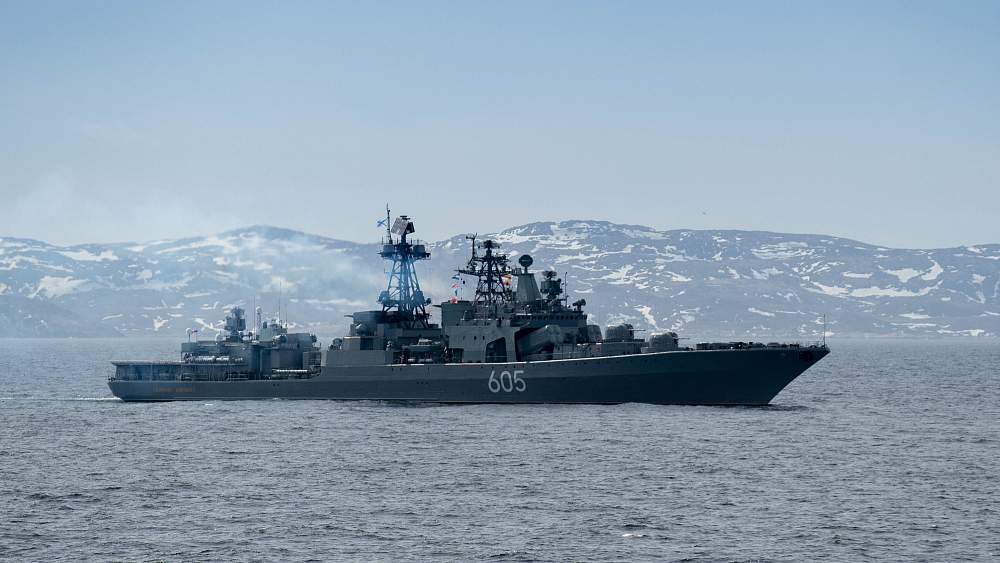
In a significant military development that has raised alarm bells across European capitals, Russia has reportedly transferred one of its most advanced combat vessels to the Baltic Sea region. The deployment comes at a particularly sensitive time, as diplomatic relations between Moscow and Western nations remain strained over multiple geopolitical issues, including the ongoing conflict in Ukraine and recent territorial disputes.
According to German newspaper Bild, the Russian Navy has been actively repositioning its naval assets in the strategically vital Baltic waterway, sending a clear signal to neighboring NATO member states. This move follows a series of statements from Russian President Vladimir Putin that European officials have interpreted as direct threats to regional security and stability.
Strategic Significance of the Baltic Sea Region
The Baltic Sea has long been considered one of the most geopolitically sensitive bodies of water in Europe. Bordered by nine countries, including NATO members Germany, Poland, Denmark, Estonia, Latvia, Lithuania, and non-NATO states Sweden and Finland (both of which have recently applied for or joined the alliance), the region represents a critical junction point between Russian and Western spheres of influence. Russia maintains access to the Baltic through its Kaliningrad exclave and the waters near St. Petersburg, making naval superiority in these waters a top priority for Moscow’s military planners.
The deployment of modern Russian warships to this region is particularly concerning for Baltic states, which have historically experienced Russian military pressure. Estonia, Latvia, and Lithuania, all former Soviet republics that joined NATO in 2004, have repeatedly expressed concerns about Russian military activities near their borders. These nations have called for increased NATO presence and enhanced collective defense measures in response to what they perceive as Russian aggression.
Russia’s Naval Modernization Program
The vessel reportedly transferred to the Baltic is part of Russia’s ambitious naval modernization program, which has been ongoing since the early 2010s. Moscow has invested heavily in developing new frigates, corvettes, and submarines equipped with advanced missile systems, including the Kalibr cruise missile capable of striking targets at distances exceeding 1,500 kilometers. These weapons systems have been combat-tested in Syria and have demonstrated significant precision strike capabilities.
Military analysts note that Russia’s Baltic Fleet has traditionally been considered one of the weaker components of the Russian Navy, particularly when compared to the Northern or Pacific Fleets. However, recent years have seen increased investment in Baltic naval capabilities, including the deployment of vessels armed with anti-ship and land-attack missiles that could potentially threaten major European population centers and military installations.
European Response and NATO Concerns
European defense officials have responded to reports of Russian naval movements with heightened vigilance. NATO has increased its surveillance activities in the region, deploying reconnaissance aircraft and naval patrol vessels to monitor Russian fleet movements. The alliance has also conducted a series of naval exercises in the Baltic, demonstrating collective resolve and interoperability among member states.
Security experts suggest that Russia’s naval deployments serve multiple purposes beyond pure military positioning. They function as political messaging tools, designed to remind European nations of Russia’s military capabilities and willingness to project power. Additionally, these movements test NATO’s response times and surveillance capabilities, providing valuable intelligence about Western military readiness. The timing of such deployments often coincides with diplomatic tensions or negotiations, suggesting their use as leverage in geopolitical discussions.
As tensions continue to simmer between Russia and Western nations, the Baltic Sea region remains a potential flashpoint that demands careful diplomatic management and robust defensive preparations from all parties involved.
Expert Opinion: The repositioning of advanced Russian naval assets to the Baltic represents a calculated escalation designed to test NATO cohesion and European resolve. While unlikely to trigger direct confrontation, this deployment signals Moscow’s intent to maintain military pressure on the alliance’s eastern flank, potentially as leverage in future negotiations over security arrangements in Europe. Baltic states should expect continued Russian naval activity as part of a broader strategy of intimidation and power projection.