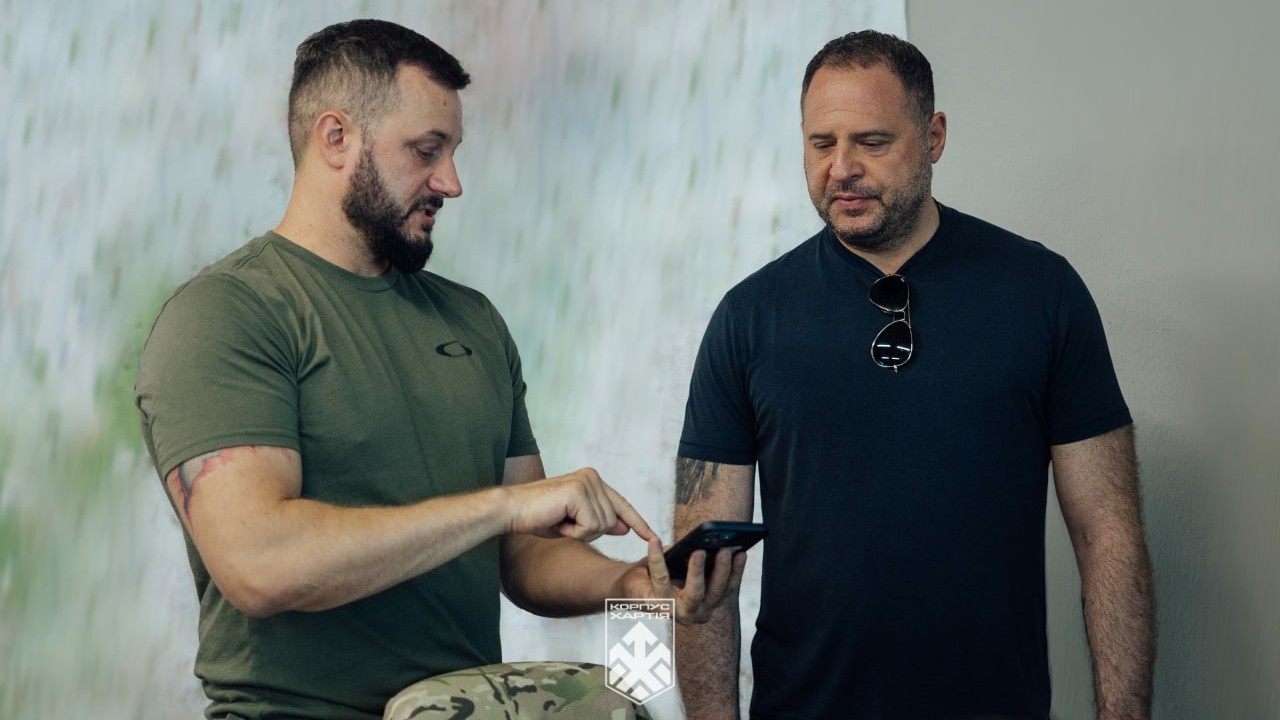
In a significant development within Ukraine’s civil-military relations landscape, the Khartia Corps volunteer formation has announced its participation in a legal assistance initiative for military personnel, a project spearheaded by Andriy Yermak, the Head of the Office of the President of Ukraine. This announcement comes at a time when Ukraine’s armed forces continue to face not only battlefield challenges but also complex legal and administrative issues that affect service members and their families. The initiative aims to provide comprehensive legal support to soldiers navigating various bureaucratic and judicial matters during wartime conditions.
The timing of this announcement has drawn considerable attention from observers, as it occurred just days after a notable development in what has become known as the “Mindychgate” scandal. A key figure in this ongoing controversy recently received a relaxation of their restrictive measures, specifically gaining permission to travel outside Kyiv. This juxtaposition of events has prompted discussion among Ukrainian political analysts about the broader context of legal proceedings and military-related cases in the country.
Background on the Legal Aid Initiative
The legal assistance project represents part of a broader effort by Ukrainian authorities to address the growing needs of military personnel who face various legal challenges during the ongoing conflict with Russia. Since the full-scale invasion began in February 2022, hundreds of thousands of Ukrainians have joined the armed forces, creating an unprecedented demand for legal services ranging from property disputes and family law matters to military justice proceedings and administrative appeals. The involvement of volunteer formations like the Khartia Corps signals an attempt to create a more comprehensive support network that extends beyond government resources alone.
Andriy Yermak, who has been a central figure in Ukrainian politics since President Volodymyr Zelensky took office in 2019, has increasingly focused on initiatives aimed at supporting military personnel and veterans. His office has launched several programs addressing everything from rehabilitation services to housing assistance for service members. The legal aid project represents another pillar in this support structure, though critics have questioned whether such initiatives adequately address systemic issues within Ukraine’s military justice system.
The Mindychgate Connection
The reference to “Mindychgate” relates to a controversial case that has captured public attention in Ukraine over recent months. The scandal involves allegations of corruption and abuse of power, and has become a symbol of broader concerns about accountability within Ukrainian institutions during wartime. The recent decision to ease travel restrictions for one of the case’s central figures has sparked debate about equal treatment under the law and the independence of Ukraine’s judicial system. Some observers view the timing of the Khartia Corps announcement as an attempt to redirect public attention, while others see it as an unrelated coincidence in a news cycle that naturally produces overlapping developments.
Legal experts in Ukraine have noted that cases involving military personnel or defense-related matters often proceed through complex jurisdictional channels that can result in outcomes that appear inconsistent to outside observers. The wartime context adds additional layers of complication, as courts must balance security considerations with traditional legal principles. International partners, including the European Union and the United States, have consistently emphasized the importance of maintaining rule of law standards even during the extraordinary circumstances of armed conflict.
The Role of Volunteer Formations
The Khartia Corps itself represents an interesting case study in Ukraine’s volunteer military ecosystem. Volunteer formations have played crucial roles throughout the conflict, often filling gaps in regular military capabilities while also navigating complex relationships with official command structures. By joining the legal aid initiative, Khartia Corps positions itself as an organization concerned not only with combat operations but also with the welfare and rights of service members more broadly. This dual focus has become increasingly common among Ukrainian volunteer units as the war has progressed into its third year and the needs of personnel have evolved beyond immediate battlefield concerns.
As Ukraine continues to fight while simultaneously pursuing European integration and domestic reforms, initiatives like the legal aid project will likely face scrutiny from both domestic audiences and international partners. The success of such programs will depend not only on the resources allocated to them but also on the broader integrity of Ukraine’s legal institutions. For military personnel and their families, access to competent legal assistance could make significant differences in matters ranging from compensation claims to custody disputes, making the stakes of these initiatives deeply personal for thousands of Ukrainians currently serving their country.
Expert Opinion: The convergence of volunteer military formations with legal assistance initiatives reflects Ukraine’s evolving civil-military landscape, where traditional boundaries between state functions and civic participation continue to blur under wartime pressures. While such partnerships can extend much-needed services to underserved populations, they also raise questions about coordination, accountability, and the long-term institutionalization of what began as emergency measures. The coming months will reveal whether these hybrid approaches can deliver meaningful results while maintaining the transparency that Ukraine’s reform partners expect.