
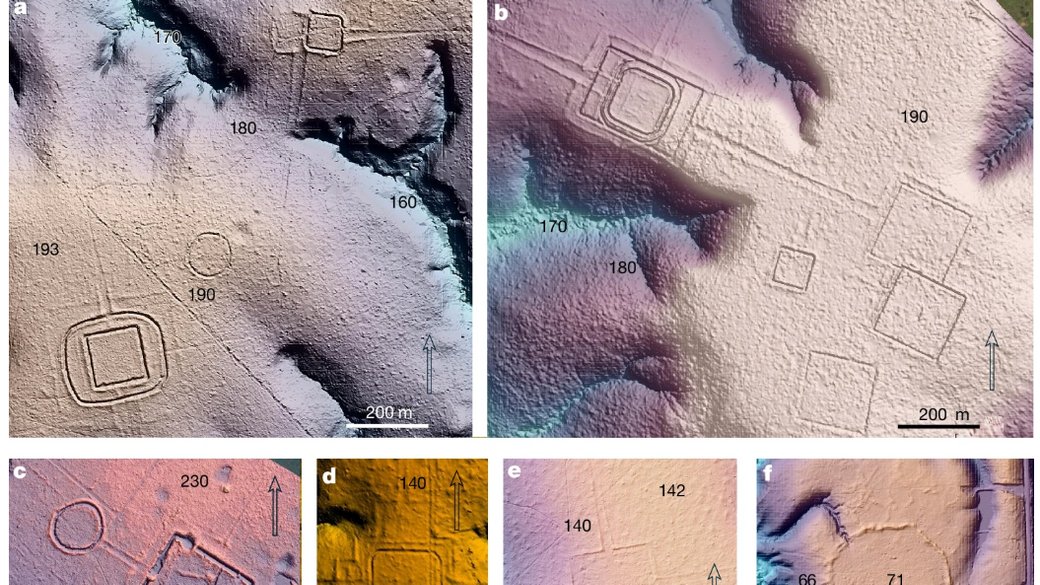
A groundbreaking archaeological discovery has revealed evidence of a sophisticated pre-colonial civilization that once thrived in the Amazon rainforest, challenging long-held assumptions about the region’s history. According to recent findings, at the height of its development, this ancient society may have supported a population of between 1.25 and 3 million people, suggesting that the Amazon was far from the untouched wilderness many historians once believed it to be.
Rewriting Amazon History
For centuries, scholars believed that the Amazon basin could not support large, complex societies due to its poor soil quality and challenging environmental conditions. This new discovery fundamentally overturns that narrative, demonstrating that indigenous peoples developed sophisticated agricultural techniques, urban planning systems, and social structures that allowed them to flourish in this demanding ecosystem. The findings join a growing body of evidence suggesting that pre-Columbian Amazonia was home to millions of people living in organized communities connected by extensive road networks.
The research builds upon decades of archaeological work in the region, including the discovery of terra preta, or “dark earth” — incredibly fertile soil that ancient Amazonians created through a complex process of adding charcoal, bone, and organic matter to the naturally nutrient-poor jungle floor. This agricultural innovation allowed these civilizations to sustain large populations and develop permanent settlements, effectively engineering their environment to support advanced societies.
Advanced Urban Planning and Infrastructure
Evidence uncovered at various sites throughout the Amazon basin reveals that these ancient peoples constructed elaborate earthworks, including raised agricultural fields, causeways, canals, and defensive structures. Some settlements featured geometric designs visible only from aerial perspectives, suggesting sophisticated planning and coordination among thousands of workers. These discoveries indicate a level of social organization comparable to other major ancient civilizations, including those of Mesoamerica and the Andes.
The population estimates of 1.25 to 3 million inhabitants represent a significant departure from earlier assessments, which placed pre-colonial Amazon populations in the tens or hundreds of thousands. Modern archaeological techniques, including LIDAR technology that can penetrate dense forest canopy to reveal hidden structures beneath, have been instrumental in uncovering the true extent of these civilizations. Researchers have identified hundreds of previously unknown sites, including villages, ceremonial centers, and extensive agricultural systems.
The Impact of European Contact
The arrival of European colonizers in the 16th century brought devastating consequences for these Amazon civilizations. Diseases such as smallpox, measles, and influenza, to which indigenous populations had no immunity, swept through the region with catastrophic effect. Historians estimate that up to 90 percent of the indigenous population perished within the first century of European contact, effectively erasing much of the physical and cultural evidence of these sophisticated societies. The subsequent regrowth of the forest over abandoned settlements contributed to the misconception of the Amazon as a pristine, uninhabited wilderness.
Today’s discoveries carry significant implications not only for our understanding of history but also for contemporary debates about sustainable development and forest management. If ancient peoples successfully managed large-scale agriculture in the Amazon without destroying the ecosystem, their techniques could offer valuable lessons for modern approaches to conservation and land use. Researchers continue to study terra preta and other indigenous innovations, hoping to unlock sustainable agricultural practices that could benefit modern populations while preserving the critical Amazon ecosystem.
Expert Opinion: These findings represent a paradigm shift in our understanding of pre-Columbian America and demonstrate that complex urban civilizations could emerge in tropical forest environments previously considered inhospitable to large populations. As LIDAR and other remote sensing technologies continue to reveal hidden archaeological sites beneath the jungle canopy, we can expect many more discoveries that will further illuminate the remarkable achievements of ancient Amazonian peoples and potentially reshape our approaches to sustainable development in tropical regions.